Skip to product information
1 of 1

Intimate Labors

Regular price $30.00
Sale price $30.00 Regular price $30.00
Sale Sold out
What do home health aides, call center operators, prostitutes, sperm donors, nail manicurists, and housecleaners have in common? Around the world, they make their livings through touch, closeness, ...
Read More
  • Format:
  • 22 June 2010
View Product Details

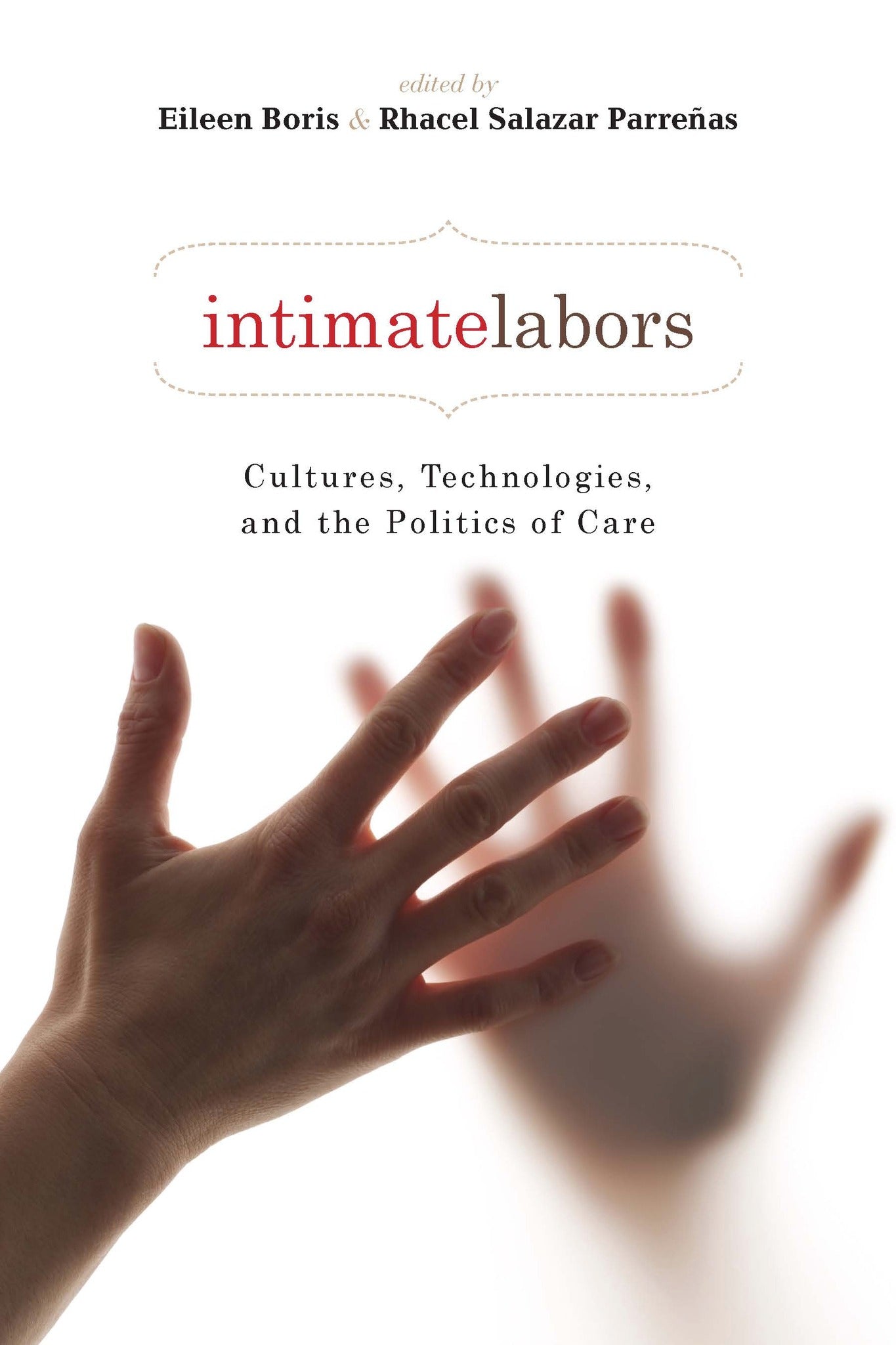
What do home health aides, call center operators, prostitutes, sperm donors, nail manicurists, and housecleaners have in common? Around the world, they make their livings through touch, closeness, and personal care. Their labors, both paid and unpaid, sustain the day-to-day work that we require to survive. This book takes a close look at carework, domestic work, and sex work in everyday life and illuminates the juncture where money and intimacy meet.

Intimate labor is presented as a comprehensive category of investigation into gender, race, class, and other power relations in the context of global economic transformations. In chronicling the history of intimate labor in light of the rise and devolution of welfare states, women's workforce participation, family formation, the expansion of sex work into new industries, and the development of institutions for dependent people, this wide-ranging reader advances debates over the relationship between care and economy.

files/i.png Icon
Price: $30.00
Pages: 360
Publisher: Stanford University Press
Imprint: Stanford Social Sciences
Publication Date: 22 June 2010
Trim Size: 9.00 X 6.00 in
ISBN: 9780804761932
Format: Paperback
BISACs:

"Eileen Boris and Rhacel Salazar Parrenas's Intimate Labors: Cultures, Technologies, and the Politics of Care is an excellent read and resource for those of us in the field of labor studies. . . I highly recommend this book to anyone engaged in organizing and educating care workers. It is well written, is thought provoking, and challenges us to understand the definition of intimate labor and how it functions in a neoliberal marketplace. In an economy increasingly dependent on intimate labor, this is a must-read volume of essays."—Emily E. LaBarbera Twarog, Labor Studies Journal
Eileen Boris is Hull Professor and Chair of Feminist Studies at the University of California, Santa Barbara, where she directs the Center for Research on Women and Social Justice. Rhacel Salazar Parreñas is Professor of American Civilization and Sociology at Brown University.