


Some error occured while loading the Quick View. Please close the Quick View and try reloading the page.
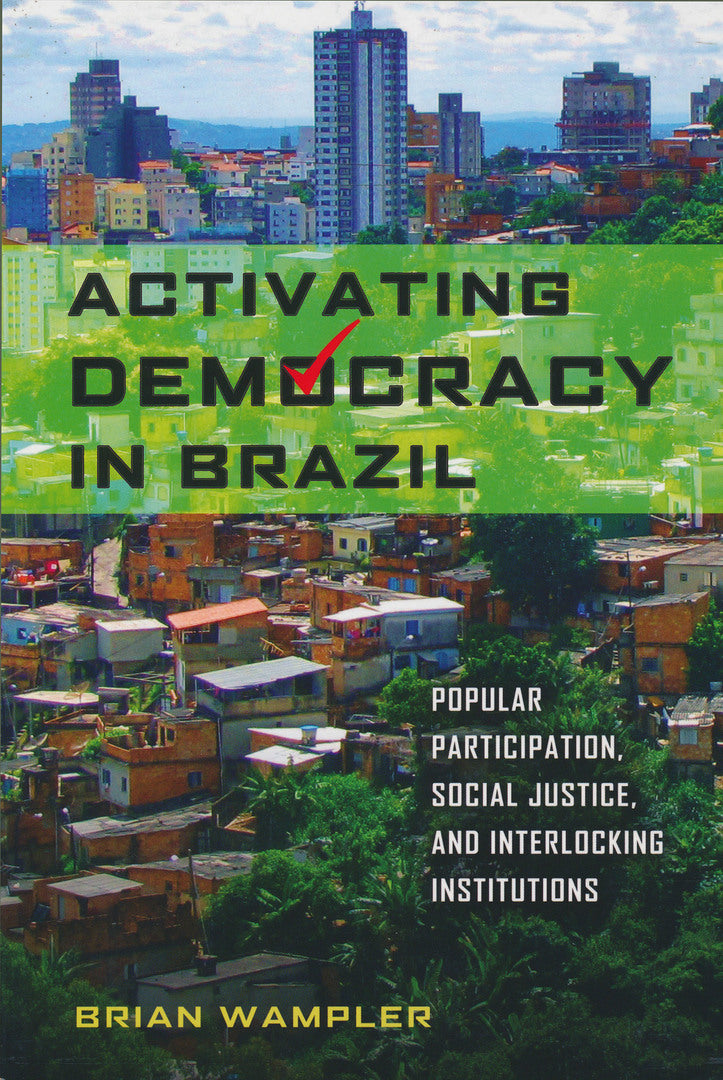
In 1988, Brazil’s Constitution marked the formal establishment of a new democratic regime. In the ensuing two and a half decades, Brazilian citizens, civil society organizations, and public officials have undertaken the slow, arduous task of building new institutions to ensure that Brazilian citizens have access to rights that improve their quality of life, expand their voice and vote, change the distribution of public goods, and deepen the quality of democracy. Civil society activists and ordinary citizens now participate in a multitude of state-sanctioned institutions, including public policy management councils, public policy conferences, participatory budgeting programs, and legislative hearings. Activating Democracy in Brazil examines how the proliferation of democratic institutions in Belo Horizonte, Brazil, has transformed the way in which citizens, CSOs, and political parties work together to change the existing state.
According to Wampler, the 1988 Constitution marks the formal start of the participatory citizenship regime, but there has been tremendous variation in how citizens and public officials have carried it out. This book demonstrates that the variation results from the interplay of five factors: state formation, the development of civil society, government support for citizens’ use of their voice and vote, the degree of public resources available for spending on services and public goods, and the rules that regulate forms of participation, representation, and deliberation within participatory venues. By focusing on multiple democratic institutions over a twenty-year period, this book illustrates how the participatory citizenship regime generates political and social change.

“Wampler argues that accessing citizenship rights requires activation democracy, which in turn depends on devising appropriate strategies to sustain collective action; overcoming the bias in representative democracy against the poor and other subaltern groups; and finally, translating “popular” demands into policy outcomes. . . .Activating Democracywill interest students of democratization and Brazilian and Latin American politics.” —Democratization
Brian Wampler is professor of political science at Boise State University. He is the author of Participatory Budgeting in Brazil: Contestation, Cooperation, and Accountability.
List of Abbreviations
List of Tables and Figures
Acknowledgments
- Activating Democracy in Brazil
- Establishing the Participatory Citizenship Regime
- Rebuilding the Local State
- Innovation and Renewal of Participatory Budgeting
- Councils and Conferences: Health Care, Housing, and Social Services
- Transforming the Engagement of Civil Society
- Organizations: Adopting New Strategies in the Participatory Citizenship Regime Transforming Favelas
- Activating Democracy: Belo Horizonte and Beyond
Notes
References
Index