


Some error occured while loading the Quick View. Please close the Quick View and try reloading the page.
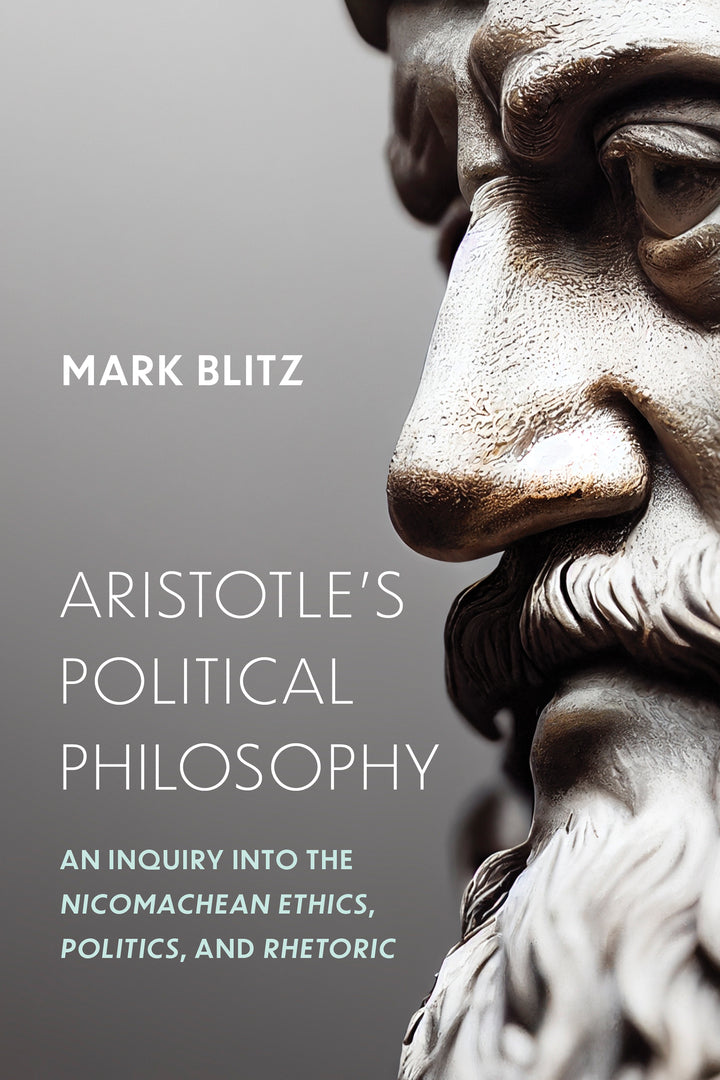
Aristotle’s Political Philosophy offers a concise and accessible overview of Aristotle’s political thought in his Nicomachean Ethics, Politics, and Rhetoric.
Aristotle’s writings on politics are known for their legendary complexity and contradictions. In Aristotle’s Political Philosophy, renowned scholar Mark Blitz draws connections between the Nicomachean Ethics, Politics, and Rhetoric to explain how these texts relate and interact with each other. Throughout the book, Blitz examines the foundations of political action, devoting special attention to Aristotle’s understanding of virtue, justice, slavery, education, friendship, statesmanship, and speech. In doing so, Blitz clarifies the central ethical and political concepts presented throughout these works to articulate how these texts, together, advance a coherent political philosophy.
After offering a comprehensive analysis of Aristotle’s political thought, Blitz ultimately argues that Aristotelian philosophy remains fundamental for understanding modern political opinions, practices, and institutions.

“Blitz has a gift for explaining Aristotle's thought in a down-to-earth, lucid, and balanced manner that renders that thought helpfully accessible to the contemporary reader.” —Peter J. Ahrensdorf, author of Homer and the Tradition of Political Philosophy
Mark Blitz is the Fletcher Jones Professor of Political Philosophy at Claremont McKenna College. He is the author of numerous books, including Reason and Politics.
Introduction
Part One. Virtue
1. Happiness, The Good, and the Noble
2. The Virtues: Their Characteristics and Substance
3. Justice and Prudence
Part Two. Politics
4. The City and Its Necessities
5. The Regime
6. Regimes: Stability and Change
7. Political Excellence and Its Limits
Part Three. Speech
8. Friendship and the Soul
9. The Rhetoric
10. Intellectual Virtue