


Some error occured while loading the Quick View. Please close the Quick View and try reloading the page.
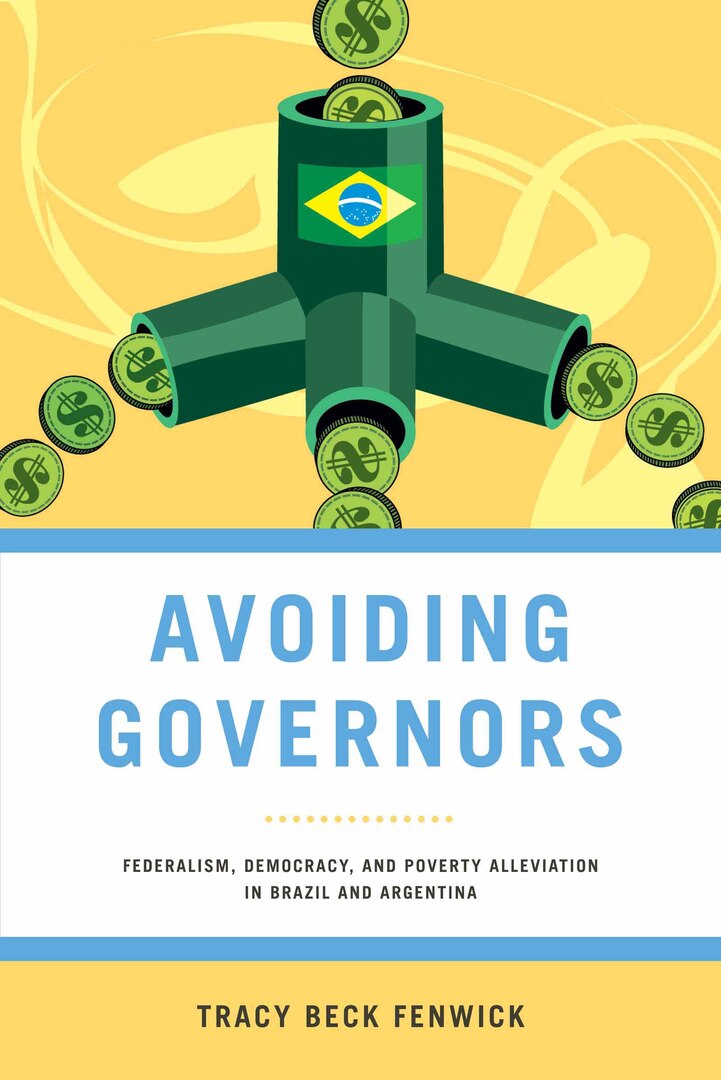
Fenwick analyzes poverty alleviation strategies in Brazil and Argentina to show how federalism affects the ability of a national government to sustain a conditional cash transfer program.
With the goal of showing the effect of domestic factors on the performance of poverty alleviation strategies in Latin America, Tracy Beck Fenwick explores the origins and rise of conditional cash transfer programs (CCTs) in the region, and then traces the politics and evolution of specific programs in Brazil and Argentina. Utilizing extensive field research and empirical analysis, Fenwick analyzes how federalism affects the ability of a national government to deliver CCTs.
One of Fenwick’s key findings is that broad institutional, structural, and political variables are more important in the success or failure of CCTs than the technical design of programs. Contrary to the mainstream interpretations of Brazilian federalism, her analysis shows that municipalities have contributed to the relative success of Bolsa Familia and its ability to be implemented territory-wide. Avoiding Governors probes the contrast with Argentina, where the structural, political, and fiscal incentives for national-local policy cooperation have not been adequate, at least this far, to sustain a CCT program that is conditional on human capital investments. She thus challenges the virtue of what is considered to be a mainly majoritarian democratic system.
By laying out the key factors that condition whether mayors either promote or undermine national policy objectives, Fenwick concludes that municipalities can either facilitate or block a national government’s ability to deliver targeted social policy goods and to pursue a poverty alleviation strategy. By distinguishing municipalities as separate actors, she presents a dynamic intergovernmental relationship; indeed, she identifies a power struggle between multiple levels of government and their electorates, not just a dichotomously framed two-level game of national versus subnational.

“Fenwick’s book is a superb example of the power of political science to offer penetrating insights by coordinating the nuances of policy, history, and institutional configuration.” —Hispanic American Historical Review
Tracy Beck Fenwick is director of the Australian Centre for Federalism and lecturer in political science at the School of Politics and International Relations, Australian National University.
List of Tables
List of Figures
List of Abbreviations
Acknowledgments
1. The Politics of Alleviating Poverty and Why Federalism Matters
2. Federalism, the Welfare State, and the Rise of CCTs in Latin America
3. Avoiding Governors and the Success of CCTs in Brazil
4. Factors Encouraging Municipal Actors to Promote National Goals in Brazil
5. CCTs in Argentina and the Politics of Alleviating Poverty
6. Factors Impeding Municipal Actors from Promoting National Goals in Argentina
7. Federalism and the Territorial Distribution of Targeted Social Welfare: In Comparative Perspective
Appendix
Notes
References
Index