


Some error occured while loading the Quick View. Please close the Quick View and try reloading the page.
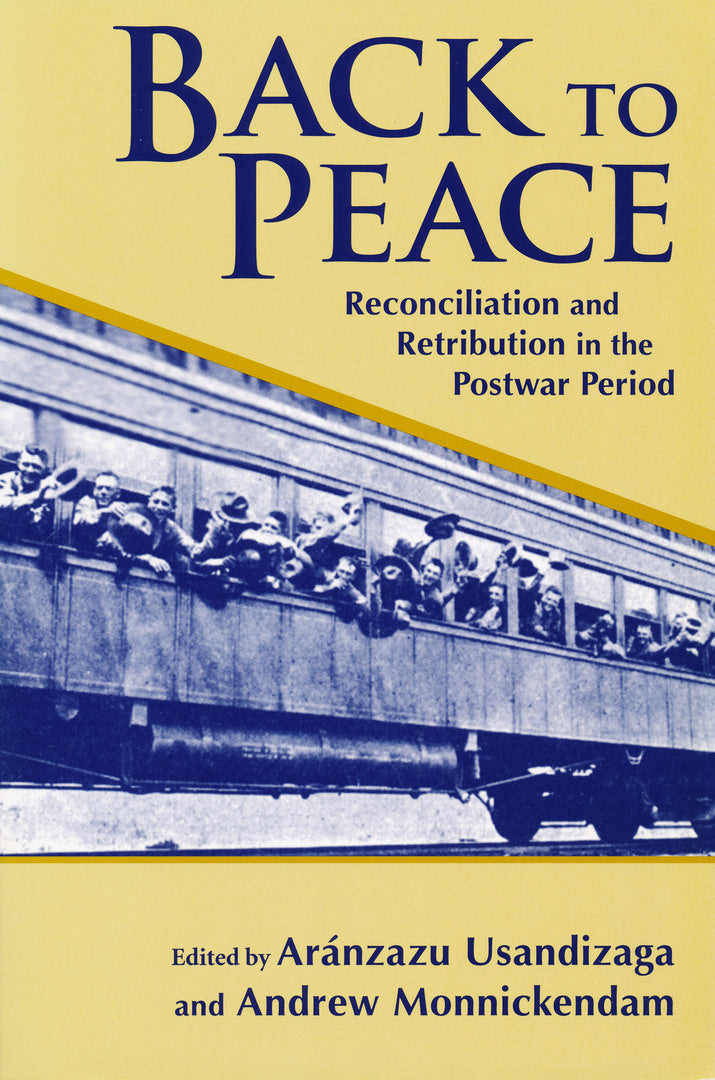
Scholars have rarely studied a society’s return to peace as a cultural category, as a formative experience common to many lives at any time in history. This collection of original essays by historians and literary critics explores the complex and difficult question of how a culture does, in fact, “return to peace” after a war. Combining analyses of both literary texts and historical sources, the contributors focus on the cultural, political, and personal implications of returning to peace.
The volume begins with an introductory essay by its editors, arguing for the need to consider “back to peace” as a significant phenomenon, not just a brief step between war and peace. The first section of the volume, “Return of the Combatant,” begins with an essay describing how soldiers in the trenches have imagined what civilian life would be like. This, and the four other essays—on F. Scott Fitzgerald's Tender is the Night, on Japanese POWs, on the return from World War II, and from Vietnam—illustrate how violence, social ostracism, and general bewilderment of soldiers follow them home from war.
The five essays in the second section analyze literary texts to reveal the fate of civilians in postwar situations: England and the United States after their respective Civil Wars, Anglo-Indian relations, Germans in postwar Britain, and contemporary Vietnamese American writers. Recurrent themes are clashes of culture, social tensions, and displacement. The four essays in the third section focus on the conflicted nature of the “back to peace” experience in the work of H.D. and Gertrude Stein, in women’s writing on the Spanish Civil War, in the stories of war brides, and in the work of Marguerite Duras. These essays demonstrate how literary and historical texts deepen our understanding of the return to peace after war.

“The focus of this volume of essays on the literary representation of the aftermaths of wars over time and place is very significant. Although there have been many studies of gender and wartime, and this has expanded into a recognized field of academic study, little attention has been paid to the return to a peacetime landscape. To focus on this complex subject and its literature provides the opening not only for new pathways to academic teaching and research, but to important interventions in the ways we think about war literature and the many periods that fall under the rubric of ‘interwar.” —Phyllis Lassner, Northwestern University
Aránzazu Usandizaga and Andrew Monnickendam are professors of American and English literature, respectively, at the Universitat Autonoma de Barcelona. They are coeditors of Dressing Up for War: Transformations of Gender and Genre in the Discourse and Literature of War.