


Some error occured while loading the Quick View. Please close the Quick View and try reloading the page.
**Does achieving equality in a multiethnic society require the complete loss of a minority's cultural identity? **
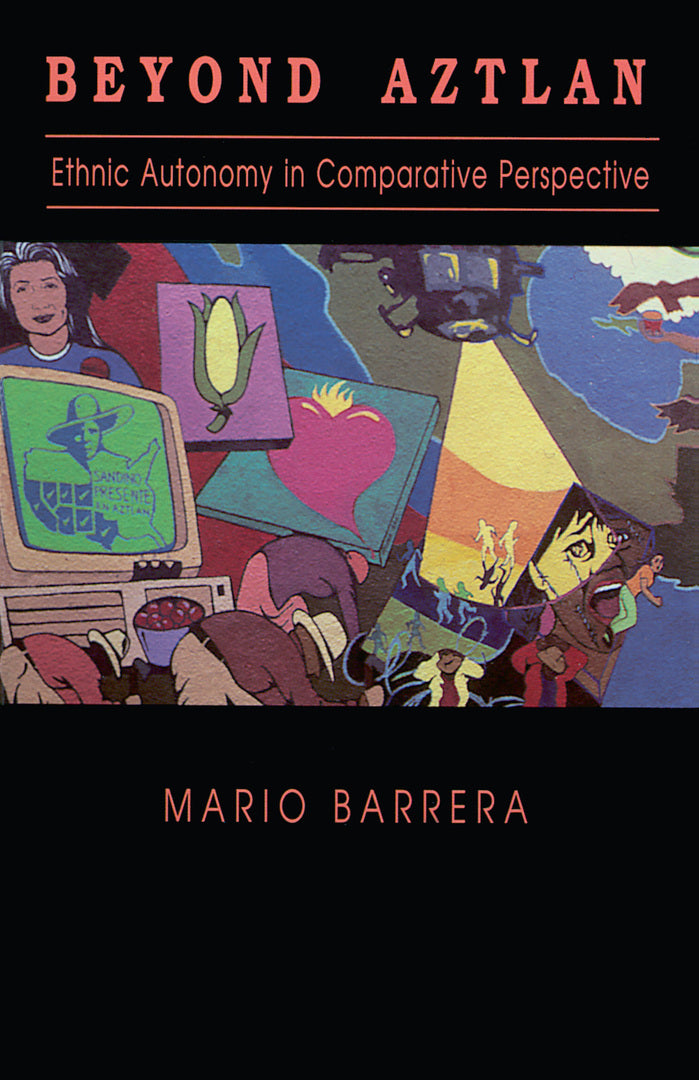
Mario Barrera strives to answer that question with full historical context in his provocative book Beyond Aztlan. Barrera identifies the goals of the Mexican American population at large—community and equality—and lays out the complicated history of achieving these goals throughout the 20th century. As focus has shifted to equality over community, the Mexican American cultural identity has fragmented and begun to erode.
Barrera explores varied trends, such as the revival of community identity during the Chicano Movement, as well as cultural fragmentation and radicalization. To fully understand and answer the question of economic equality over cultural identity, Barrera looks at minorities in four other countries to compare to the United States: Canada, China, Switzerland, and Nicaragua. He argues that while equality is not easy to attain and even harder to hold onto, a group can still preserve cultural identity while being treated as equals.

"This overview looks at Mexican-American politics since the 1940s, analyzes the aims of the Chicano Movement, and weighs the relative successes and failures both of that political force and of the larger society in accommodating it. A useful, accessible book." —Books of the Southwest
Mario Barrera is Professor Emeritus of Chicano/Latino Studies at the Department of Ethnic Studies, UC Berkeley. He has published numerous articles in professional journals and has written and edited a number of books, including Race and Class in the Southwest (Notre Dame Press, 1979), and History, Culture and Society. He also produced the documentary film Chicano Park, 1988.
Preface
Part 1. The History of Chicano Ethnic Goals
1. Introduction: Goals, Dilemmas, and Autonomy
2. The Emergence of Chicano Ethnic Goals
3. The Shift to Equality
4. The Chicano Movement and the Revival of Community
5. Postmovement Trends: Fragmentation, Radicalization, Retraditionalization
Part 2. A Comparative Analysis
6. Unintended Consequences and Internal Contradictions
7. Learning from Experience, Part I: Canada and China
8. Learning from Experience, Part II: Switzerland and Nicaragua
9. In Search of Aztlan
Bibliography
Index