


Some error occured while loading the Quick View. Please close the Quick View and try reloading the page.
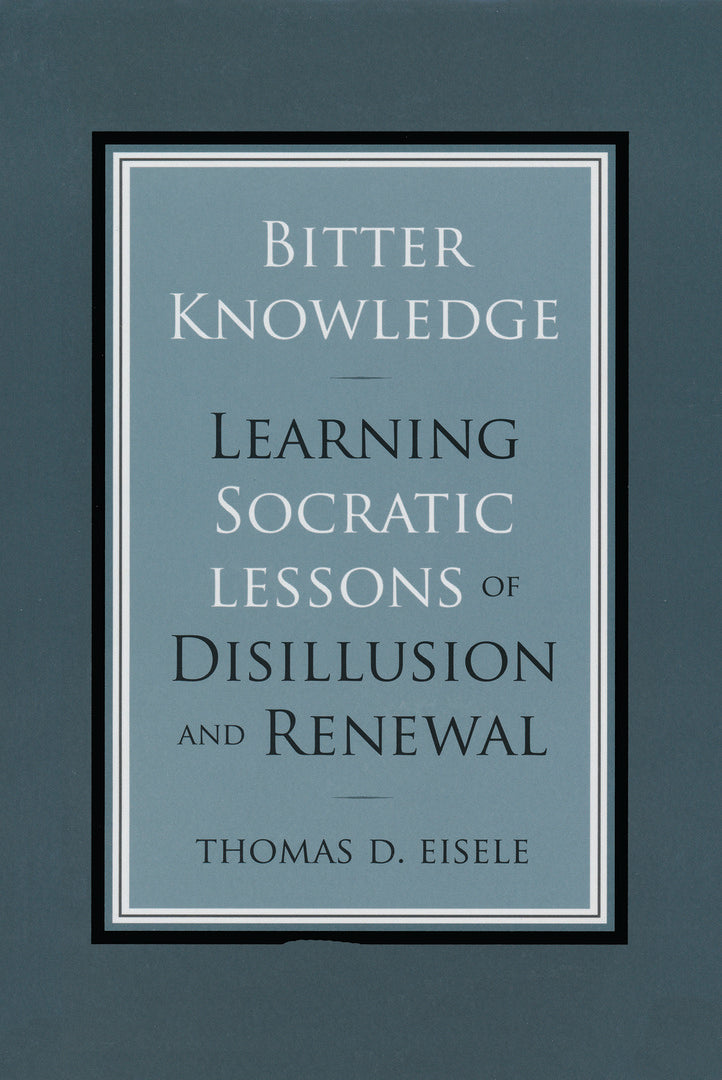
Thomas Eisele explores the premise that the Socratic method of inquiry need not teach only negative lessons (showing us what we do not know, but not what we do know). Instead, Eisele contends, the Socratic method is cyclical: we start negatively by recognizing our illusions, but end positively through a process of recollection performed in response to our disillusionment, which ultimately leads to renewal. Thus, a positive lesson about our resources as philosophical investigators, as students and teachers, becomes available to participants in Socrates' robust conversational inquiry.
Bitter Knowledge includes Eisele's detailed readings of Socrates' teaching techniques in three fundamental Platonic dialogues, Protagoras, Meno, and Theaetetus, as well as his engagement with contemporary authorities such as Gregory Vlastos, Martha Nussbaum, and Stanley Cavell. Written in a highly engaging and accessible style, this book will appeal to students and scholars in philosophy, classics, law, rhetoric, and education.

“Thomas Eisele’s captivating book, Bitter Knowledge, raises the debate over the law school model of Socratic teaching to an unprecedented level of philosophical sophistication. . . . Eisele conducts a careful analysis of four key dialogues of Plato that together offer a vivid literary portrait of the character of Socrates and his philosophical method. The result is a work at once rich in philosophic insight and provocative in its investigation of the method of American law teaching and its relationship with Socrates, the philosopher.” —Journal of Legal Education
Thomas D. Eisele is professor of law at the University of Cincinnati College of Law.