


Some error occured while loading the Quick View. Please close the Quick View and try reloading the page.
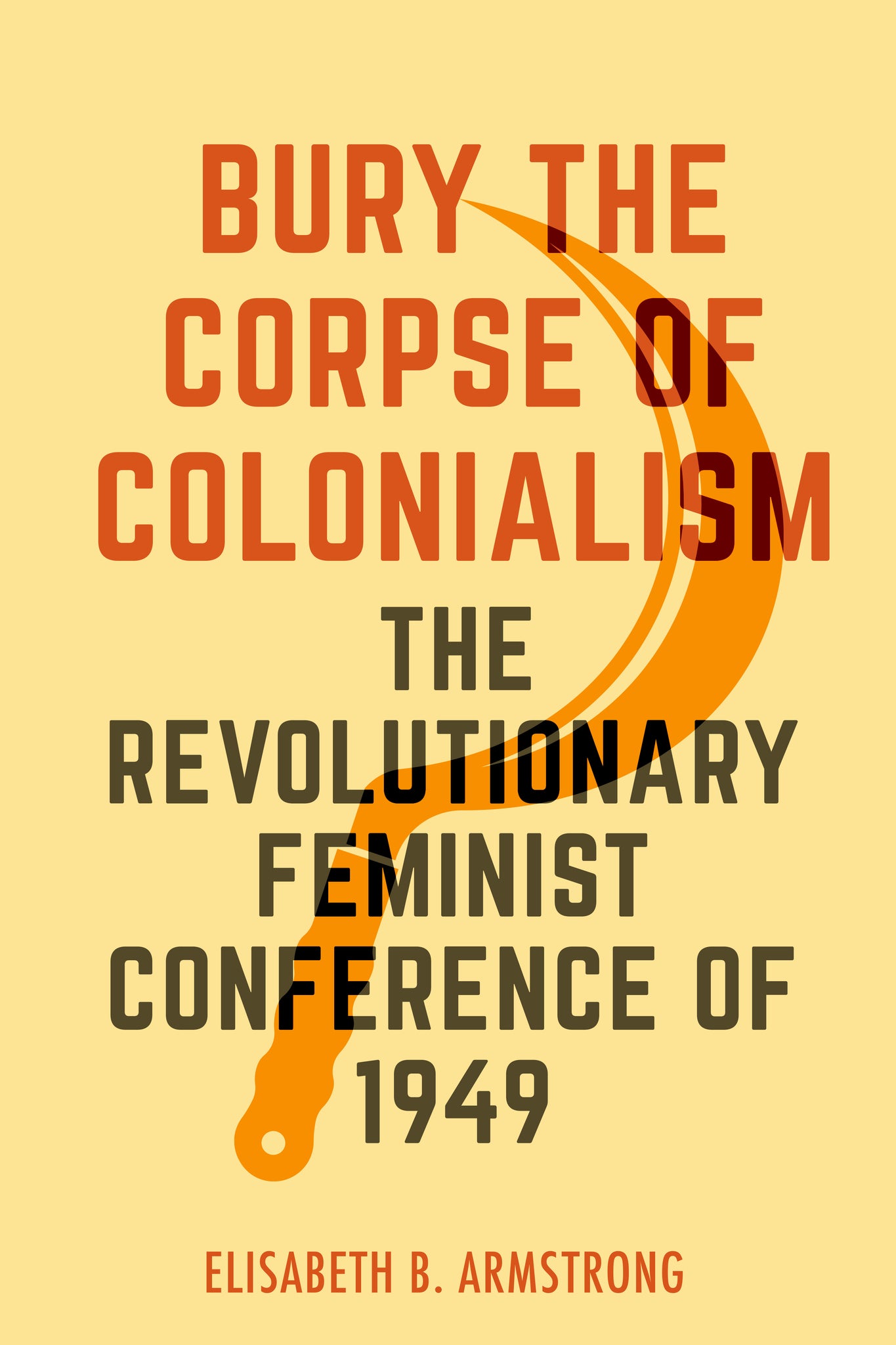
An intimate look at the 1949 Asian Women’s Conference, the movements it drew from, and its influence on feminist anticolonialism around the world.
In 1949, revolutionary activists from Asia hosted a conference in Beijing that gathered together their comrades from around the world. The Asian Women’s Conference developed a new political strategy, demanding that women from occupying colonial nations contest imperialism with the same dedication as women whose countries were occupied. Bury the Corpse of Colonialism shows how activists and movements create a revolutionary theory over time and through struggle—in this case, by launching a strategy for anti-imperialist feminist internationalism.
At the heart of this book are two stories. The first describes how the 1949 conference came to be, how it was experienced, and what it produced. The second follows the delegates home. What movements did they represent? Whose voices did they carry? How did their struggles hone their praxis? By examining the lives of more than a dozen AWC participants, Bury the Corpse of Colonialism traces the vital differences at the heart of internationalist solidarity for women’s emancipation in a world structured through militarism, capitalism, patriarchy, and the seeming impossibility of justice.
In 1949, revolutionary activists from Asia hosted a conference in Beijing that gathered together their comrades from around the world. The Asian Women’s Conference developed a new political strategy, demanding that women from occupying colonial nations contest imperialism with the same dedication as women whose countries were occupied. Bury the Corpse of Colonialism shows how activists and movements create a revolutionary theory over time and through struggle—in this case, by launching a strategy for anti-imperialist feminist internationalism.
At the heart of this book are two stories. The first describes how the 1949 conference came to be, how it was experienced, and what it produced. The second follows the delegates home. What movements did they represent? Whose voices did they carry? How did their struggles hone their praxis? By examining the lives of more than a dozen AWC participants, Bury the Corpse of Colonialism traces the vital differences at the heart of internationalist solidarity for women’s emancipation in a world structured through militarism, capitalism, patriarchy, and the seeming impossibility of justice.

Price: $24.95
Pages: 206
Publisher: University of California Press
Imprint: University of California Press
Publication Date:
14 March 2023
Trim Size: 8.25 X 5.50 in
ISBN: 9780520390911
Format: Paperback
BISACs:
"Armstrong explains the theory of women’s anti-imperialist praxis that conference attendees developed: women in both colonized and colonizing countries must join the fight, and motherhood links all women via a common interest in saving husbands and sons from oppressing and being oppressed. Quotations from the memoirs of participants enliven the account."
Elisabeth B. Armstrong is Professor of the Study of Women and Gender at Smith College.
List of Illustrations
Introduction
1. The 1949 Asian Women's Conference in Beijing (People's Republic of China)
2. The Journey to the Conference
3. An Anatomy of Revolutionary Women's Praxis
4. To Save the World
Conclusion
Acknowledgments
Notes
Sources and Further Reading
Index
Introduction
1. The 1949 Asian Women's Conference in Beijing (People's Republic of China)
2. The Journey to the Conference
3. An Anatomy of Revolutionary Women's Praxis
4. To Save the World
Conclusion
Acknowledgments
Notes
Sources and Further Reading
Index