


Some error occured while loading the Quick View. Please close the Quick View and try reloading the page.
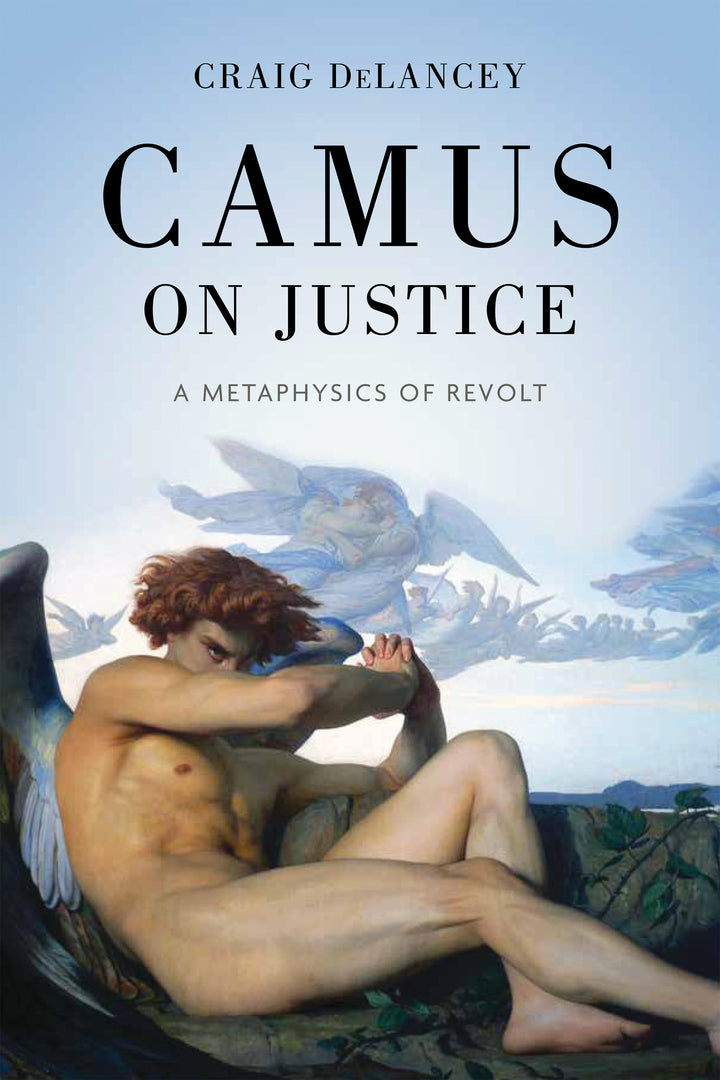
Camus on Justice investigates Albert Camus’s rich and overlooked theory about the relationship between the absurd, politics, and revolution.
What is the purpose of our lives? Camus on Justice grapples with this complex question through a unique look at the work of Albert Camus. Craig DeLancey argues that Camus sees the question of purpose as essentially related to questions of justice: our need for purpose is a revolt against a purposeless universe, and our need to foster a just society where all can pursue purpose is a revolt against human injustice. DeLancey deepens the conversation by juxtaposing Camus’s arguments with Sartre’s and de Beauvoir’s, two contemporaries who profoundly disagreed with Camus. Ultimately, DeLancey offers a new reading of Camus’s understanding of the absurd, which in turn develops a fuller understanding of his political and social theories.
This book applies rigorous analytic philosophy to Camus’s work and includes a unique interpretation of The Fall, showing how Camus predicted much of the turmoil of our current day and age. Camus on Justice reveals how Albert Camus’s philosophy offers wisdom not only for his time but also our own.

"This book makes an impressive case for the contemporary relevance and importance of Camus’s political thinking." —Anthony Rudd, author of The Philosophy of Camus
Craig DeLancey is professor of philosophy and chair of the Department of Philosophy at the State University of New York at Oswego. He has published books and papers on metaphysics and logic. His most recent book is Consciousness as Complex Event: Towards a New Physicalism.
Introduction
1. The Absurd
2. Suicide and Murder
3. Metaphysical Revolt
4. Historical Revolt
5. Just Revolt
6. The Fall and a New Paradox of Liberalism Bibliography
Index