


Some error occured while loading the Quick View. Please close the Quick View and try reloading the page.
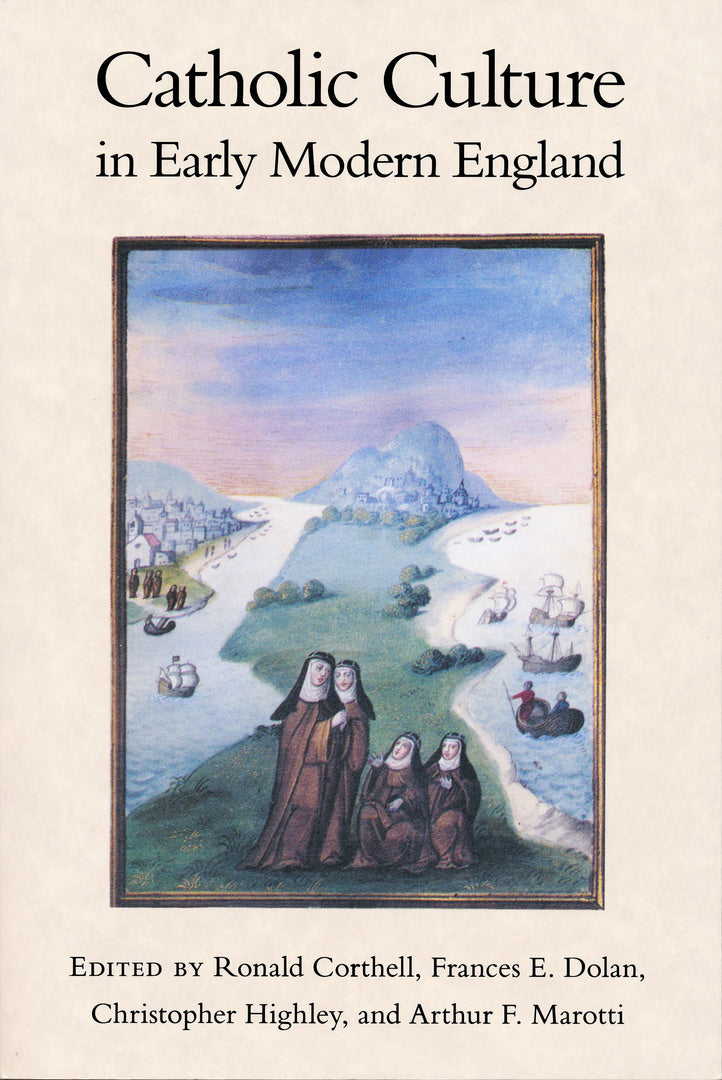
This collection of essays explores the survival of Catholic culture in sixteenth- and seventeenth-century England—a time of Protestant domination and sometimes persecution. Contributors examine not only devotional, political, autobiographical, and other written texts, but also material objects such as church vestments, architecture, and symbolic spaces. Among the topics discussed in this volume are the influence of Latin culture on Catholic women, Marian devotion, the activities of Catholics in continental seminaries and convents, the international context of English Catholicism, and the influential role of women as maintainers of Catholic culture in a hostile religious and political environment.
Catholic Culture in Early Modern England makes an important contribution to the ongoing project of historians and literary scholars to rewrite the cultural history of post-Reformation English Catholicism.

“This volume makes clear . . . that the recovery of the stray and sparse bric-a-brac of contemporary Catholic culture is not cultural or literary antiquarianism. It may not be clear at first how such objects (buildings, letters, spiritual and imaginative writings of various kinds, relics, vestments, etc.) fit into an overall account of post-Reformation Catholicism in England, but it is evident enough that explaining how they were created and how they survived tells us a great deal about English Catholics’ self-image, often in ways that cannot be recovered from other sources.” —Modern Philology
Arthur F. Marotti is professor of English at Wayne State University.