


Some error occured while loading the Quick View. Please close the Quick View and try reloading the page.
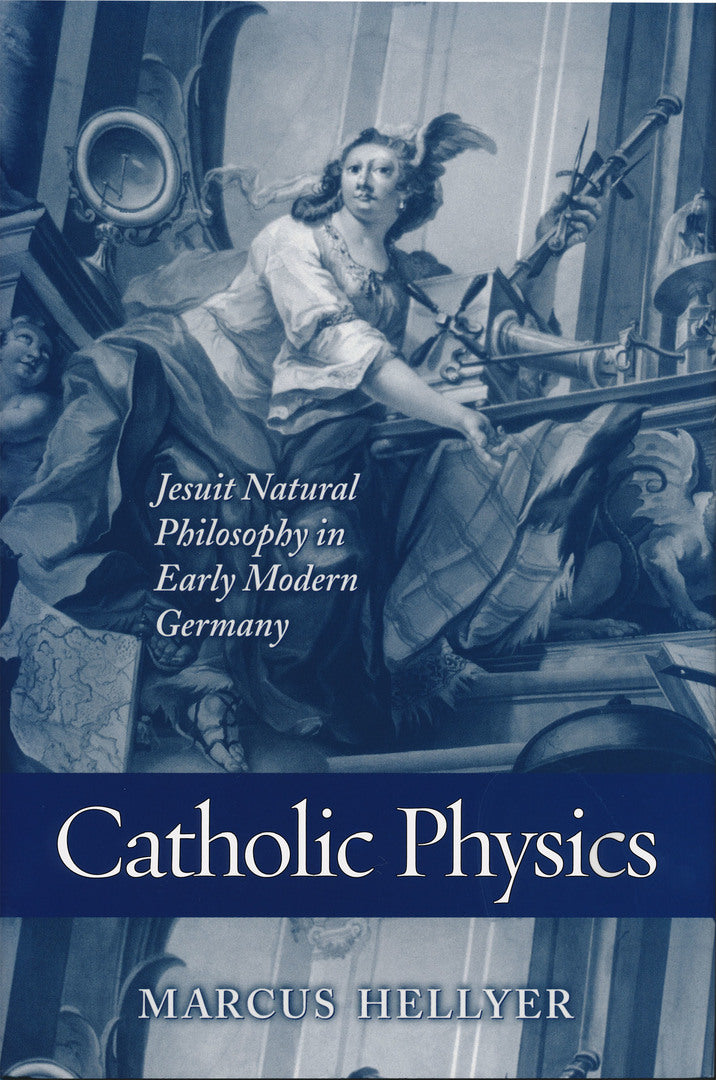
With their dozens of universities and colleges, the Jesuits held a monopoly over higher education in Catholic Germany in the seventeenth and eighteenth centuries. Using rich, previously untapped sources, Marcus Hellyer traces the development of science instruction at these institutions over a period stretching from the Counter-Reformation to the height of the Enlightenment. He argues that the Scientific Revolution was not an all-or-nothing affair; Jesuit professors enthusiastically adopted particular elements, such as experimental natural philosophy, while doggedly rejecting others, such as mechanical theories of matter. Hellyer's examination of the Jesuit colleges over a span of two centuries, from the late sixteenth century to 1773, demonstrates that digesting the New Science was a lengthy process. crucial components of the Scientific Revolution when the Society was suppressed in 1773.
Catholic Physics also explores the fascinating interaction between Jesuit natural philosophy and theology, which, though marked by constant tension, was also quite fruitful. For example, the censorship of natural philosophy by the Jesuit hierarchy in Rome was a negotiated process in which Jesuit professors accepted the necessity of censorship, yet constantly sought to circumvent regulations imposed on them by teaching controversial questions such as Copernican cosmology. After the Galileo affair, jesuit physics professors made sure they declared that heliocentrism was wrong, but they also taught their students the advantages it held over the rival cosmology sanctioned by the Catholic Church.
By investigating the neglected yet influential Jesuit colleges of early modern Germany, Hellyer brings new sources and insight to the field of history of science. His pioneering book will be welcomed not only by historians but by those engaged in the important and ongoing debate between science and religion.

“The great advantage of this thorough study is that it examines natural philosophy over a period of more than 200 years, beginning with the foundation of the first Jesuit colleges in Germany in the 1550s and concluding with the suppression of the society in 1773. Hellyer's work is richly textured, and he moves easily from the rarefied world of early-modern universities and pedagogical theories to the 'real' world theatre of experiment. The result of this thoughtful and nuanced study, which concentrates on a broad swathe of chronology and a number of issues, will hopefully open up new avenues for research in the history of science and early-modern Germany.” —European History Quarterly
Marcus Hellyer received his Ph.D. in the history of science at the University of California, San Diego. He is a senior research officer at Parliament House in Canberra, Australia.