


Some error occured while loading the Quick View. Please close the Quick View and try reloading the page.
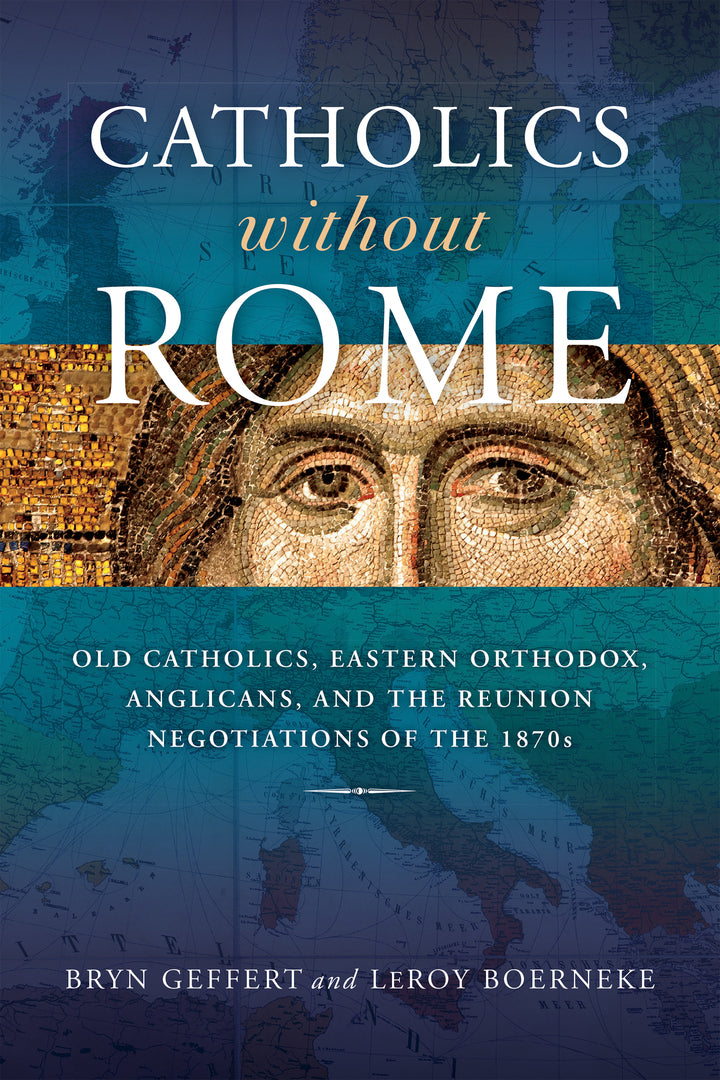
Catholics without Rome examines the dawn of the modern, ecumenical age, when “Old Catholics,” unable to abide Rome’s new doctrine of papal infallibility, sought unity with other “catholics” in the Anglican and Eastern Orthodox churches.
In 1870, the First Vatican Council formally embraced and defined the dogma of papal infallibility. A small and vocal minority, comprised in large part of theologians from Germany and Switzerland, judged it uncatholic and unconscionable, and they abandoned the Roman Catholic Church, calling themselves “Old Catholics.” This study examines the Old Catholic Church’s efforts to create a new ecclesiastical structure, separate from Rome, while simultaneously seeking unity with other Christian confessions. Many who joined the Old Catholic movement had long argued for interconfessional dialogue, contemplating the possibility of uniting with Anglicans and the Eastern Orthodox. The reunion negotiations initiated by Old Catholics marked the beginning of the ecumenical age that continued well into the twentieth century. Bryn Geffert and LeRoy Boerneke focus on the Bonn Reunion Conferences of 1874 and 1875, including the complex run-up to those meetings and the events that transpired thereafter.
Geffert and Boerneke masterfully situate the theological conversation in its wider historical and political context, including the religious leaders involved with the conferences, such as Döllinger, Newman, Pusey, Liddon, Wordsworth, Ianyshev, Alekseev, and Bolotov, among others. The book demonstrates that the Bonn Conferences and the Old Catholic movement, though unsuccessful in their day, broke important theological ground still relevant to contemporary interchurch and ecumenical affairs. Catholics without Rome makes an original contribution to the study of ecumenism, the history of Christian doctrine, modern church history, and the political science of confessional fellowships.

"[Catholics Without Rome] presents a gripping narrative of theology, nationalism, and religious converts, as well as a heady ecumenical optimism that emerged in the fallout of the First Vatican Council and the secession of various prominent Roman Catholics, especially in Germany, following the declaration on infallibility." —Journal of Theological Studies
Bryn Geffert is the dean of libraries and professor of history at the University of Vermont. He is the author of a number of books, including Eastern Orthodox and Anglicans: Diplomacy, Theology, and the Politics of Interwar Ecumenism.
LeRoy Boerneke (1929–1983) was a professor at Martin Luther College. His 1977 dissertation formed the foundation for the present study.
List of Illustrations
Preface
About This Work
Note on Transliteration and Dates
Introduction
1. Nineteenth-Century Ecumenism
2. Rome
3. The Vatican Council
4. Reactions and Rupture
5. Making Sense of Old Catholics
6. Establishing the Old Catholic Ecclesia
7. Intensifying Interest
8. Preparing for Bonn
9. The First Bonn Reunion Conference, 1874
10. The Second Bonn Reunion Conference, 1875
11. Ways Part
12. Explaining Failure
13. Aftermath as Conclusion
Notes
Bibliography
Index