


Some error occured while loading the Quick View. Please close the Quick View and try reloading the page.
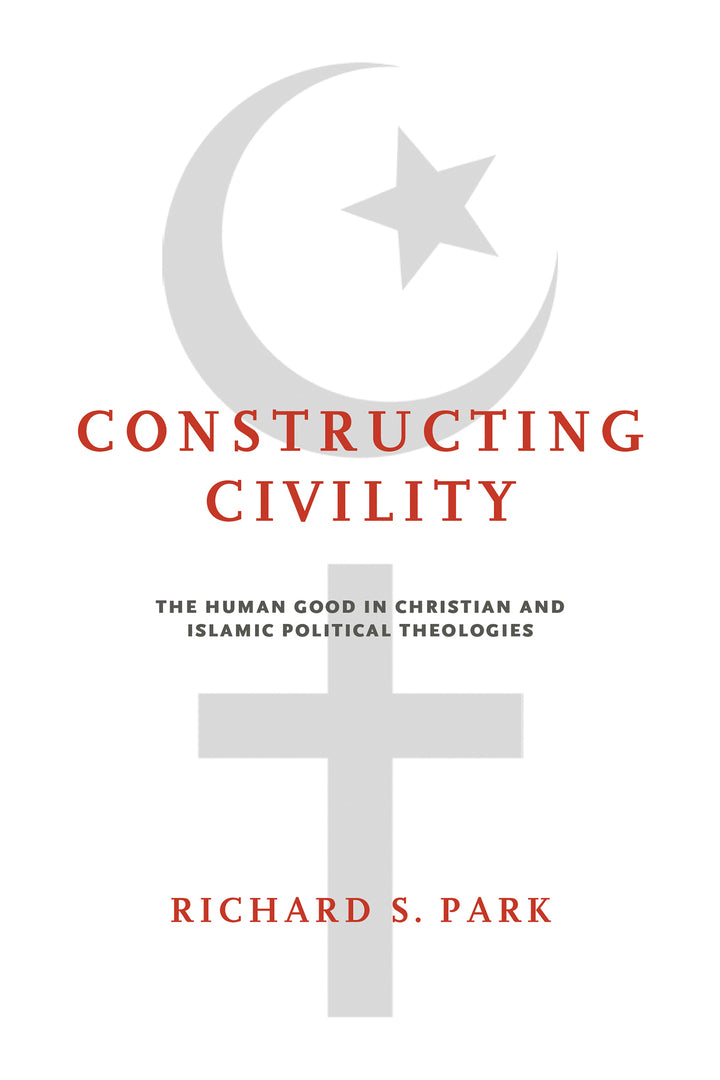
In Constructing Civility, Richard Park bridges Christian and Islamic political theologies on the basis of an Aristotelian ethics. He argues that modern secularism entails ideological commitments that can work against the promotion of public civility in pluralistic societies. A corrective outlook on public life and the public sphere is necessary, an outlook that aligns with and recovers the notion of the human good. Park develops a framework for a universally applicable public civility in multifaith and multicultural contexts by engaging the central concepts of the "image of God" (imago Dei) and "human nature" (fitra) in Roman Catholicism and Islam.
The study begins with a critique of the social fragmentation and decline of public life found in modernity. Park's central contention is that the construction of public civility within Christian and Islamic political theologies is more promising and sustainable if it is reframed in terms of the human good rather than the common good. The book offers an illustration of the proposed framework of public civility in Mindanao, Philippines, an area that represents one of the longest-standing conflicts between Christian and Muslim communities. Park's sophisticated treatment brings together theology, philosophy, religious studies, intellectual history, and political theory, and will appeal to scholars in all of those fields.

"Richard Park advances a crucial and variant aspect of public civility, based on an articulation of the human good that transcends tradition and offers conceptual resources and motivations for intercommunal engagement, which is stultified by a modernist view of the state that admits of no universal conception of the human self. Park correctly argues that without such an articulation, peace building in conflict-torn regions of the world is next to impossible." —Abdulaziz Sachedina, IIIT Chair in Islamic Studies, George Mason University
Richard S. Park is assistant professor of religion at Vanguard University.
Acknowledgements
Introduction
1. Religious Diversity and Public Civility
2. Modernity’s Mayhem and the Need for Moral Political Theory
3. The Decline of Public Life
4. A Case for the Human Good
5. The Human Good and Catholic Social Thought
6. The Human Good within Islamic Political Ethics
7. Public Civility and Islamic Political Theology
8. The Prospects of Public Civility
9. The Human Good and the Scope of Public Civility
Conclusion
Bibliography