


Some error occured while loading the Quick View. Please close the Quick View and try reloading the page.
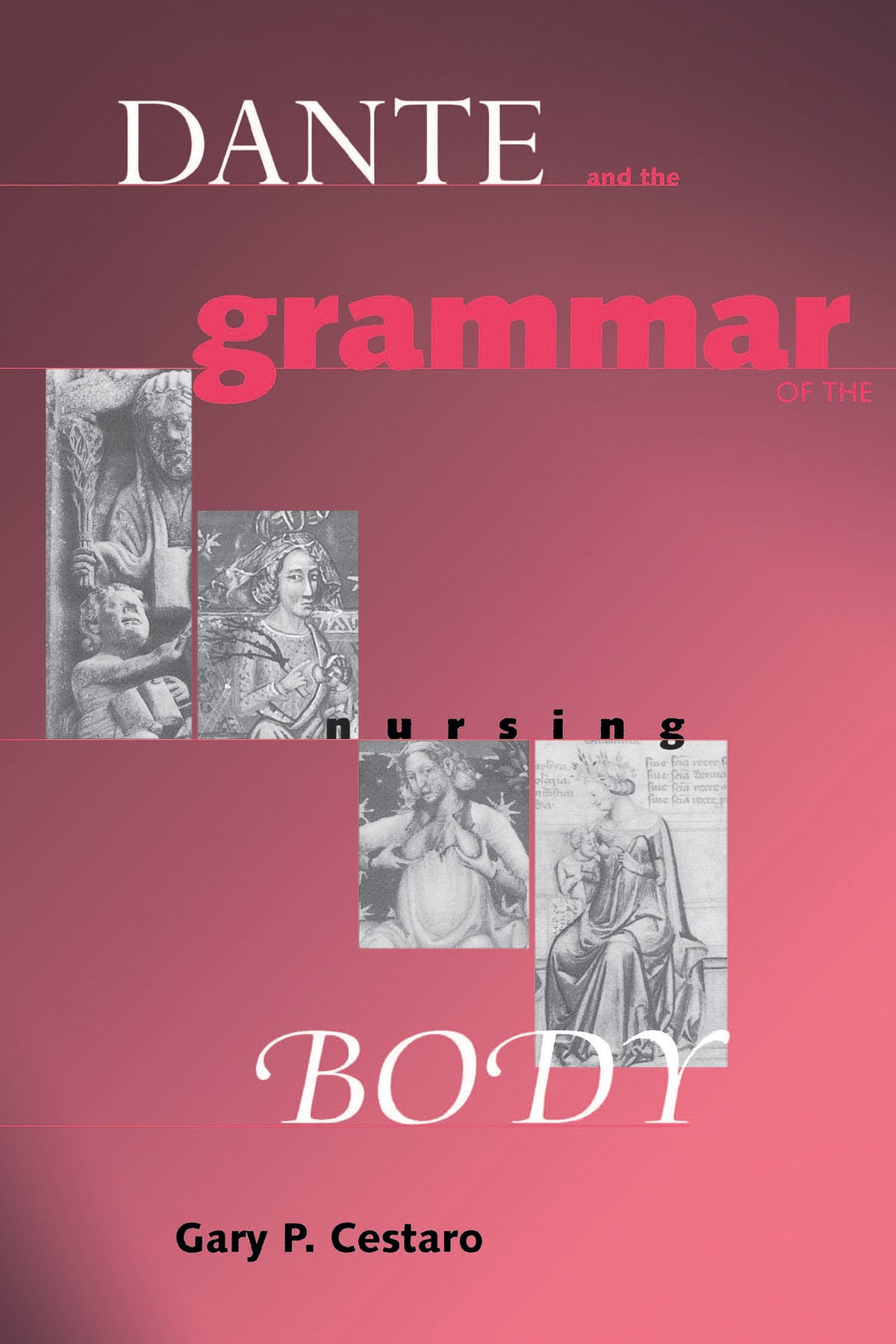
Dante and the Grammar of the Nursing Body takes a serious look at Dante's relation to Latin grammar and the new "mother tongue"-Italian vernacular-by exploring the cultural significance of the nursing mother in medieval discussions of language and selfhood. Inspired by Julia Kristeva's meditations on the maternal semiotic, Cestaro's book uncovers ancient and medieval discourses that assert the nursing body's essential role in the development of a mature linguistic self.
The opening chapters locate traces of the nursing motif in Dante's minor works and particularly in his Latin treatise on the mother tongue, De vulgari eloquentia. Cestaro argues that a primal scene of suckling motivates the poet's musings on language and brings the work to its premature end. Subsequent chapters explore the evolution of the nursing body in the Comedy: from the parodic anti-nurse of Inferno (archetypically Circe with her poison milk), to the Christian deconstruction and reconstruction of selfhood in intimate association with female nursing on the mountain of Purgatorio. The book ends in Paradiso with a dramatic metaphorical celebration of the nursing body as a site of eternal truth and emblem of the resurrected body promised by medieval Christianity.

“Cestaro marshals an impressive array of material, within and outside the Dante corpus, in the service of materializing Dante beyond the hypostases of classical virility and its modern critical analogues. Additionally, Cestaro writes like a charm.” —Modern Philology
Gary P. Cestaro is associate professor of modern languages at DePaul University.