


Some error occured while loading the Quick View. Please close the Quick View and try reloading the page.
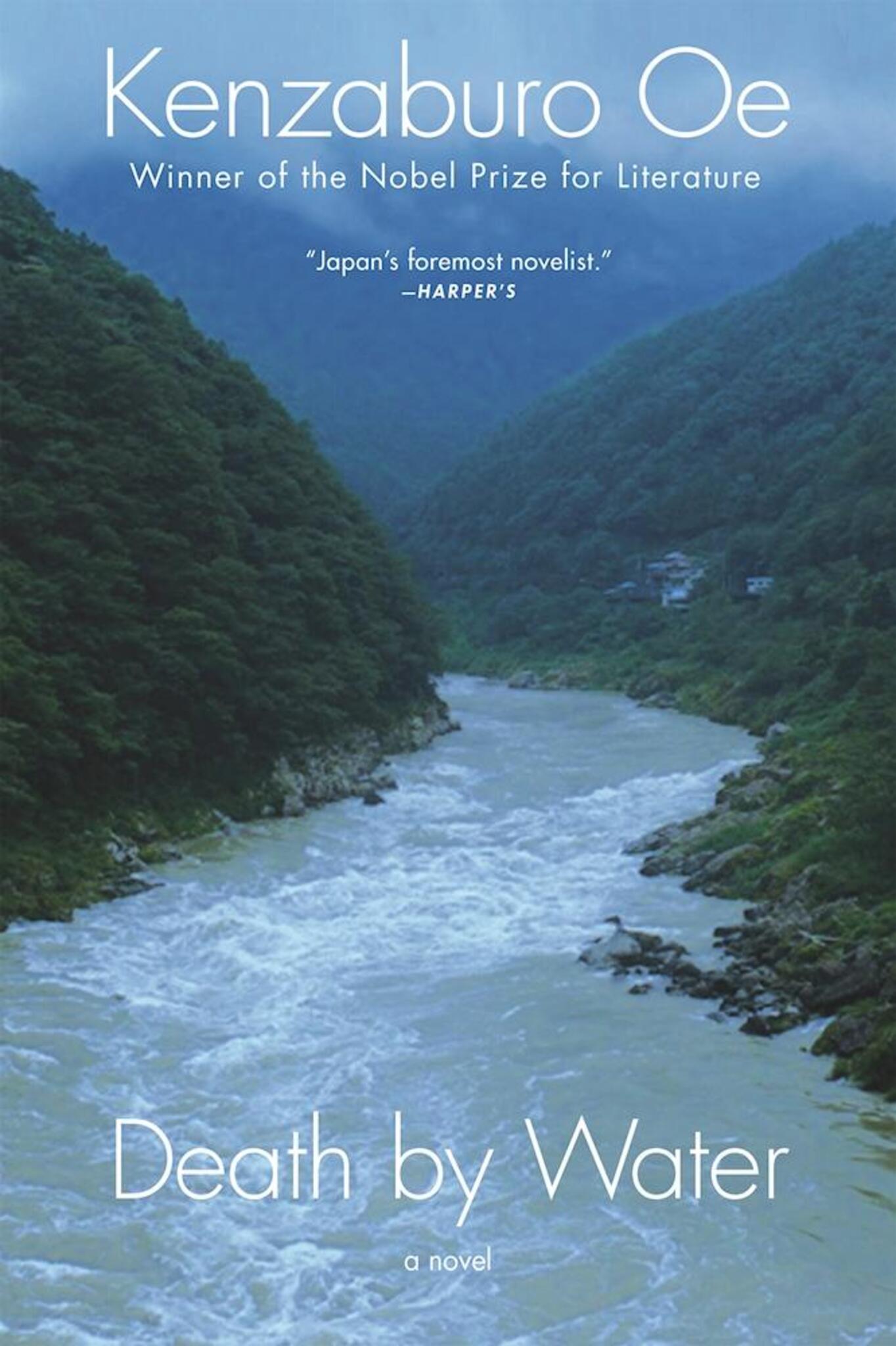
Nobel Prize winner Kenzaburo Oe’s "pensive novel, at once autobiographical and philosophical" is a finely woven masterpiece about a writer who searches for the truth behind his father’s death and discovers a new family legacy to impart to his own son. (Kirkus Reviews)
Kenzaburo Oe was awarded the Nobel Prize in Literature for creating “an imagined world, where life and myth condense to form a disconcerting picture of the human predicament today.” In Death by Water, his recurring protagonist and literary alter-ego returns to his hometown village in search of a red suitcase rumored to hold documents revealing the details of his father’s death during World War II, details that will serve as the foundation for his new, and final, novel.
Since his youth, renowned novelist Kogito Choko planned to fictionalize his father’s fatal drowning in order to fully process the loss. Stricken with guilt and regret over his failure to rescue his father, Choko has long been driven to discover why his father was boating on the river in a torrential storm. Though he remembers overhearing his father and a group of soldiers discussing an insurgent scheme to stage a suicide attack on Emperor Mikado, Choko cannot separate his memories from imagination and his family is hesitant to reveal the entire story. When the contents of the trunk turn out to offer little clarity, Choko abandons the novel in creative despair. Floundering as an artist, he’s haunted by fear that he may never write his tour de force. But when he collaborates with an avant-garde theater troupe dramatizing his early novels, Choko is revitalized by revisiting his formative work and he finds the will to continue investigating his father’s demise.
Diving into the turbulent depths of legacy and mortality, Death by Water is an exquisite examination of resurfacing national and personal trauma, and the ways that storytelling can mend political, social, and familial rifts.

Praise for Death by Water
One of the San Francisco Chronicle's Best Books of the Year
"[Oe’s] an eloquent spokesman for a generation that can remember, vividly and viscerally, all sides of Japan’s ambiguities—a generation that’s beginning to exit the stage. . . . The combination of this seriousness with a fearsome, graphic candor—trained on himself most of all—makes him formidable, whether he’s describing the challenges of being a parent or the sins of history. . . . A thoughtful reprise of a lifetime of literary endeavor. . . . You have to admire his serene and total conviction." —Janice P. Nimura, New York Times Book Review
"The densest and most rewarding 432 pages you’ll experience this year . . . a wild ride of epic proportions . . . an absorbing, complex collage of multi-layered prose, poetic reference, memories and dreams . . . an essential revelation." —Terry Hong, Christian Science Monitor
"[Oe’s] novels continue to bewilder and amaze . . . Death by Water masterfully captures the vertigo of [an] old writer’s vivid inner world. That he accomplishes this while also looking outward—exploring the state of a nation and the passing of a generation, and what stands to be lost in the process—is nothing short of remarkable." —Gregory Leon Miller, San Francisco Chronicle
"An epic . . . Oe grapples with the idea of duty to family, self, and country but is firmly critical of glamorizing the past." —Elle
"[A] deeply layered portrait of an elderly man blown backward into the future, his eyes planted squarely on the past." —NPR
"It’s taken six years for this big novel by Japanese Nobel laureate Oe to reach Anglophone readers, but that wait has been for something immensely worthwhile . . . it is enchanting." —Booklist (starred review)
"[A] pensive novel, at once autobiographical and philosophical. . . . It's vintage Oe: provocative, doubtful without being cynical, elegant without being precious." —Kirkus Reviews
"Layered and reflexive . . . Told in echoing and overlapping accounts of conversations, telephone calls, and stage performances, Oe’s deceptively tranquil idiom scans the violent history of postwar Japan and its present-day manifestations, in the end finding redemption." —Publishers Weekly
Kenzaburo Oe was awarded the Nobel Prize in Literature for creating "an imagined world, where life and myth condense to form a disconcerting picture of the human predicament today." He is the author of numerous books, including The Changeling; Rouse Up, O Young Men of the New Age; Hiroshima Notes; A Personal Matter; Teach Us to Outgrow Our Madness; and The Silent Cry, among others.