


Some error occured while loading the Quick View. Please close the Quick View and try reloading the page.
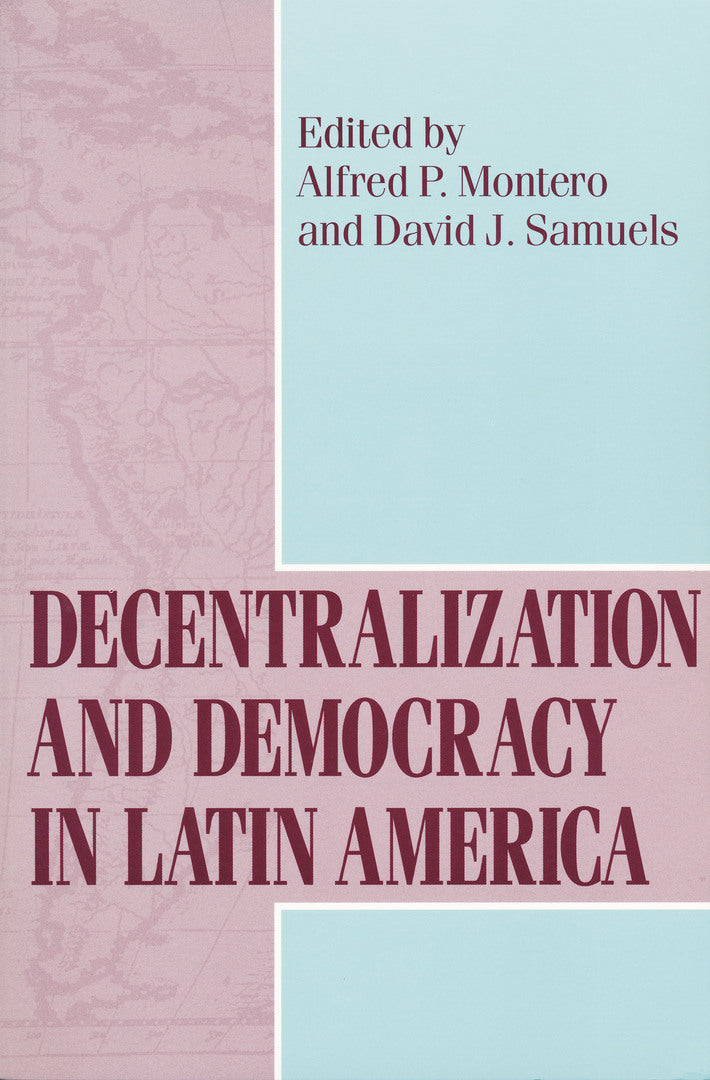
The nine essays in this collection represent the first book-length treatment of one of the major changes that have shaped Latin America since independence: decentralization of the state. Contributors argue that though the assignment of political, fiscal, and administrative duties to subnational governments has been one of the most important political developments in Latin America, it is also one of the most overlooked. This volume is divided into three sections. Part one presents an overview of the topic by the editors; part two considers the political origins of decentralization; and part three examines decentralization and economic reforms.
Decentralization and Democracy in Latin America explores the causes of decentralization in six significant case studies: Argentina, Bolivia, Brazil, Chile, Mexico, and Venezuela. Shorter analyses of Uruguay and Peru are also included. The essays in this volume find substantial common ground across regime types, historical periods, and countries, and yield several substantive conclusions. First, historical-institutional and socioeconomic legacies matter. Second, democratization and neoliberal reform are neither necessary nor sufficient to explain decentralization. Finally, institutional and electoralist approaches, supplemented with analysis of macro and distal factors, offer the most promising avenues for further research.
This book will be important for all students and scholars of Latin America and comparative politics.

"This book deals with an interesting topic, but at the same time offers the reader an excellent starting point for understanding the phenomenon in its contextual and comparative dimension without losing the particular development of each individual country. It is without doubt a well-written book." —Political Studies Review
Alfred P. Montero is associate professor of political science at Carleton College.
David J. Samuels is associate professor of political science at the University of Minnesota.
Contributors: Alfred P. Montero, David J. Samuels, Kathleen M. O’Neill, Gary Bland, Kent Eaton, Michael Penfold-Becerra, Caroline C. Beer, Erik Wibbels, Stephan Haggard, and Steven B. Webb.