


Some error occured while loading the Quick View. Please close the Quick View and try reloading the page.
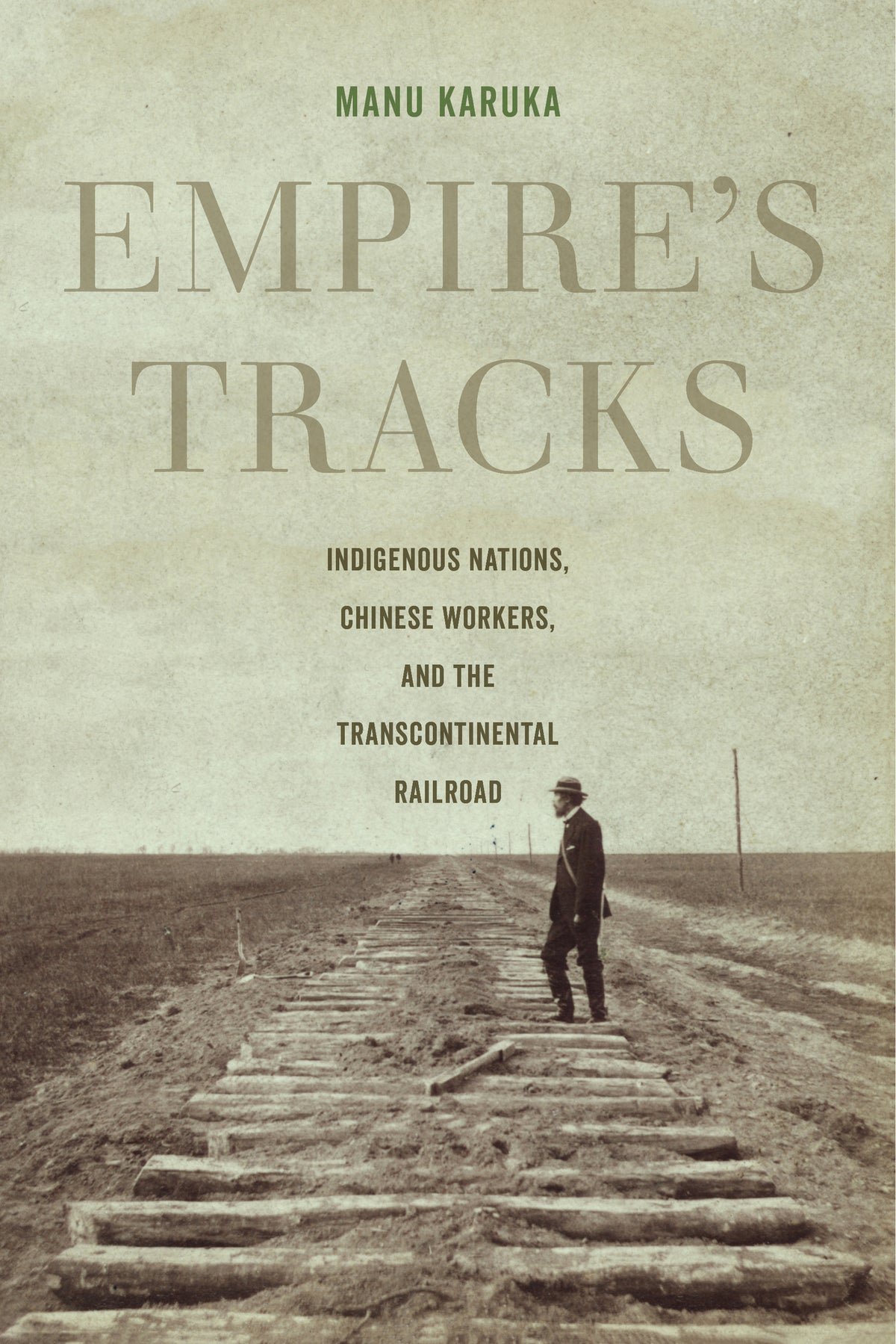
Empire’s Tracks boldly reframes the history of the transcontinental railroad from the perspectives of the Cheyenne, Lakota, and Pawnee Native American tribes, and the Chinese migrants who toiled on its path. In this meticulously researched book, Manu Karuka situates the railroad within the violent global histories of colonialism and capitalism. Through an examination of legislative, military, and business records, Karuka deftly explains the imperial foundations of U.S. political economy. Tracing the shared paths of Indigenous and Asian American histories, this multisited interdisciplinary study connects military occupation to exclusionary border policies, a linked chain spanning the heart of U.S. imperialism. This highly original and beautifully wrought book unveils how the transcontinental railroad laid the tracks of the U.S. Empire.

Price: $29.95
Pages: 320
Publisher: University of California Press
Imprint: University of California Press
Series: American Crossroads
Publication Date:
05 March 2019
Trim Size: 9.00 X 6.00 in
ISBN: 9780520296640
Format: Paperback
BISACs:
"Empire’s Tracks comes at a critical juncture, which only compounds its appeal. It is a moment where monopolies breathe new life as seemingly benevolent multinational, e-commerce corporations; when oil pipelines continue to cut through North America despite opposition from Indigenous peoples (amongst others); and when threats of mass deportations emanate from the highest political offices. . . .Karuka’s sincere meditation on the historicity of war, finance and countersovereignty is deeply welcomed as it sensitises readers to the tragically unexceptional reality of the present."
Manu Karuka is Assistant Professor of American Studies at Barnard College.
List of Illustrations
Preface
1 • The Prose of Countersovereignty
2 • Modes of Relationship
3 • Railroad Colonialism
4 • Lakota
5 • Chinese
6 • Pawnee
7 • Cheyenne
8 • Shareholder Whiteness
9 • Continental Imperialism
Epilogue: The Significance of Decolonization
in North America
Acknowledgments
Notes
Bibliography
Index
Preface
1 • The Prose of Countersovereignty
2 • Modes of Relationship
3 • Railroad Colonialism
4 • Lakota
5 • Chinese
6 • Pawnee
7 • Cheyenne
8 • Shareholder Whiteness
9 • Continental Imperialism
Epilogue: The Significance of Decolonization
in North America
Acknowledgments
Notes
Bibliography
Index