


Some error occured while loading the Quick View. Please close the Quick View and try reloading the page.
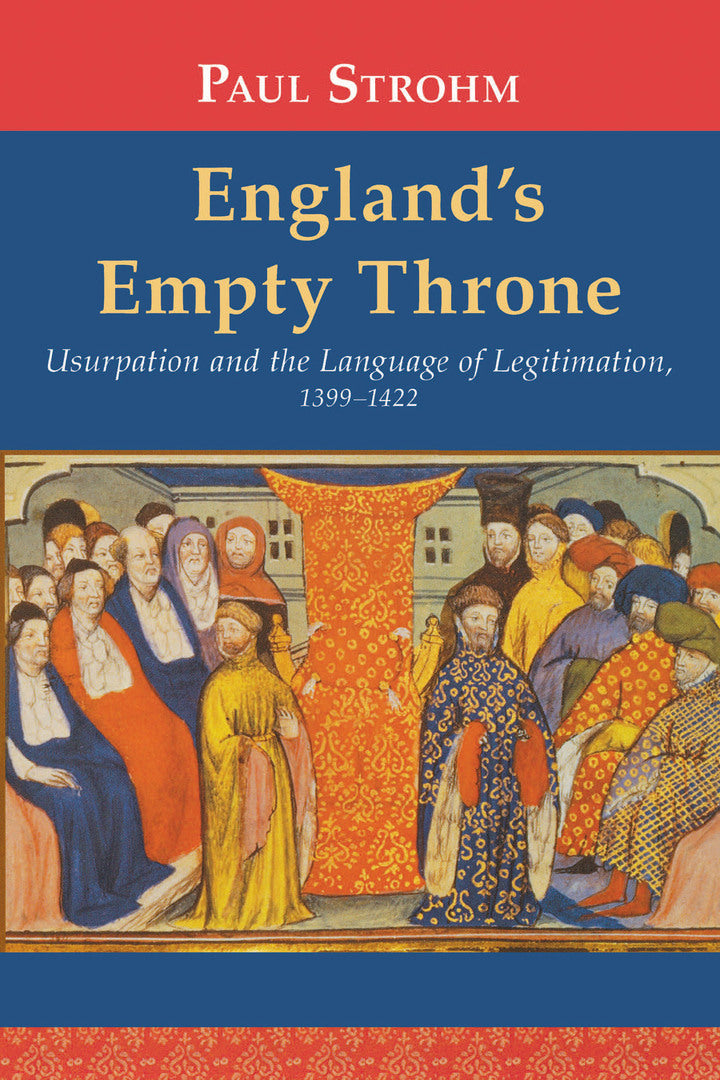
After the dethronement and subsequent murder of Richard II, the usurping Lancastrian dynasty faced an exceptional challenge. Interrupting a long period of Plantagenet rule, Henry IV and Henry V needed not only to establish physical possession of the English throne but to occupy it symbolically as well. In this boldly revisionary book, Paul Strohm provides a new account of the Lancastrian revolution and its aftermath.
Integrating techniques of literary and historical analysis, he reveals the Lancastrian monarchs as masters of outward display, persuasively "performing" their kingship through a variety of novel ceremonies in a quest for legitimacy. He also describes far-reaching Lancastrian experiments in domination, including the proscription of prophecy; the enlistment of poetry as court propaganda; the extensive use of spies and informers; and, most ambitiously, the redefinition of treason to cover not only overt deeds but words and thoughts as well.
Strohm's account of the Lancastrian quest for legitimacy and the uses of symbolic power illuminates—indeed, recasts—our understanding of a period of unprecedented political upheaval.

“Strohm in this book moves beyond the more literary concerns of his earlier works and ‘str[ides] confidently into the historical mainstream’ in a work that is ‘quite clearly a book aimed at historians’ (p. x). As such, Strohm interrogates not only ‘literary’ works from the likes of Hoccleve and Lydgate, but narrative chronicles, legal documents, and prophetic utterances.” —Bulletin of International Medieval Research
Paul Strohm is Anna S. Garbedian Professor Emeritus of the Humanities at Columbia University.