


Some error occured while loading the Quick View. Please close the Quick View and try reloading the page.
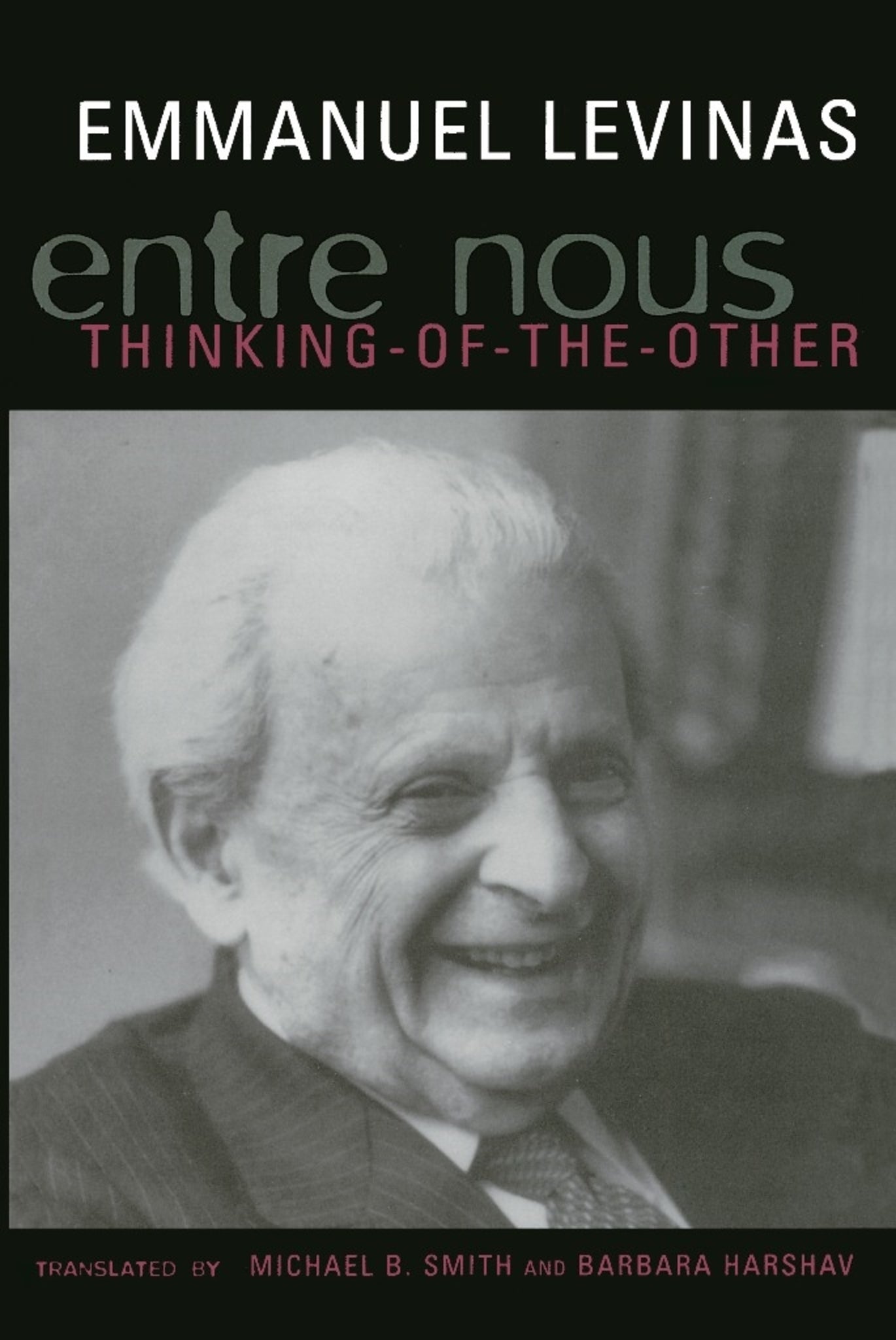
Emmanuel Levinas is one of the most important figures of twentieth-century philosophy. Exerting a profound influence upon such thinkers as Derrida, Lyotard, Blanchot, and Irigaray, Levinas's work bridges several major gaps in the evolution of continental philosophy—between modern and postmodern, phenomenology and poststructuralism, ethics and ontology. He is credited with having spurred a revitalized interest in ethics-based philosophy throughout Europe and America.
Entre Nous (Between Us) is the culmination of Levinas's philosophy. Published in France a few years before his death, it gathers his most important work and reveals the development of his thought over nearly forty years of committed inquiry. Along with several trenchant interviews published here, these essays engage with issues of suffering, love, religion, culture, justice, human rights, and legal theory. Taken together, they constitute a key to Levinas's ideas on the ethical dimensions of otherness.
Working from the phenomenological method of Edmund Husserl and Martin Heidegger, Levinas pushed beyond the limits of their framework to argue that it is ethics, not ontology, that orients philosophy, and that responsibility precedes reasoning. Ethics for Levinas means responsibility in relation to difference. Throughout his work, Levinas returns to the metaphor of the face of the other to discuss how and where responsibility enters our lives and makes philosophy necessary. For Levinas, ethics begins with our face to face interaction with another person—seeing that person not as a reflection of one's self, nor as a threat, but as different and greater than self. Levinas moves the reader to recognize the implications of this interaction: our abiding responsibility for the other, and our concern with the other's suffering and death.
Situated at the crossroads of several philosophical schools and approaches, Levinas's work illuminates a host of critical issues and has found resonances among students and scholars of literature, law, religion, and politics. Entre Nous is at once the apotheosis of his work and an accessible introduction to it. In the end, Levinas's urgent meditations upon the face of the other suggest a new foundation upon which to grasp the nature of good and evil in the tangled skein of our lives.

Is Ontology Fundamental?
The I and the Totality
Levy-Bruhl and Contemporary Philosophy
A Man-God?
A New Rationality: On Gabriel Marcel
Hermeneutics and the Beyond
Philosophy and Awakening
Useless Suffering
Philosophy, Justice, and Love
Nonintentional Consciousness
From the One to the Other: Transcendence and Time
The Rights of Man and Good Will
Diachrony and Representation
The Philosophical Determination of the Idea of Culture
Uniqueness
Totality and Infinity
Dialogue on Thinking-of-the-Other
"Dying for..."
The Idea of the Infinite in Us
The Other, Utopia, and Justice