


Some error occured while loading the Quick View. Please close the Quick View and try reloading the page.
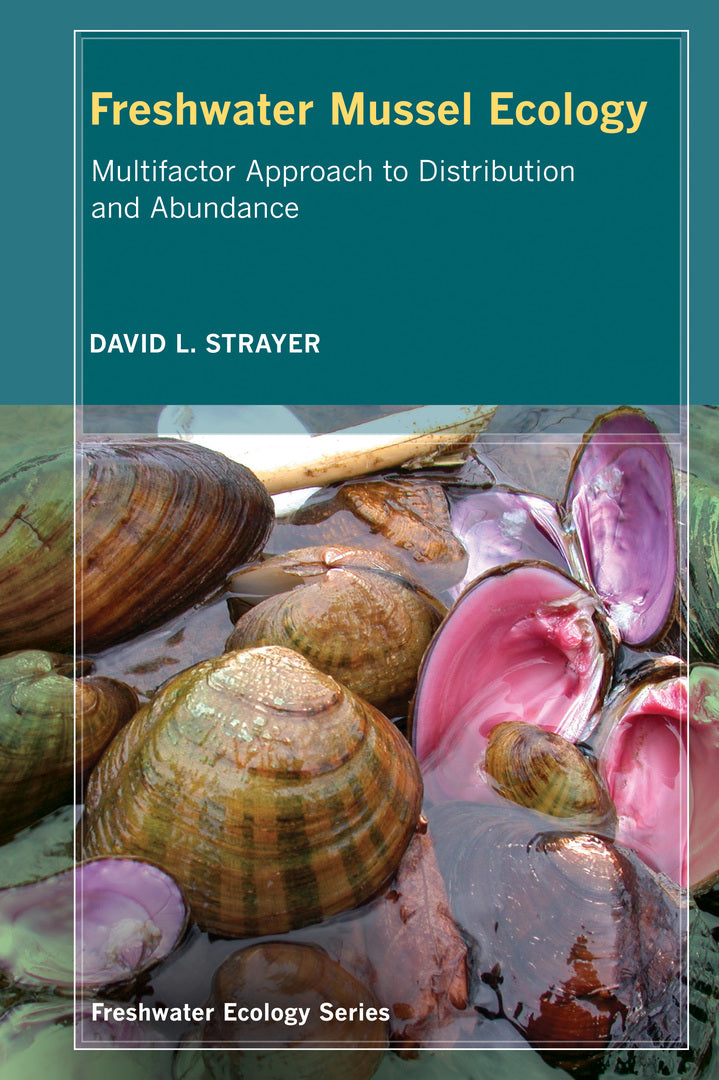
Pearly mussels (Unionoidea) live in lakes, rivers, and streams around the world. These bivalves play important roles in freshwater ecosystems and were once both culturally and economically valuable as sources of food, pearls, and mother-of-pearl. Today, however, hundreds of species of these mussels are extinct or endangered. David L. Strayer provides a critical synthesis of the factors that control the distribution and abundance of pearly mussels. Using empirical analyses and models, he assesses the effects of dispersal, habitat quality, availability of fish hosts, adequate food, predators, and parasites. He also addresses conservation issues that apply to other inhabitants of fresh waters around the globe and other pressing issues in contemporary ecology.

Price: $85.00
Pages: 216
Publisher: University of California Press
Imprint: University of California Press
Series: Freshwater Ecology Series
Publication Date:
10 June 2008
Trim Size: 9.00 X 6.00 in
ISBN: 9780520255265
Format: Hardcover
BISACs:
“Highly recommended.”
— S. R. Fegley
David L. Strayer is Senior Scientist at the Institute of Ecosystem Studies and author of Pearly Mussels of New York State, among other books.
Preface
PART ONE: The Laboratory
1. The Model as Monster
2. The Case of Pearly Mussels
PART TWO: The Monster’s Parts
3. Dispersal
4. Habitat
5. Hosts
6. Food
7. Enemies
8. Implications for Conservation
PART THREE: Making the Monster Walk
9. Three Models for Mussel Ecology
10. Is a Comprehensive Model Possible?
Literature Cited
Index
PART ONE: The Laboratory
1. The Model as Monster
2. The Case of Pearly Mussels
PART TWO: The Monster’s Parts
3. Dispersal
4. Habitat
5. Hosts
6. Food
7. Enemies
8. Implications for Conservation
PART THREE: Making the Monster Walk
9. Three Models for Mussel Ecology
10. Is a Comprehensive Model Possible?
Literature Cited
Index