


Some error occured while loading the Quick View. Please close the Quick View and try reloading the page.
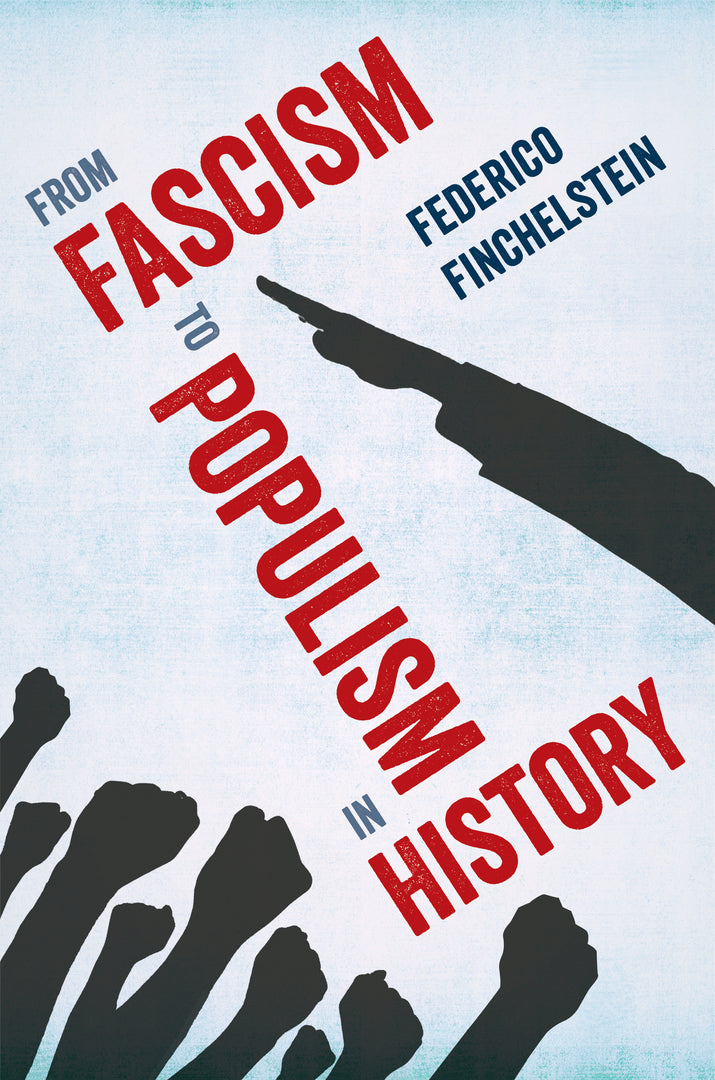
What is fascism and what is populism? What are their connections in history and theory, and how should we address their significant differences? What does it mean when pundits call Donald Trump a fascist, or label as populist politicians who span left and right such as Hugo Chávez, Juan Perón, Rodrigo Duterte, and Marine Le Pen? Federico Finchelstein, one of the leading scholars of fascist and populist ideologies, synthesizes their history in order to answer these questions and offer a thoughtful perspective on how we might apply the concepts today. While they belong to the same history and are often conflated, fascism and populism actually represent distinct political trajectories. Drawing on an expansive record of transnational fascism and postwar populist movements, Finchelstein gives us insightful new ways to think about the state of democracy and political culture on a global scale. This new edition includes an updated preface that brings the book up to date, midway through the Trump presidency and the election of Jair Bolsonaro in Brazil.

Price: $24.95
Pages: 376
Publisher: University of California Press
Imprint: University of California Press
Publication Date:
20 August 2019
Trim Size: 8.25 X 5.50 in
ISBN: 9780520309357
Format: Paperback
BISACs:
“The historiography rests on three basic assumptions, all of which are usefully questioned in Federico Finchelstein’s From Fascism to Populism in History. One is that fascism not only originated in Europe but was primarily a European phenomenon. Another is that it was historically specific to those interwar years. The third: that fascism involved a repudiation of democracy, a kind of pathology of political development. . . . An expert on the modern history of Argentina, Finchelstein reminds us that the second world war marked a turning point. Before it, fascists were filled with confidence: they wrote off democracy as an outmoded relic of the 19th century, and claimed fascism as the future. . . . ”
Federico Finchelstein is Professor of History at the New School for Social Research and Eugene Lang College in New York City. He is the author of several books, including Transatlantic Fascism and The Ideological Origins of the Dirty War. He contributes to major American, European, and Latin American media, including the New York Times, Washington Post, The Guardian, Mediapart, Politico, Clarin, Nexos, and Folha de S.Paulo.
Preface to the Paperback Edition
Prologue
Introduction: Thinking through Fascism and
Populism in Terms of the Past
1. What Is Fascism in History?
2. What Is Populism in History?
3. Populism between Democracy
and Dictatorship
Epilogue: Populism Recharged
Acknowledgments
Notes
Index
Prologue
Introduction: Thinking through Fascism and
Populism in Terms of the Past
1. What Is Fascism in History?
2. What Is Populism in History?
3. Populism between Democracy
and Dictatorship
Epilogue: Populism Recharged
Acknowledgments
Notes
Index