


Some error occured while loading the Quick View. Please close the Quick View and try reloading the page.
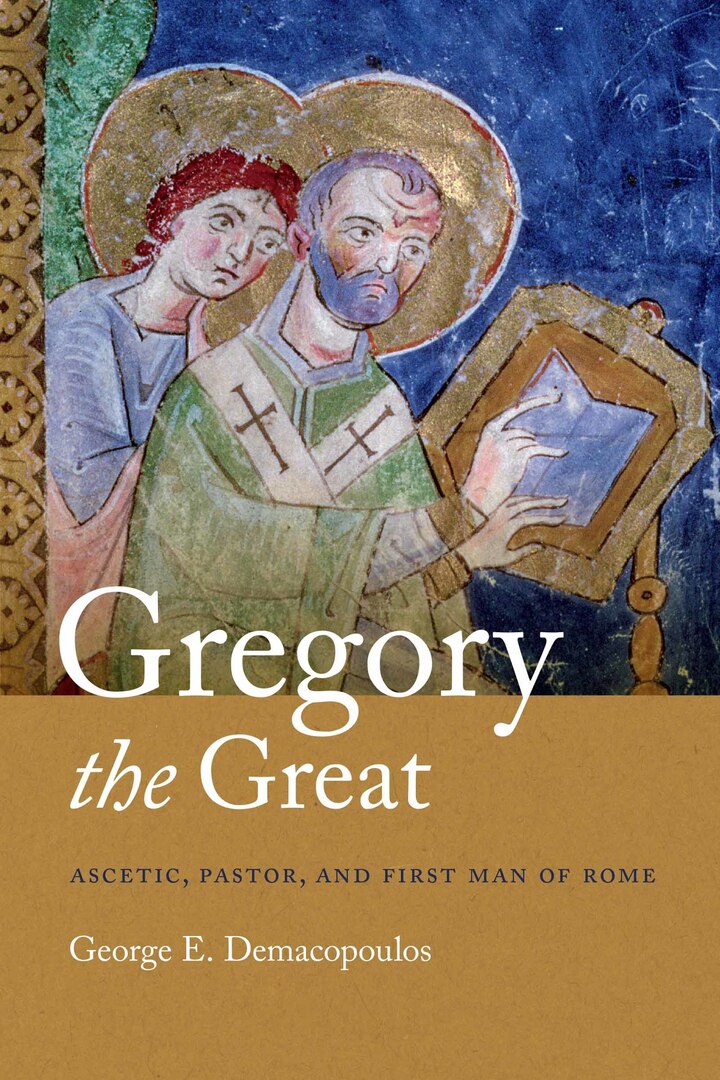
Gregory the Great (bishop of Rome from 590 to 604) is one of the most significant figures in the history of Christianity. His theological works framed medieval Christian attitudes toward mysticism, exegesis, and the role of the saints in the life of the church. The scale of Gregory's administrative activity in both the ecclesial and civic affairs of Rome also helped to make possible the formation of the medieval papacy. Gregory disciplined malcontent clerics, negotiated with barbarian rulers, and oversaw the administration of massive estates that employed thousands of workers. Scholars have often been perplexed by the two sides of Gregory—the monkish theologian and the calculating administrator. George E. Demacopoulos's study is the first to advance the argument that there is a clear connection between the pontiff's thought and his actions. By exploring unique aspects of Gregory's ascetic theology, wherein the summit of Christian perfection is viewed in terms of service to others, Demacopoulos argues that the very aspects of Gregory's theology that made him distinctive were precisely the factors that structured his responses to the practical crises of his day. With a comprehensive understanding of Christian history that resists the customary bifurcation between Christian East and Christian West, Demacopoulos situates Gregory within the broader movements of Christianity and the Roman world that characterize the shift from late antiquity to the early Middle Ages. This fresh reading of Gregory's extensive theological and practical works underscores the novelty and nuance of Gregory as thinker and bishop.

"In his previous monographs George Demacopoulos has distinguished himself as a careful and informed interpreter of ancient pastoral practice and the development of papal authority. These two concerns merge in his new study, Gregory the Great: Ascetic, Pastor, and First Man of Rome, in which Demacopoulos argues for an integrative approach to Gregory that links his ascetical and pastoral theologies to his public activities. This is an original and important book, based on the full range of Gregory’s writings and exhaustive examination of the secondary sources. It should be of interest to a wide audience of classicists, late-antique and medieval historians, and theologians." —David G. Hunter, Cottrill-Rolfes Chair of Catholic Studies, University of Kentucky
George E. Demacopoulos is the Fr. John Meyendorff and Patterson Family Chair of Orthodox Christian Studies at Fordham University. He is the author and editor of a number of books, including Five Models of Spiritual Direction in the Early Church (University of Notre Dame Press, 2007).
Acknowledgments
Introduction
Part 1. Gregory as Ascetic Theologian
1. A Theology of Asceticism
2. Fall, Redemption, and the Ascetic’s Filter
3. Ecclesiology and the Rhetoric of Episcopal Equality
4. Some Mystical Attributes of Gregory’s Ascetic Theology
Part 2. Gregory as Pastoral Theologian
5. The Importance of Spiritual Leadership
6. The Recruitment of Leaders
7. The Tasks of the Spiritual Leader
8. The Impediments to Effective Leadership
Part 3. Gregory as “First Man” of Rome
9. The Rome of Gregory’s Imagination
10. Ever the Praefect: Gregory’s “Secular” Responsibilities
11. Gregory’s Ascetic Program and Its Opponents
12. Prefect of the Roman Church
13. Spreading Christianity beyond the Roman World
14. The Steward of Peter’s Tomb
Conclusion: The Apostolic Steward
Abbreviations
Notes
Bibliography
Index