


Some error occured while loading the Quick View. Please close the Quick View and try reloading the page.
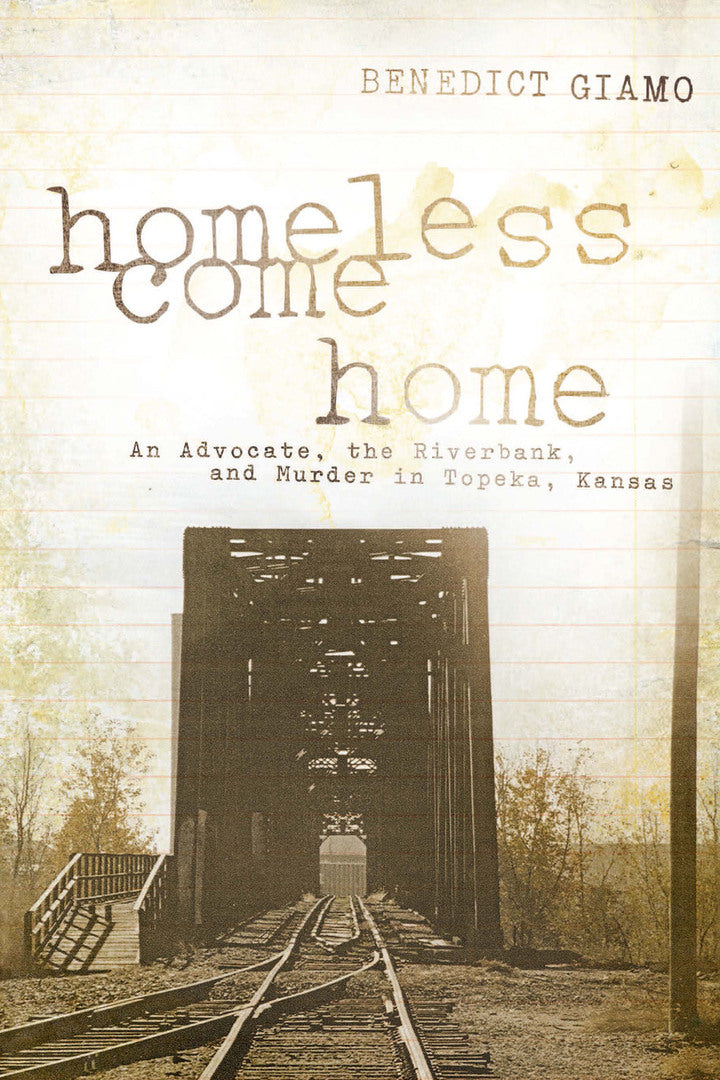
Benedict Giamo has published widely on the condition of historical and contemporary homelessness in America. In Homeless Come Home: An Advocate, the Riverbank, and Murder in Topeka, Kansas, Giamo offers a deeply sympathetic yet critical look at the life of homeless advocate David Owen, who was tortured and killed in 2006 by some of those he intended to help. Part chronicle, part social analysis, part investigative journalism, and part true-crime book, Homeless Come Home examines why and how David Owen contributed to his own gruesome death.
David Owen defined his single-minded mission of tough Christian love, which he called “Homeless Come Home,” in terms of his belief that all homeless persons could and should be reunited with their family. He demanded that the homeless reenter society via telephone cards, cell phones, and their families front doors. Owen, who himself was disabled and had a history of legal and mental problems, would not take no for an answer. Many with whom he came in contact—pastors, social workers, legislators, police—feared that his fanatical dedication and aggressive approach ultimately would be his downfall. After police discovered his corpse on the bank of the Kansas River, four homeless persons who had been living in a nearby tent camp were charged with his kidnapping and felony murder.
Giamo explores Owen’s actions and motives, the homeless community in Topeka, the social services available to them, and the separate trials of the co-defendants charged in his death. In doing so, he conveys the contention between social order and disorder and raises broader concerns regarding inequality, advocacy, and justice. The story is both fascinating and cautionary, a modern tragedy in which no one person can be identified as its cause.

"This thorough, rigorously sympathetic account of a terrible crime and its many resonances does narrative and analytical justice to the tortured complexity of David Owen, an unreasonable, inspired, polarizing man who wanted to bring the homeless home—whether they wanted to come or not. Giamo's evenhanded investigation into 'a clash between a type of homelessness lived in extremis and a brand of advocacy that went to the end of the line' follows the tangled stories of its difficult characters to their common root, the profound tension between individual and community at the heart of American life." —Carlo Rotella, Boston College
Benedict Giamo is associate professor of American Studies at the University of Notre Dame. He is the author and coauthor of a number of books, including On the Bowery: Confronting Homelessness in American Society and Beyond Homelessness: Frames of Reference.