


Some error occured while loading the Quick View. Please close the Quick View and try reloading the page.
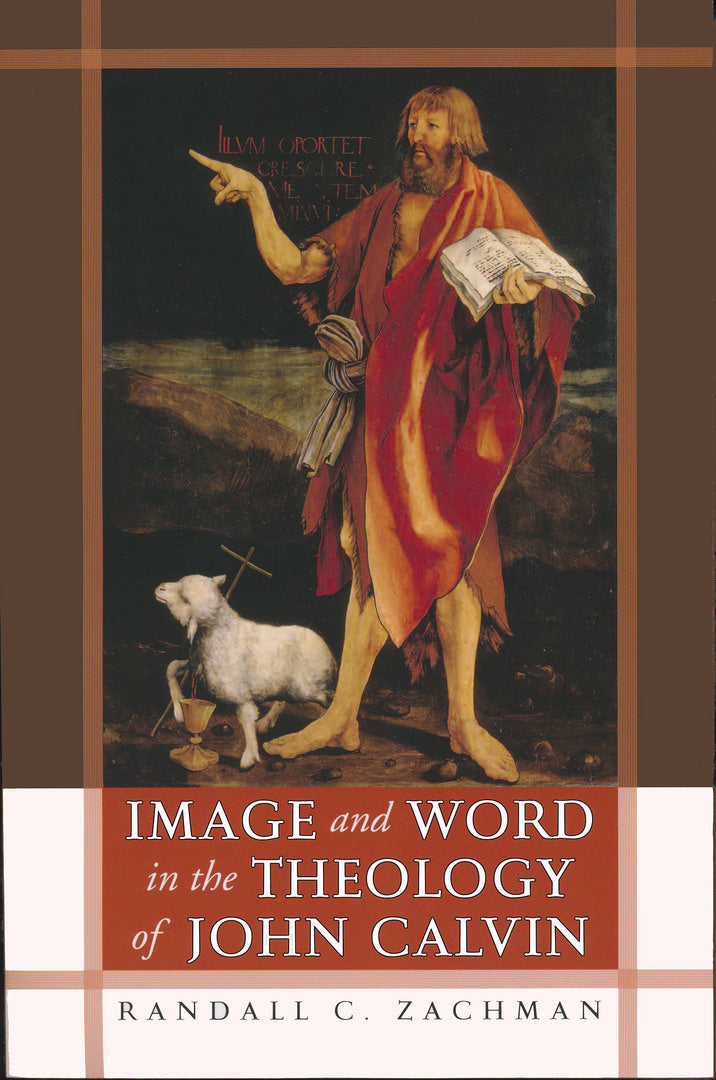
In his groundbreaking new study of the Swiss reformer, Randall C. Zachman reveals and analyzes John Calvin’s understanding of image and word both comprehensively and chronologically, with attention to the way that each theme develops in Calvin’s theology.
Most scholars allege that John Calvin (1509–1564) insisted on the essential invisibility of God in order to deny that God could be represented in any kind of visible image. This claim formed one of his foundational arguments against the display of man-made images in worship. Given the transcendence of God, Calvin rejected the human attempt to create signs and symbols of God’s presence on earth, especially the statues, images, and paintings present in Roman Catholic churches.
Zachman argues, in contrast, that although Calvin rejects the use of what he calls “dead images” in worship, he does so to focus our attention on the “living images of God” in which the invisible God becomes somewhat visible. Calvin insists that these images cannot rightly be contemplated without the Word of God to clarify their meaning; we are only led to the true knowledge of God when we hold together the living images of God that we see with the Word of God that we hear. This combination of seeing and hearing pervades Calvin’s theology, from his understanding of the self-revelation of God the Creator to his development of the self-manifestation of God the Redeemer in Jesus Christ. According to Zachman, Calvin maintains the same linking of seeing and hearing in our relationships with other human beings: we must always hold together what we see in others’ gestures and actions with what we hear in their words, so that the hidden thoughts of their hearts might be manifested to us.
Zachman’s nuanced argument that Calvin holds image and word, manifestation and proclamation, in an inseparable relationship is relevant to all the major themes of Calvin’s theology. It constitutes a highly significant and surprising contribution to our knowledge of the Reformation and an invitation to further study of theological aesthetics.

“Lutheran readers may find this book to be a helpful introduction to various themes in Calvin’s thought with a few unexpected turns along the way. . . . Zachman’s work will undoubtedly be important for evangelicals and Calvinists who seek to remain faithful to Calvin’s theology and yet also move in ecumenical and liturgical directions.” —Concordia Theological Quarterly
Randall C. Zachman taught Reformation and post-Reformation theology at the University of Notre Dame from 1991-2017. Since his retirement, he has moved to Lancaster, PA with his wife Carrie Call, and is now Adjunct Instructor of Church History at Lancaster Theological Seminary. He is the author of The Assurance of Faith and John Calvin as Teacher, Pastor, and Theologian, and co-editor of Conciliation and Confession (University of Notre Dame Press).