


Some error occured while loading the Quick View. Please close the Quick View and try reloading the page.
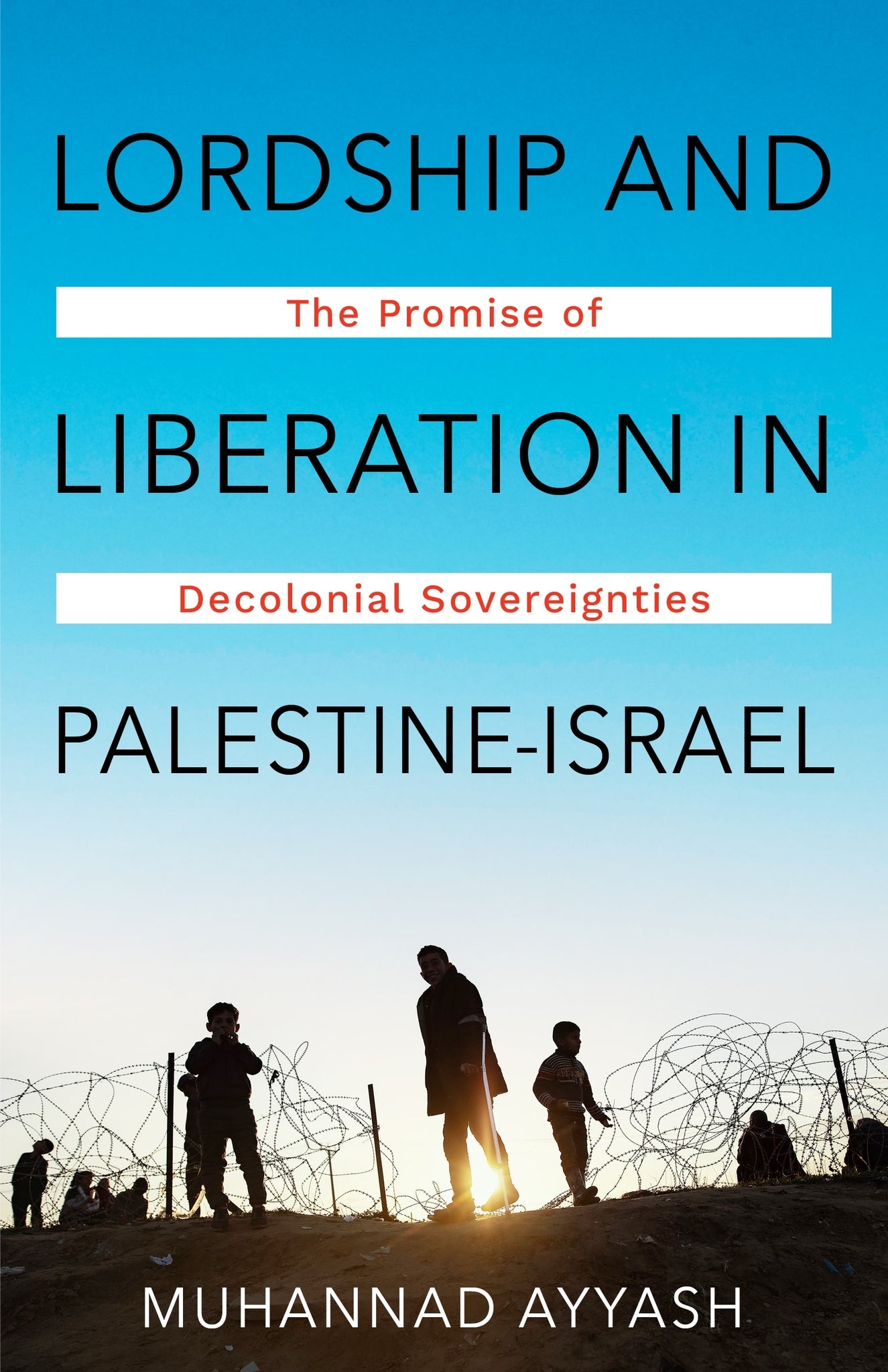
This interdisciplinary book provides timely fresh perspective on Palestine-Israel by rethinking the nature of settler-colonial sovereignty and the relationship between land and people. Muhannad Ayyash argues that this relationship comes in two distinct forms: a settler-colonial type, practiced by the Israeli state, that consists of “lordship” over land and people, and a decolonial type, seen in Palestinian popular organizing, that he calls “land as life,” a reciprocal bond. The former is characterized by private ownership, possession, and violent expulsion of others; the latter by communal ownership, belonging to the land, and opposition to the violence of expulsion.
Ranging widely across theory and history, Ayyash contends that the opposition between these two types is at the core of the Palestinian-Israeli struggle. The choice before us today, he concludes, is between the continuation of the Israeli settler-colonial project in particular and the project of colonial modernity in general, or the commencement of a decolonial age in Palestine-Israel and beyond. Offering both novel theorizations and politically engaged analysis, Lordship and Liberation in Palestine-Israel illuminates how decolonial sovereignties represent an alternative to settler-colonial violence.

Acknowledgments
Prelude
Introduction
1. Settler Colonial Sovereignty
2. Lordship as Violence in the Settler Colony
3. The Indigenous-Settler Distinction and the Interlocking of Enemy-Siblings
4. The Four-Dimensional Operation of Violence: Fragmentation, Isolation, Dehumanization, and Lordship
5. A Literary Critique: Toward Decolonial Sovereignties
6. Decolonial Sovereignties
Conclusion
Postscript
Notes
Bibliography
Index