


Some error occured while loading the Quick View. Please close the Quick View and try reloading the page.
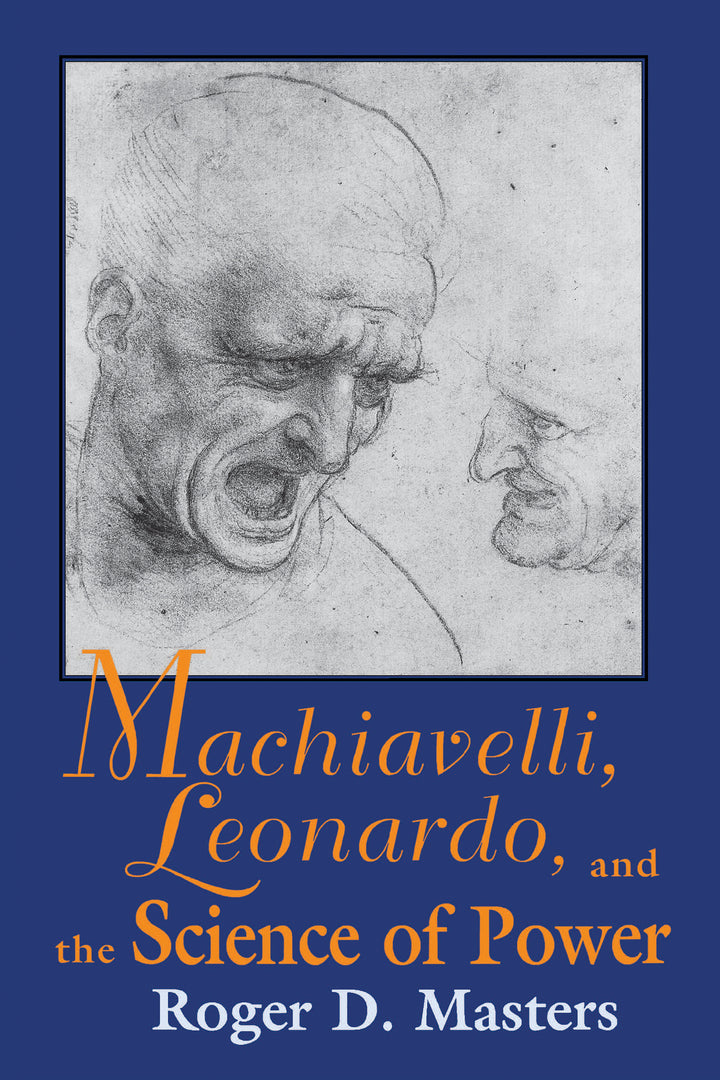
In recent years, Niccolò Machiavelli's works have been viewed primarily with historical interest as analysis of the tactics used by immoral political officials. Roger D. Masters, a leading expert in the relationship between modern natural sciences and politics, argues boldly in this book that Machiavelli should be reconsidered as a major philosopher whose thought makes the wisdom of antiquity accessible to the modern (and post-modern) condition, and whose understanding of human nature is superior to that of Hobbes, Locke, Rousseau, Marx, or Mill. Central to Masters's claim is his discovery, based on previously untranslated documents, that Machiavelli knew and worked with Leonardo da Vinci between 1502-1507. An interdisciplinary tour de force, Machiavelli, Leonardo, and the Science of Power will challenge, perplex, and ultimately delight readers with its evocative story of the relationship between Machiavelli and da Vinci, their crucial roles in the emergence of modernity, and the vast implications this holds for contemporary life and society.

"Masters' book illuminates our understanding of Leonardo and Machiavelli as individuals and as connected figures who established modern ways of thinking about science and society. For the first time it clearly defines their distinct legacies and their combined impact on the history of western culture. It points to how their combined impact was the basis for Hobbes and other moderns to grow their theories, which unfortunately oversimplified the originators. In proposing a provocative, enlightening, and challenging theory of modernity based on science and power, the book establishes a comprehensive critical approach to two of the most creative and influential thinkers and artists in human history." —Sixteenth Century Journal
Roger D. Masters is Nelson A. Rockefeller Professorof Government, Emeritus, at Dartmouth College. He published 16 books and is the author of over 125 scholarly articles. His most recent books include The Neurotransmitter Revolution: Serotonin, Social Behavior and Law and Beyond Relativism: Science and Human Values.