


Some error occured while loading the Quick View. Please close the Quick View and try reloading the page.
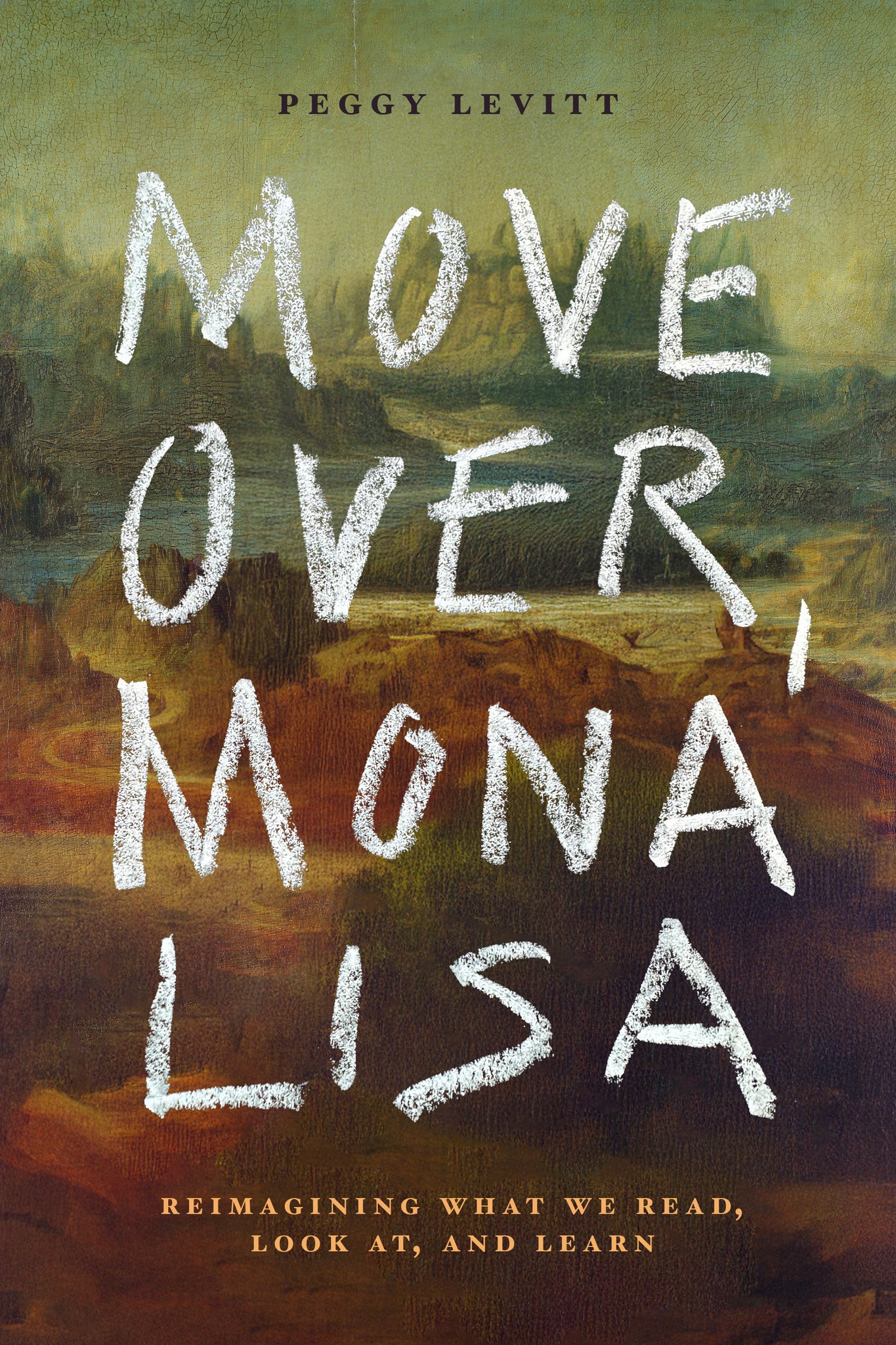
Calls to include a wider range of art, literature, and ideas in the world's classrooms, libraries, and museums are loud and clear. If so many agree that reforms are needed, why is change so slow?
The answer is the inequality pipeline—the multiple obstacles that ideas and art need to overcome to circulate globally. Most strategies to disrupt the pipeline only increase inclusivity, without fundamentally challenging institutional hierarchies. In Move Over, Mona Lisa, Peggy Levitt reveals, through her conversations with creatives, thinkers, and professionals working in the cultural and academic worlds in Argentina, Lebanon, and South Korea, that another approach to combatting global cultural and intellectual inequality is underway.
Like-minded actors outside of traditional cultural centers are creating new nodes of power, and new pathways which connect them, that allow art, books, and ideas to, "travel from Buenos Aires to Mexico City without having to pass through Madrid." They are circumventing traditional powerbrokers and boldly reconfiguring the cultural and intellectual order. Levitt's journey begins where art and literature are first created; then takes us to where they get discovered, circulated, exhibited, and acquired; and concludes where they are researched, published about, and taught. Along the way, we meet visionary artists, out-of-the box writers, committed activists, and teachers striving to define what it means to train truly global citizens. We also discover how the culture and history of the cities they work from influences what they do.
By linking these ideas together, Levitt persuasively demonstrates that what happens in the museum or the library is integrally connected to what happens in institutions of higher learning. With deeply researched, novel insights, ambition, and hope, Move Over, Mona Lisa offers nothing short of a new theory of global cultural and intellectual change.

1. The Decentering Ethos
2. The Problem: The Power Has Shifted but Not Enough
3. The Explanation: The Inequality Pipeline of Art, Literature, and Ideas
4. The Context: Cultural Armature and Cultural Policies
5. The Infrastructures That Produce and Disseminate Culture
Talk Back: You Can't Write Global Art Histories without Local Art Histories
—Nadia von Maltzahn
6. The Infrastructures That Discover, Market, and Critique Culture
Talk Back: Book Fairs in Buenos Aires as Alternative Publishing Infrastructures
—Ezequiel Saferstein
7. The Connoisseurs: Becoming a Global Culture Consumer
Talk Back: A Digital Decentering: Online Platforms, NFTs, Generative AI, and Global Connectivity
—Kangsan Lee
8. The Researchers and Reviewers: Organizing, Classifying, and Evaluating Scholarship
9. The Professors: A Look at Global Liberal Arts
10. The Change-Makers: Putting Decentering into Practice
Acknowledgments
Cast of Individual and Institutional Characters
Notes
Bibliography
Index