


Some error occured while loading the Quick View. Please close the Quick View and try reloading the page.
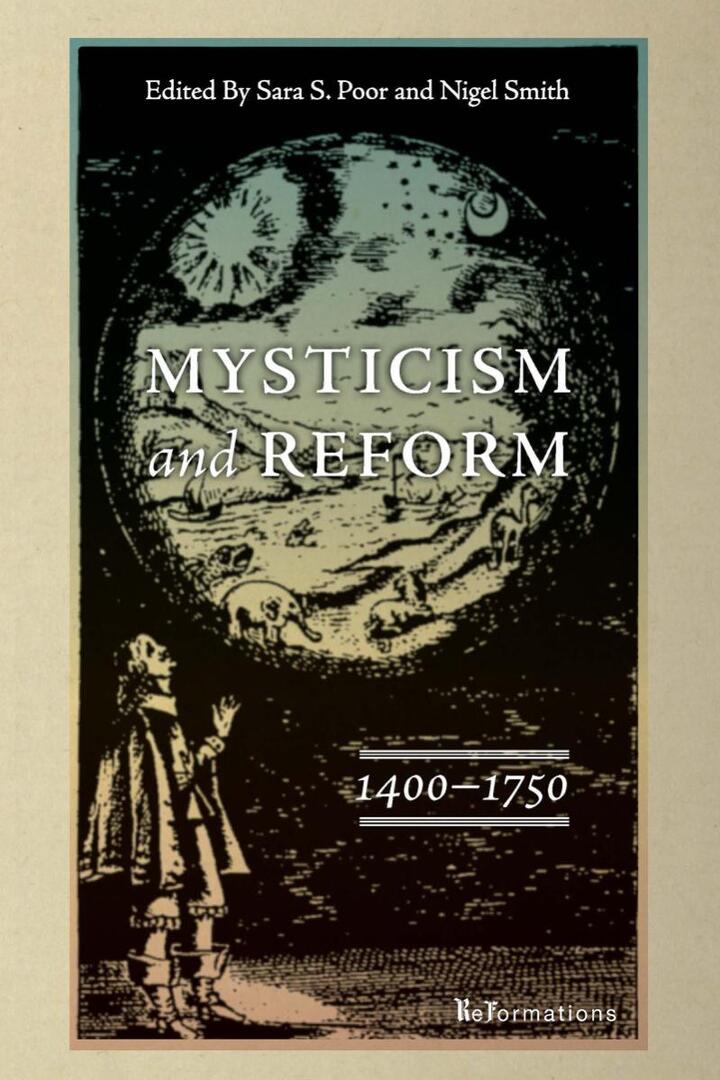
The apparent disappearance of mysticism in the Protestant world after the Reformation used to be taken as an example of the arrival of modernity. However, as recent studies in history and literary history reveal, the “Reformation” was not experienced in such a drastically transformative manner, not least because the later Middle Ages itself was marked by a series of reform movements within the Catholic Church in which mysticism played a central role.
In Mysticism and Reform, 1400-1750, contributors show that it is more accurate to characterize the history of early modern mysticism as one in which relationships of continuity within transformations occurred. Rather than focus on the departures of the sixteenth-century Reformation from medieval traditions, the essays in this volume explore one of the most remarkable yet still under-studied chapters in its history: the survival and transformation of mysticism between the late Middle Ages and the early modern period.
With a focus on central and northern Europe, the essays engage such subjects as the relationship of Luther to mystical writing, the visual representation of mystical experience in fifteenth- and sixteenth-century art, mystical sermons by religious women of the Low Countries, Valentin Weigel’s recasting of Eckhartian gelassenheit for a Lutheran audience, and the mysticism of English figures such as Gertrude More, Jane Lead, Elizabeth Hooten, and John Austin, the German Catharina Regina von Greiffenberg, and the German American Marie Christine Sauer.

“The sheer ambition of bringing together the unwieldy subjects of mysticism and reform into one volume may seem misguided . . . [yet] this is precisely why the publication of this volume is a most welcome surprise. [The] arrival of such a multifaceted and coherent collection of well-researched essays . . . is indeed a god-send.” —Sixteenth Century Journal
Nigel Smith is the William and Annie S. Paton Foundation Professor of Ancient and Modern Literature at Princeton University.
List of Illustrations
Acknowledgments
Introduction by Sara S. Poor and Nigel Smith
- Ways of Knowing in the Pre- and Post-Reformation Worlds by Euan K. Cameron
- Gelassenheit and Confessionalization: Valentin Weigel Reads Meister Eckhart by Alana King
- The Arnhem Mystical Sermons and the Sixteenth-Century Mystical Renaissance in Arnhem and Cologne by Kees Schepers
- “From the very hour that I desire him”: Refiguring Spiritual Communion in Writings by Maria van Hout (d. 1547) and the Sisters of Saint Agnes in Arnhem by Kirsten M. Christensen
- Saintly Idiocy and Contemplative Empowerment: The Example of Dame Gertrude More by Arthur F. Marotti
- Quaker Mysticism as the Return of the Medieval Repressed: English Women Prophets before and after the Reformation by Genelle C. Gertz
- “Between the Rational and the Mystical”: The Inner Life and the Early English Enlightenment by Sarah Apetrei
- Seraphic Discourse, Mystical Bodies: John Austin’s Original Psalms by Alison Shell
- Between the Eucharist and Eroticism: Embodiment in the the Poetry of Catherina Regina von Greiffenberg (and an Edition by Johann Reinhard Hedinger from 1702) by Franz M. Eybl
- Sister Marcella, Marie Christine Sauer (d. 1752), and the Chronicle of the Sisters at Ephrata by Bethany Wiggin
- A Battle for Hearts and Minds: The Heart in Reformation Polemic by Jeffrey F. Hamburger and Hildegard Elisabeth Keller
- The Rhetoric of Mysticism: From Contemplative Practice to Aesthetic Experiment by Niklaus Largier
List of Contributors
Index