


Some error occured while loading the Quick View. Please close the Quick View and try reloading the page.
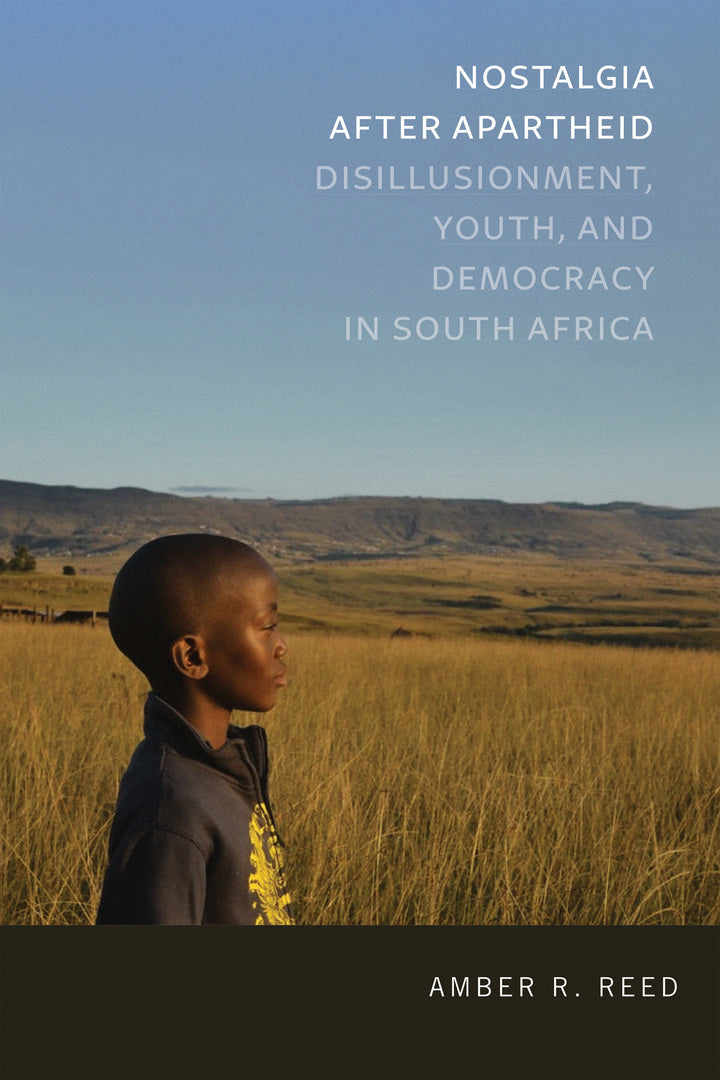
Nostalgia after Apartheid offers a unique approach to understanding how attempted post-apartheid reforms have failed rural Black South Africans, and how this failure has led to a nostalgia for the very conditions that once oppressed them.
Nostalgia after Apartheid examines a surprising phenomenon encountered in the post-apartheid nation: despite the Department of Education mandating curricula meant to teach values of civic responsibility and liberal democracy, those who are actually responsible for teaching this material (and the students taking it) often resist what they see as the imposition of “white” values. These teachers and students do not see South African democracy as a type of freedom, but rather as destructive of their own “African culture”—whereas apartheid, at least ostensibly, allowed for cultural expression in the former rural homelands. In the Eastern Cape, Amber R. Reed observes, resistance to democracy occurs alongside nostalgia for apartheid among the very citizens who were most disenfranchised by the late racist, authoritarian regime.
Examining a rural town in the former Transkei homeland and the urban offices of the Sonke Gender Justice Network in Cape Town, Reed argues that nostalgic memories of a time when African culture was not under attack, combined with the socioeconomic failures of the post-apartheid state, set the stage for the current political ambivalence in South Africa. Beyond simply being a case study, however, Nostalgia after Apartheid shows how, in a global context in which nationalism and authoritarianism continue to rise, the threat posed to democracy in South Africa has far wider implications for thinking about enactments of democracy.

"Amber Reed’s Nostalgia After Apartheid examines how the failings of democracy in South Africa are articulated through critiques of cultural liberalism and manifested in debates over culture and tradition. In this nuanced, rigorously researched ethnography, Reed develops a complex set of interlocking arguments that are focused on South Africa but relevant elsewhere." —Anthropology and Education Quarterly
Amber R. Reed is assistant professor of Global and Diaspora Studies at Spelman College.
List of Illustrations
Preface
Acknowledgments
Glossary of isiXhosa Words
Map of South Africa
Introduction
1. Being Xhosa, Being South African
2. The NGO as Moral Compass?
3. “Thinking Outside the Box”: Sonke in Kamva
4. Life Orientation as Democratic Project
5. Teaching Nostalgia
6. Freedom from Democracy?
Appendix
Notes
Bibliography
Index