


Some error occured while loading the Quick View. Please close the Quick View and try reloading the page.
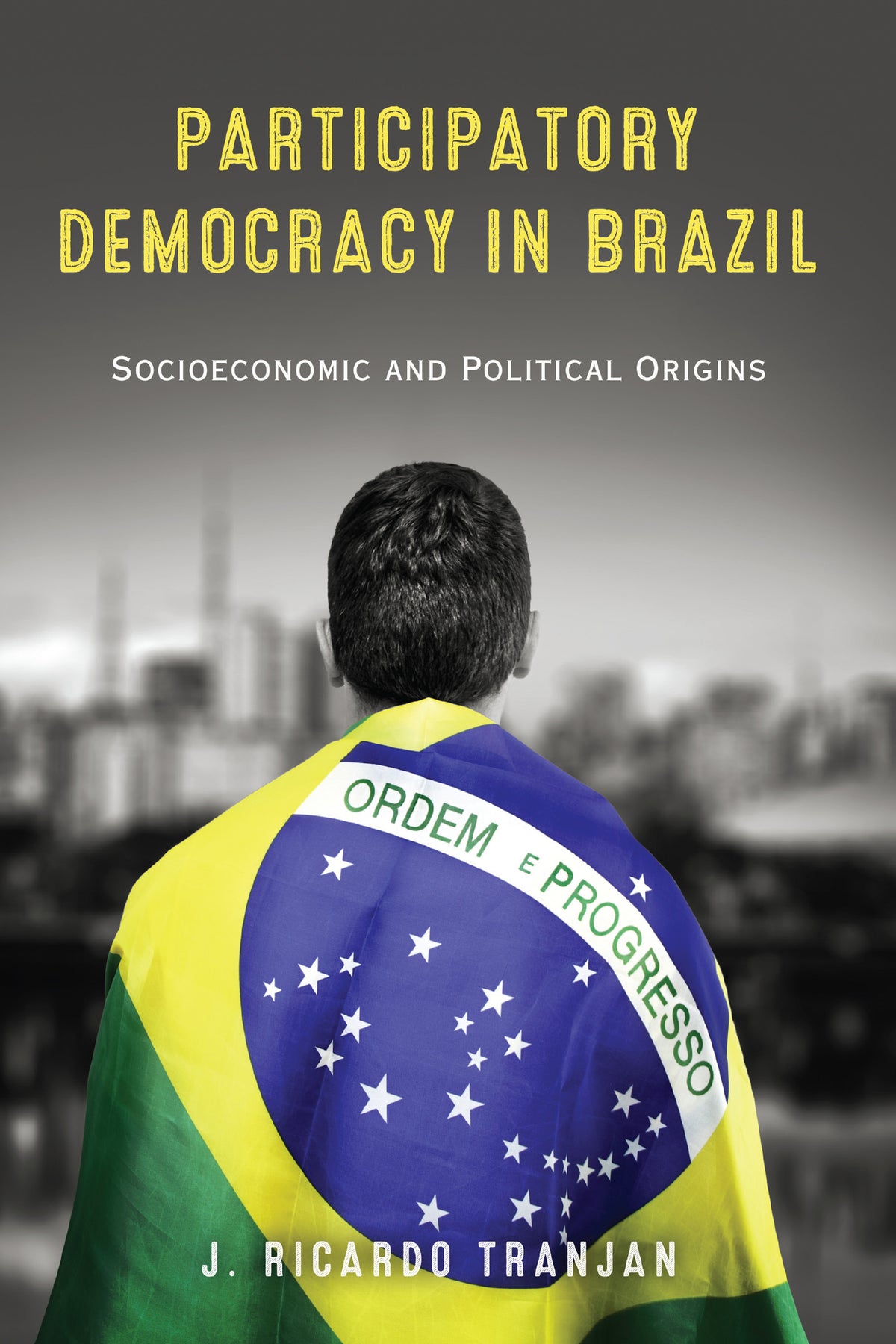
The largely successful trajectory of participatory democracy in post-1988 Brazil is well documented, but much less is known about its origins in the 1970s and early 1980s. In Participatory Democracy in Brazil: Socioeconomic and Political Origins, J. Ricardo Tranjan recounts the creation of participatory democracy in Brazil. He positions the well-known Porto Alegre participatory budgeting at the end of three interrelated and partially overlapping processes: a series of incremental steps toward broader political participation taking place throughout the twentieth century; short-lived and only partially successful attempts to promote citizen participation in municipal administration in the 1970s; and setbacks restricting direct citizen participation in the 1980s. What emerges is a clearly delineated history of how socioeconomic contexts shaped Brazil’s first participatory administrations.
Tranjan first examines Brazil’s long history of institutional exclusion of certain segments of the population and controlled inclusion of others, actions that fueled nationwide movements calling for direct citizen participation in the 1960s. He then presents three case studies of municipal administrations in the late 1970s and early 1980s that foreground the impact of socioeconomic factors in the emergence, design, and outcome of participatory initiatives. The contrast of these precursory experiences with the internationally known 1990s participatory models shows how participatory ideals and practices responded to the changing institutional context of the 1980s. The final part of his analysis places developments in participatory discourses and practices in the 1980s within the context of national-level political-institutional changes; in doing so, he helps bridge the gap between the local-level participatory democracy and democratization literatures.

"J. Ricardo Tranjan argues for the need to contextualize participatory ideals and practices, and maintains that the much-celebrated cases of the 1990s and 2000s are rooted in less-known cases of the 1970s and 1980s (are, in fact, 'moderations' of those). The formula Tranjan uses for analyzing this context—economic structure and macro-institutional setting—is well-described. The book can be used in courses focusing on 'governance' practices in the developing world or on Brazilian contemporary politics/history." —William Nylen, Stetson University
J. Ricardo Tranjan is a public policy consultant and independent scholar.
List of Abbreviations
Glossary of Foreign Terms
Acknowledgments
Introduction
1. The Brazilian (Un)Representative System
2. Participatory Movements under Authoritarian Government
3. MDB Autênticos in Lages
4.CEBs in Boa Esperança
5. The PT in Diadema
6. The Tempering of Participatory Ideals and Practices
7.The Making of Participatory Democracy in Brazil
Notes
Works Cited
Index