


Some error occured while loading the Quick View. Please close the Quick View and try reloading the page.
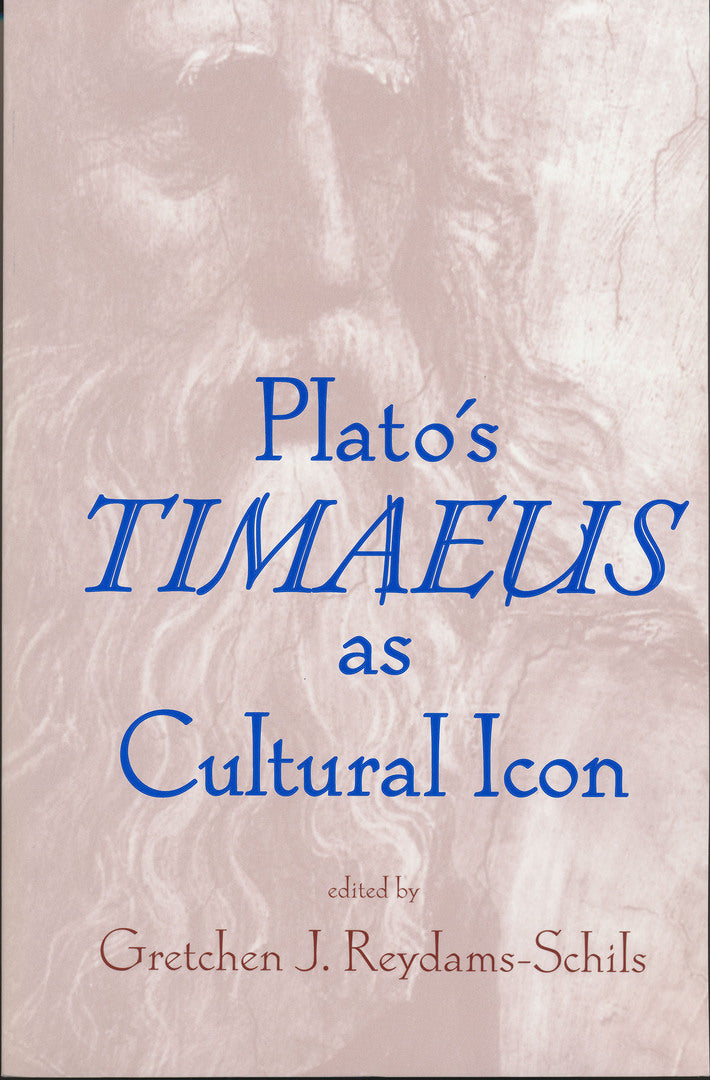
In recent years, Plato's Timaeus has recaptured the interest of scholars, sparking an exploration of the astonishing influence this work has had on a wide range of intellectual traditions. Plato's Timaeus as Cultural Icon brings together a group of leading experts from Canada, the United States, and Europe to examine the reception of Plato's Timaeus throughout history, as well as its impact on major intellectual and cultural traditions.
Gretchen J. Reydams-Schils's enlightening introduction tackles the issue of why the Timaeus has enjoyed such tremendous cultural status and sets the stage for the many topics covered in this volume, which include an assessment of the Timaeus's influence on Plato's successors, an examination of how it became connected to traditions of sacred texts, an analysis of the "mind-body problem," the tradition of music and its relation to philosophy, the cultural impact of Calcidius's Latin translation of the work, and the interaction between the Timaeus and Islamic philosophy. As a collaborative effort of expert philosophers, classicists, and historians, this remarkable book serves as a wonderful starting point and research tool for anyone with an interest in Plato's Timaeus.

"This volume contains thirteen papers from a conference held at Notre Dame.... The papers discuss the interpretation and significance of Plato's Timaeus from the Old Academy to nineteenth-century German philosophy. There is an introductory overview by the editor, as well as a bibliography, index locorum, and a general index. ...of high quality." —Speculum
Gretchen Reydams-Schils is associate professor in the Program of Liberal Studies at the University of Notre Dame.
Contributors: Michael J. B. Allen, Werner Beierwaltes, Luc Brisson, Cristina D’Ancona, John Dillon, Paul Edward Dutton, Stephen Gersh, Carlos Lévy, Rhonda Martens, Mitchell Miller, David T. Runia, Kenneth Sayre, and Richard Sorabji