


Some error occured while loading the Quick View. Please close the Quick View and try reloading the page.
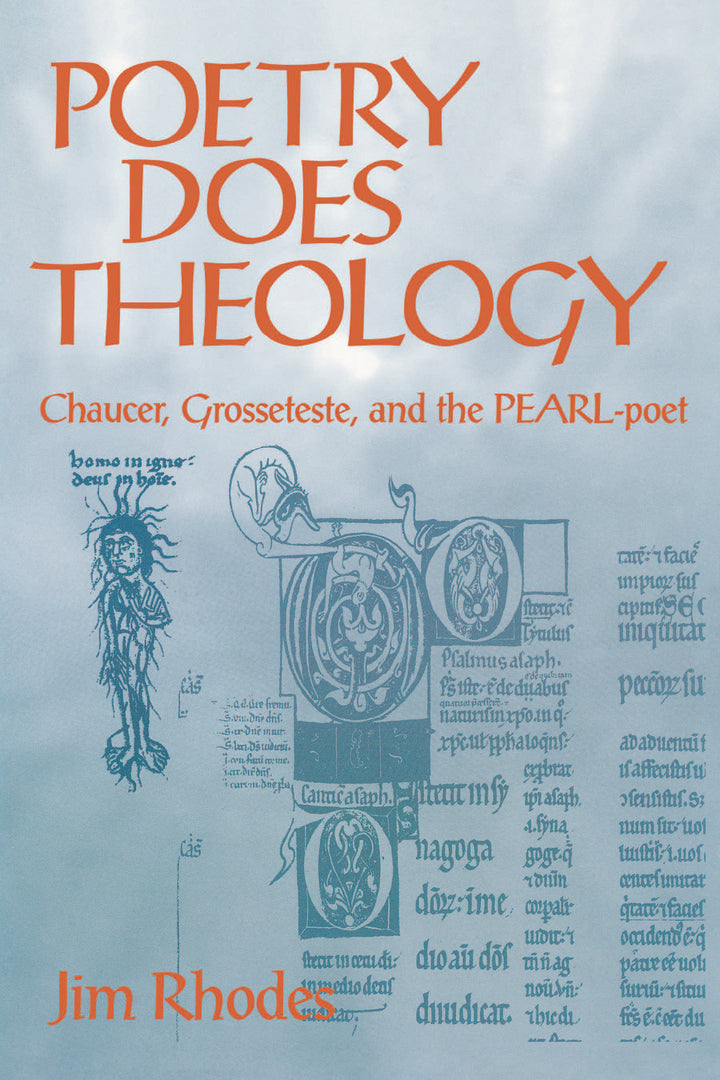
What happens when poetry deals explicitly with a serious theological issue? In Poetry Does Theology, Jim Rhodes seeks one answer to that question by analyzing the symbiotic relationship that existed between theology and poetry in fourteenth-century England. He pays special attention to the narrative poems of Chaucer, Grosseteste, the Pearl-poet, the author of Saint Erkenwald, and Langland.
Rhodes shows that Chaucer and his contemporaries wrote at the end of a linguistic and theological revolution-a time when revised perspectives on the creation and incarnation gave rise to a new humanistic spirit that transformed late medieval theological culture and spurred the development of vernacular theology and poetry. Rhodes' careful analysis describes how the relationship between theology and poetry underwent a radical transformation as the latter half of the fourteenth century progressed.
What had previously been the exclusive prerogative of a Latinate and clerical elite became in the later Middle Ages a matter of concern within vernacular culture, particularly the emerging category of "literature." This newly defined and self-conscious literature provided not simply an arena in which theological questions could be raised; it also privileged a secular, humanist outlook that granted to earthly life its own legitimacy and dignity.
In Poetry Does Theology, Rhodes argues that one of the distinctive qualities of modernity—its secular and this-worldly orientation—is a phenomenon that took root in England in the fourteenth century and found its primary site of development not in theological or philosophical circles, but in a vernacular literature that opened for inquiry the theological and philosophical questions that dominated the era.

“Rhodes’ book is an affirmation of the role that poets played in religious transformations of the late medieval period and a readable series of essays, each chapter acting as a fairly self-contained reading of one or two texts.... The text also contains several analytical gems relating the poetry to detailed readings of Hebrew Scripture, demonstrating the author’s exegetical talent. Of most interest to the literary scholar of late medieval poetry, it should also prove interesting to serious students of pre-Reformation English Christian thought.” —Religious Studies Review
Jim Rhodes is professor emeritus of English at Southern Connecticut State University.