


Some error occured while loading the Quick View. Please close the Quick View and try reloading the page.
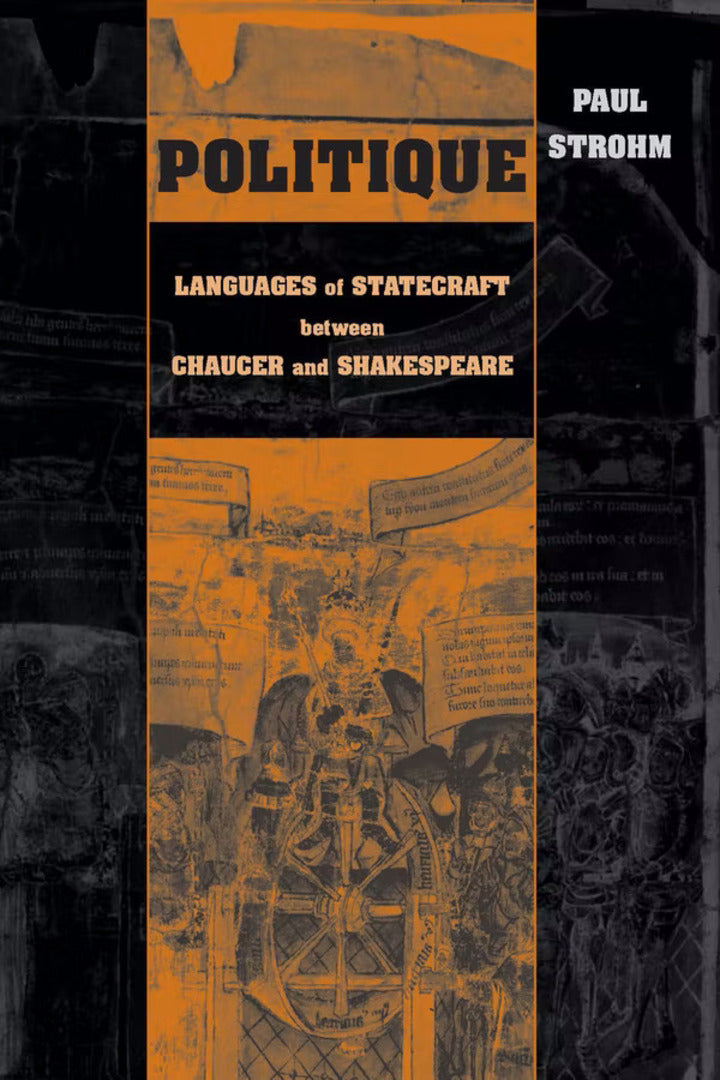
In this book Paul Strohm shifts his recognized talent for textual and cultural analysis to the later fifteenth century, arguing that England experienced its own "pre-Machiavellian" moment between 1450 and 1485. These turbulent decades encouraged new pragmatic discussions of political policies of a sort not previously seen and not to be seen again until the middle of the sixteenth century. Strohm contends that England had no need to await the writings of Machiavelli to find its voice in matters of practical statecraft and political calculation. In support of this thesis, he analyzes a range of mainly vernacular fifteenth-century English political texts along with several contemporary writings from Burgundy, France, and Italy. The writers of these texts are unsentimental, shrewdly informed, and keenly concerned with political practice in the world.
Intricately connected with this new discussion of worldly politics is a revised, and more hopeful, view of the individual’s relation to Fortune and her operations. Emergent in the English fifteenth century is the possibility that the prudent prince can effectively "Fortune-proof" himself by the exercise of foresight and the qualities of vertue—a trait remarkably anticipatory of its Italian and Machiavellian counterpart, virtú. This view is introduced to England by the poet John Lydgate and flourishes in the second half of the fifteenth century. In addition to Lydgate, Strohm looks at the imaginative accomplishments of other undercredited writers such as Fortescue, Pecock, Whethamstede, Warkworth, and the unnamed authors of Somnium Vigilantis, Historie of the Arrivall of Edward IV, and the Great Chronicle of London. He also offers an appreciation of the collective linguistic and symbolic endeavors of those in the fifteenth-century public sphere.
This detailed and rich study, which is based on the 2003 Conway Lectures Strohm delivered at the University of Notre Dame, contributes to the fields of medieval and early modern studies, medieval literary criticism, and political philosophy.

"Taking points of departure from Quentin Skinner and J.G.A. Pocock, Paul Strohm deploys superior powers of textual and linguistic analysis to uncover a "pre-Machiavellian moment": an historical phase which saw political discourse deployed with unprecedented slipperiness and subtlety; a time when it was thought possible not just to follow Fortune, but to jam her turning wheel. That this should have occurred in the fifteenth century, a period regarded as too dull, tradition-bound or chaotic for significant discursive innovation, is just one of the surprises of this remarkable book. Little-regarded writers such as Fortescue and Pecock, Whethamstede and Warkworth, emerge as figures of compelling interest; John Lydgate, once dismissed as Chaucer's dullest successor, opens paths to the Mirror for Magistrates and to the heart of Shakespearean history. This book is recommended to scholars and students of medieval and Renaissance history and literature and to all those fascinated by languages of conspiracy, destiny, and government." —David Wallace, University of Pennsylvania
Paul Strohm is William B. Ransford Professor of Medieval Literature at Columbia University.