


Some error occured while loading the Quick View. Please close the Quick View and try reloading the page.
Winner, 2026 ASALH Book Prize, Association for the Study of African American Life and History
Winner, 2025 On the Brinck Book Award, University of New Mexico School of Architecture and Planning
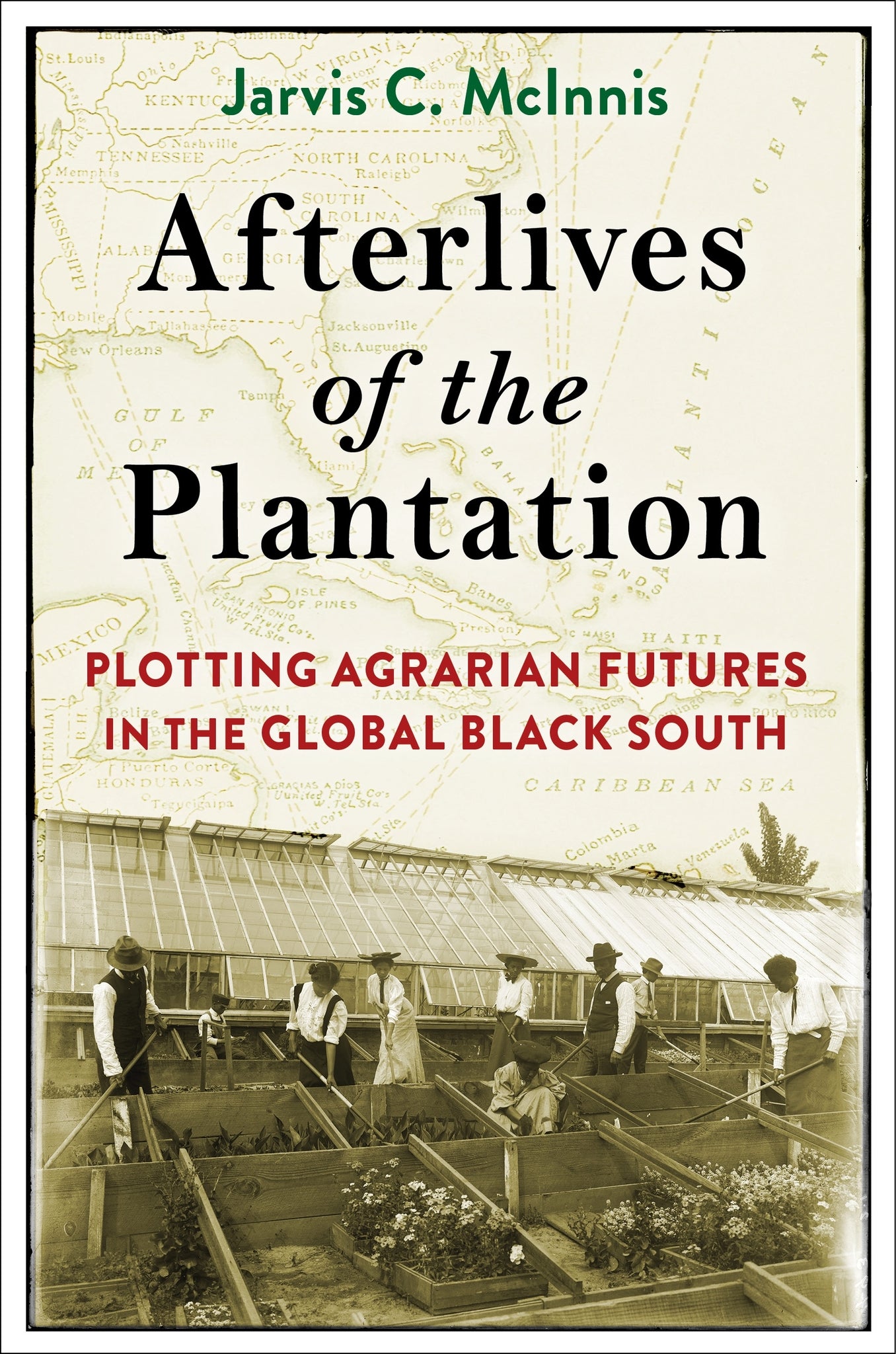
Built on the grounds of a former cotton plantation, the Tuskegee Institute, founded by Booker T. Washington, offered agricultural and industrial education as a strategy for Black self-determination. There—and in many other communities in the U.S. South, the Caribbean, and Central America—Black people repurposed and regenerated what had been a place of enslavement into a site for imagining alternative futures.
Jarvis C. McInnis charts a new account of Black modernity by centering Tuskegee’s vision of agrarian worldmaking. He traces the diasporic ties and networks of exchange that linked Black communities in the late nineteenth and early twentieth centuries. Although Washington is often regarded as an accommodationist, McInnis shows how artists, intellectuals, and political leaders—including George Washington Carver, Jean Price-Mars, Zora Neale Hurston, Claude McKay, and Marcus Garvey—adapted Tuskegee’s methods into dynamic strategies for liberation in places like Cuba, Puerto Rico, Haiti, and Jamaica. Even as the legacy of the plantation continued to circumscribe Black life, these thinkers found resources in its ruins to forge new theories and practices of progress, aesthetic innovation, and freedom that contributed to the New Negro Movement of the 1920s and 1930s.
In contrast to traditional understandings of Black modernity as urban and premised on northward migration, McInnis foregrounds rural settings and practices of place making, rootedness, and liberatory agriculture. Shedding new light on the transnational influence of a historically Black institution in the U.S. South, Afterlives of the Plantation remaps Black cultural, intellectual, and political histories down to the very soil.

Acknowledgments
Introduction: Regenerating Black Life in Plantation Ruins
Plot I
1. An Experiment in Black World Making: Cultivating Intellectuals of the Land in the Alabama Countryside
2. Performing the Tuskegee New Negro: The Racial and Gendered Aesthetics of the Repurposed Plantation
Plot II
3. Strategic Translations: Race, Nation, and the Affordances of Booker T. Washington and Tuskegee in Cuba
4. Joining Hands Across the Sea: Agricultural Education, Economic (Inter)Nationalism, and Haitian–African American Relations
Plot III
5. Becoming New Negroes: Student Aspirations, Hemispheric Migration, and the Otherwise Uses of Tuskegee
6. At the Crossroads of Diaspora and Empire: Harvesting a Plot Logic in Claude McKay’s Jamaica
7. Aestheticizing Labor, Performing Diaspora: Zora Neale Hurston and the Scene of the Work Camp
8. Of Ships and Plantations: Marcus Garvey and the UNIA’s Vision of a Pan-African Agro-industrial Empire
Epilogue: Gathering and Assessing Our Harvests; or, Lessons from Our Experiment Plots
Notes
Bibliography
Index