


Some error occured while loading the Quick View. Please close the Quick View and try reloading the page.
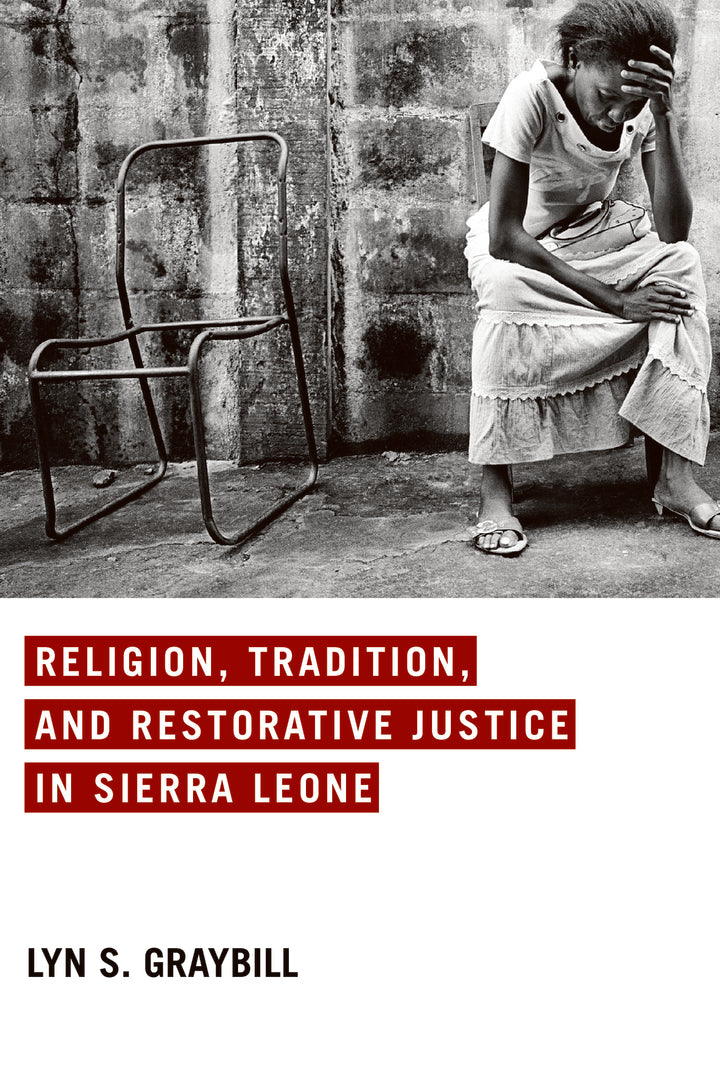
In this groundbreaking study of post-conflict Sierra Leone, Lyn Graybill examines the ways in which both religion and local tradition supported restorative justice initiatives such as the national Truth and Reconciliation Commission (TRC) and village-level Fambul Tok ceremonies.
Through her interviews with Christian and Muslim leaders of the Inter-Religious Council, Graybill uncovers a rich trove of perspectives about the meaning of reconciliation, the role of acknowledgment, and the significance of forgiveness. Through an abundance of polling data and her review of traditional practices among the various ethnic groups, Graybill also shows that these perspectives of religious leaders did not at all conflict with the opinions of the local population, whose preferences for restorative justice over retributive justice were compatible with traditional values that prioritized reconciliation over punishment.
These local sentiments, however, were at odds with the international community's preference for retributive justice, as embodied in the Special Court for Sierra Leone, which ran concurrently with the TRC. Graybill warns that with the dominance of the International Criminal Court in Africa—there are currently eighteen pending cases in eight countries—local preferences may continue to be sidelined in favor of prosecutions. She argues that the international community is risking the loss of its most valuable assets in post-conflict peacebuilding by pushing aside religious and traditional values of reconciliation in favor of Western legal norms.

Graybill makes a significant contribution to discussing the controversies and dilemmas associated with pursuing justice in the aftermath of systematic and mass human atrocities... Graybill has added some tools to the toolkit of transitional justice, in a way that easily captures the imagination. -Canadian Journal of African Studies
Lyn S. Graybill is an expert in the role of religious and cultural resources in international ethics and human rights practices. The author of Truth and Reconciliation in South Africa: Miracle or Model? and Religion and Resistance Politics in South Africa, she has taught at universities in Virginia, Georgia, and West Africa.
Acknowledgments
Preface
Abbreviations
Introduction: Postwar Transitional Justice
1. Role of the Inter-Religious Council
2. The Sierra Leone Truth and Reconciliation Commission
3. Women and Transitional Justice
4. Popular Views of the TRC and the Special Court
5. Perceptions of Religious Leaders
6. Traditional Reconciliation Practices
7. Unfinished Business
Conclusion
Appendix 1. The Instrument
Appendix 2. Interviews of Religious Leaders
Notes
Bibliography
Index