


Some error occured while loading the Quick View. Please close the Quick View and try reloading the page.
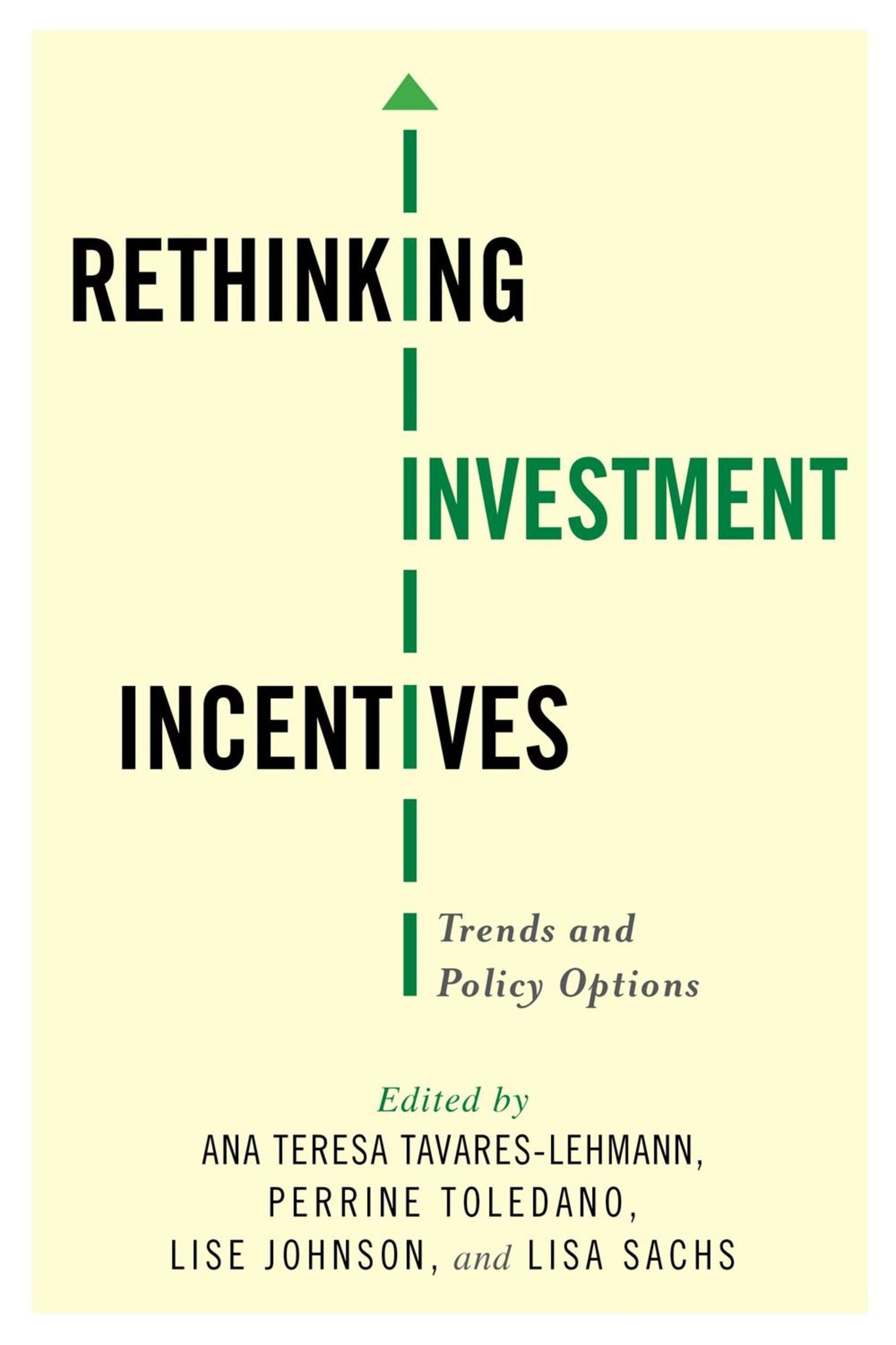
Governments often use direct subsidies or tax credits to encourage investment and promote economic growth and other development objectives. Properly designed and implemented, these incentives can advance a wide range of policy objectives (increasing employment, promoting sustainability, and reducing inequality). Yet since design and implementation are complicated, incentives have been associated with rent-seeking and wasteful public spending.
This collection illustrates the different types and uses of these initiatives worldwide and examines the institutional steps that extend their value. By combining economic analysis with development impacts, regulatory issues, and policy options, these essays show not only how to increase the mobility of capital so that cities, states, nations, and regions can better attract, direct, and retain investments but also how to craft policy and compromise to ensure incentives endure.

Ana Teresa Tavares-Lehmann is associate professor of economics at the School of Economics, University of Porto, and head of international business at the University of Porto Business School.
Perrine Toledano is the head of extractive industries at the Columbia Center on Sustainable Investment (CCSI).
Lise Johnson is the head of investment law and policy at CCSI.
Lisa Sachs is the director of CCSI.
Foreword
1. Introduction, by Ana Teresa Tavares-Lehmann, Lisa Sachs, Lise Johnson, and Perrine Toledano
Part I: Invesment Incentives: An Introduction
2. Types of Investment Incentives, by Ana Teresa Tavares-Lehmann
3. Definitions, Motivations, and Locational Determinants of Foreign Direct Investment, by Sarianna M. Lundan
Part II: A Global Overview of Investment Incentives
4. The Use of Investment Incentives: The Cases of R&D-Related Incentives and International Investment Agreements, by Christian Bellak and Markus Leibrecht
5. Incentives in the European Union, by Phillipe Gugler
6. Incentives in the United States, by Charles Krakoff and Chris Steele
7. Tax Incentives Around the World, by Sebastian James
Part III: Designing Incentives Programs to Get Value for Money and Achieve Intended Goals
8. A Holistic Approach to Investment Incentives, by Louis Brennan and Frances Ruane
9. Investment Incentives for Sustainable Developmen, by James Zhan and Joachim Karl
10. Cost-Benefit Analysis of Investment Incentives, by Ellen Harpel
Part IV: Reducing Incentives Competition: Regulatory Efforts to Limit "Races to the Bottom"
11. Regulation of Investment Incentives: National and Subnational Efforts to Regulate Competition for Investment Through the Use of Incentives, by Kenneth P. Thomas
12. Regulation of Investment Incentives: Instruments at an International/Supranational Level, by Lise Johnson
13. Conclusions: Outstanding Issues on the Design and Implementation of Incentives Policies, by Lise Johnson, Perrine Toledano, Lisa Sachs, and Ana Teresa Tavares-Lehmann
Acknowledgments
Contributors
Index