


Some error occured while loading the Quick View. Please close the Quick View and try reloading the page.
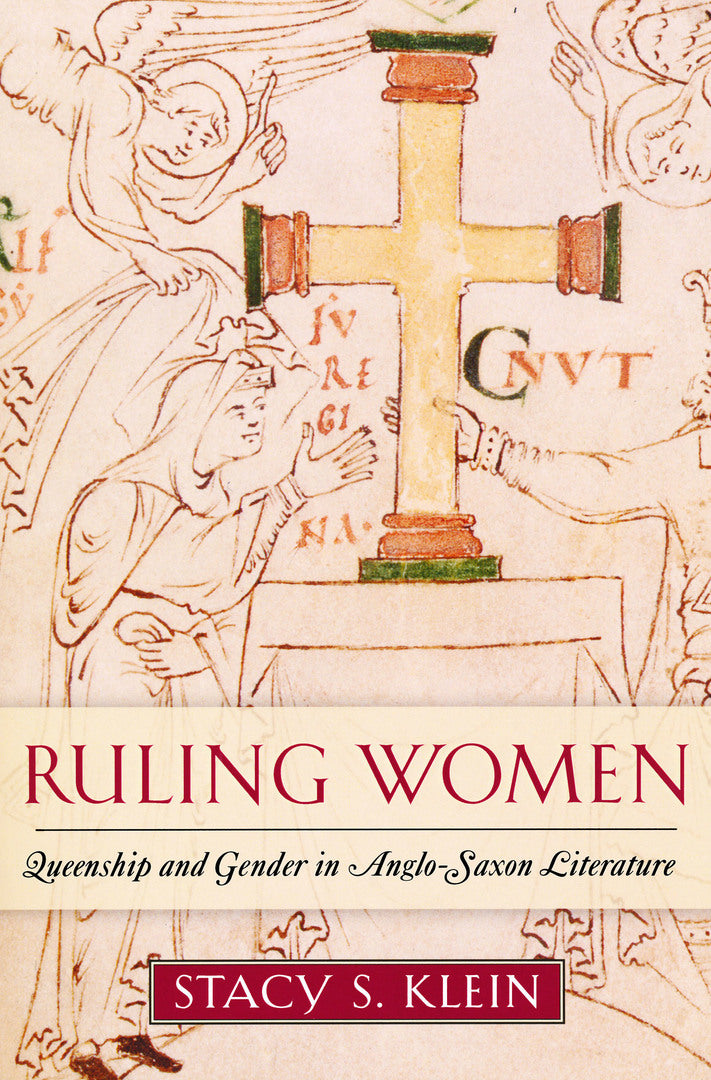
In Ruling Women, Stacy S. Klein explores how queens functioned as imaginative figures in Anglo-Saxon texts. Focusing on pre-Conquest works ranging from Bede to Ælfric, Klein argues that Anglo-Saxon writers drew upon accounts of legendary royal wives to construct cultural ideals of queenship during a time when that institution was undergoing profound change.
Also a study of gender, her book examines how Anglo-Saxon writers used women of the highest social rank to forge broader cultural ideals of femininity, even as they used female voices to articulate far less comfortable social truths. Capitalizing on queens’ strong associations with intercession, Anglo-Saxon writers consistently looked to royal women as mediatory figures for negotiating sustained tensions, and sometimes overt antagonisms, among different peoples, institutions, and systems of belief. Yet as authors appropriated legendary queens and inserted them into contemporary Anglo-Saxon culture, these royal “peaceweavers” simultaneously threatened to destroy existing unities and to expose the fragility of seemingly entrenched social formations.
Drawing on the strengths of historical, typological, and literary criticism, feminist theory, and cultural studies, Ruling Women offers us a way to understand Anglo-Saxon texts as both literary monuments and historical documents, and thus to illuminate the ideological fissures and cultural stakes of Anglo-Saxon literary practice.

“Ruling Women is a refreshingly independent and thought-provoking study which challenges any tendency to assume that Anglo-Saxon depictions of women were solely and simply driven by straightforward misogyny. Klein has made a valuable contribution in establishing the cultural significance of Anglo-Saxon literary representations of queens, and also in demonstrating that Ælfric’s presentation of Biblical and legendary queens in their relation to the politics of the Benedictine Reform and Æthelred’s reign merit further study.” —Journal of English and Germanic Philology
Stacy S. Klein is associate professor of English at Rutgers University. She is the author of numerous scholarly articles on Old English poetry, early medieval biblical translation, and Anglo-Saxon femininity.