


Some error occured while loading the Quick View. Please close the Quick View and try reloading the page.
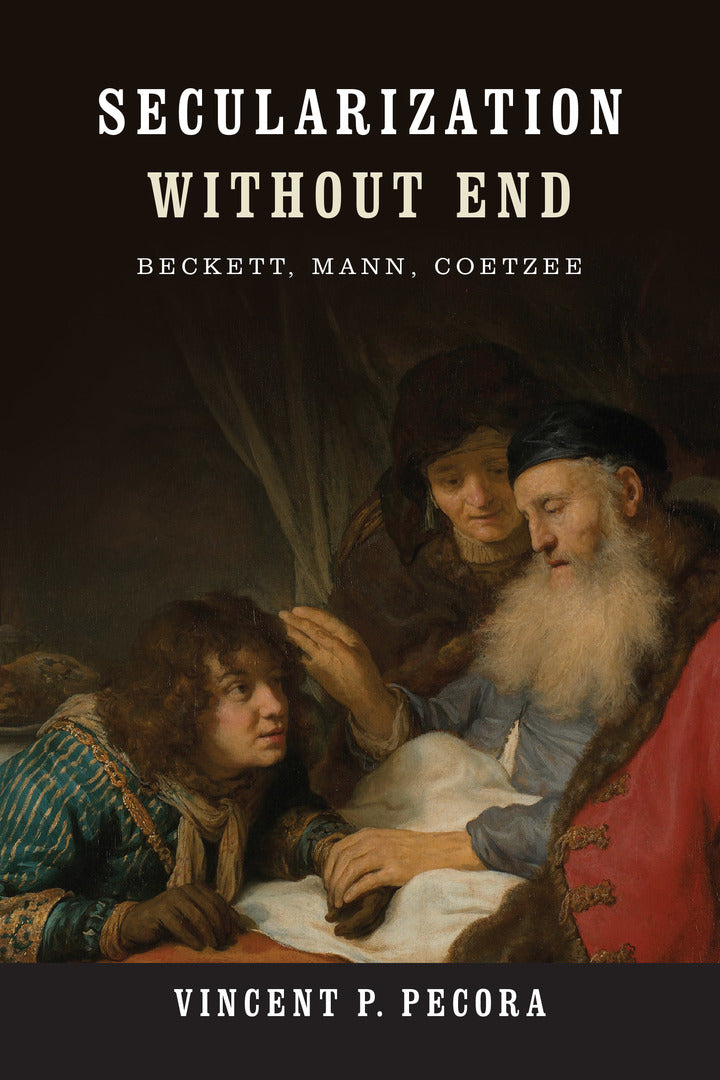
In Secularization without End: Beckett, Mann, Coetzee, Vincent P. Pecora elaborates an alternative history of the twentieth-century Western novel that explains the resurgence of Christian theological ideas. Standard accounts of secularization in the novel assume the gradual disappearance of religious themes through processes typically described as rationalization: philosophy and science replace faith. Pecora shows, however, that in the modern novels he examines, "secularization" ceases to mean emancipation from the prescientific ignorance or enchantment commonly associated with belief and signifies instead the shameful state of a humanity bereft of grace and undeserving of redemption.
His book focuses on the unpredictable and paradoxical rediscovery of theological perspectives in otherwise secular novels after 1945. The narratives he analyzes are all seemingly godless in their overt points of view, from Samuel Beckett’s Murphy to Thomas Mann’s Doktor Faustus to J. M. Coetzee’s The Childhood of Jesus. But, Pecora argues, these novels wind up producing varieties of religious doctrine drawn from Augustinian and Calvinist claims about primordial guilt and the impotence of human will. In the most artfully imaginative ways possible, Beckett, Mann, and Coetzee resist the apparently inevitable plot that so many others have constructed for the history of the novel, by which human existence is reduced to mundane and meaningless routines and nothing more. Instead, their writing invokes a religious past that turns secular modernity, and the novel itself, inside out.

“Among the most provocative of the questions Pecora explores is this: In what ways has secularization promoted a return to supposedly discarded theologies? While Pecora is interested in the broader and more commonly studied issue of the demise of the secularization thesis, he moves beyond explanations of how religious (primarily Christian) commitments persist in supposedly secular societies to the question of how secularization might have actually served as a causal factor in the renewal of religious thoughts and sentiment.” —Fides et Historia
Vincent P. Pecora is the Gordon B. Hinckley Professor of British Literature and Culture at the University of Utah. He is the author of a number of books, including Secularization and Cultural Criticism: Religion, Nation, and Modernity.
Acknowledgments
Introduction: Secularization and the History of the Novel
- Martin Heidegger, John Calvin, and Samuel Beckett
- Thomas Mann, Augustine, and the “Death of God”
- The Ambivalent Puritan: J. M. Coetzee
Conclusion: Reading in the Afterlife of the Novel
Notes
Bibliography
Index