


Some error occured while loading the Quick View. Please close the Quick View and try reloading the page.
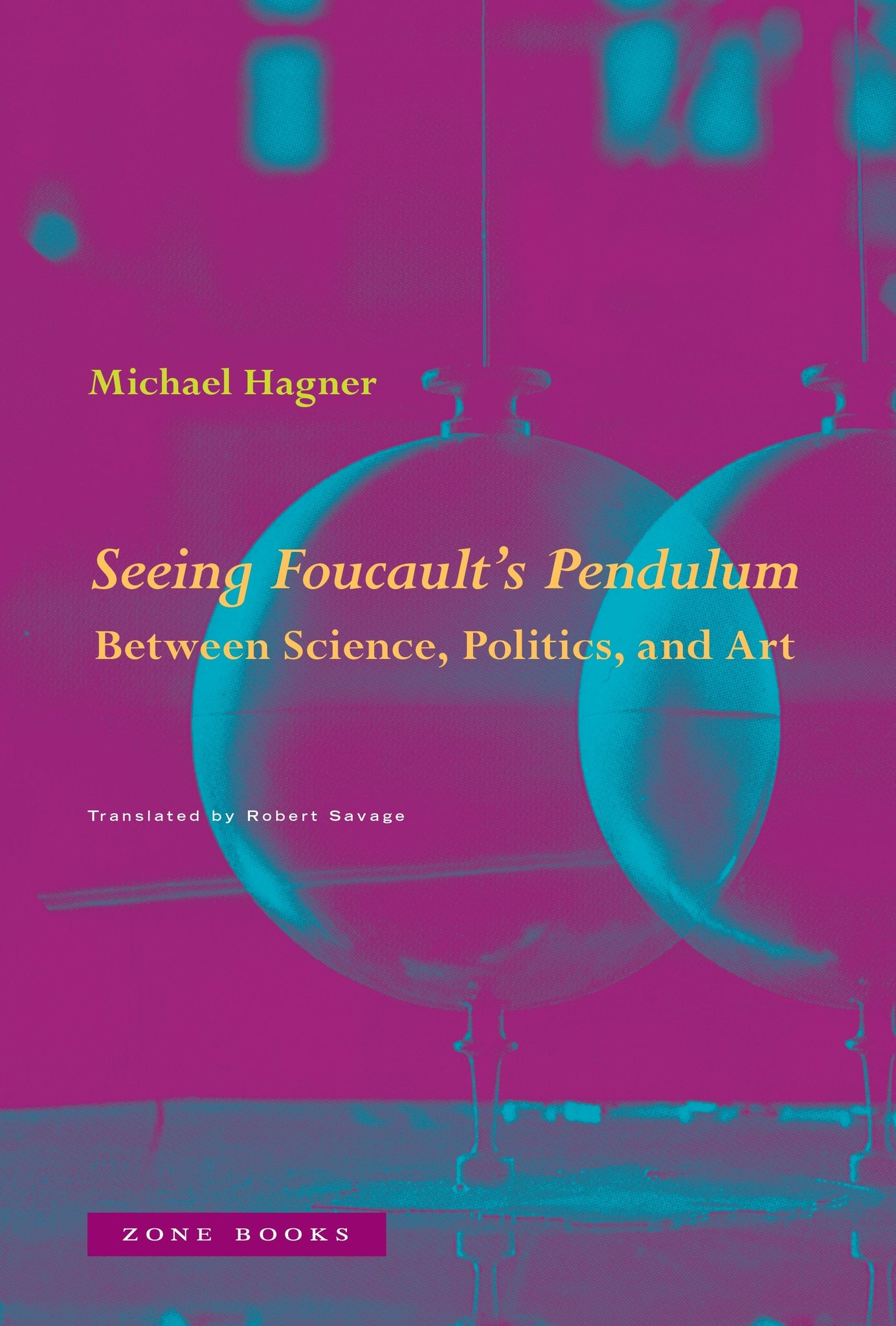
An investigation of a cosmic experiment
In 1851, the physicist Léon Foucault performed an unforgettable experiment. By suspending a large pendulum inside the dome of Paris’ Pantheon, Foucault provided the first simple, direct empirical evidence of the Earth's rotation—an undeniable demonstration of heliocentrism. This experiment, conducted long after the Copernican Revolution and using a laboratory apparatus rather than astronomical observation, visually confirmed what had previously been accepted as theory. The pendulum’s motion clearly illustrated the Earth's rotation. But Foucault’s experiment did not end there. It sparked a range of subsequent reenactments and interpretations, each adding new layers to its meaning. Repeated over and again, its afterlives were many as were its ramifications.
Historian Michael Hagner revisits this epoch-making experiment and its reception from the nineteenth century to the present day and follows how cosmological questions conjoined political and aesthetic judgments about the public staging and history of science. The pendulum experiment, Hagner argues, is more than just a mere scientific demonstration. It contains within it the histories of technological innovation, ideological conflicts, and the rise of popular culture and visual media. In a series of insightful studies of literary, artistic, and scientific reenactments, Hagner uses both words and images to narrate the rich and complex legacy of this experiment.
Seeing Foucault's Pendulum includes among other fascinating tales, a short but stunning history of the Copernican Revolution, the paradigm-shifting work of the nineteenth-century astronomer Camille Flammarion, and the reenactments of Foucault’s experiment at the Smithsonian Institution and New York’s United Nations building. Linking nature to culture and calling for world unity, the experiment’s legacy extends beyond science. It has been reimagined in Umberto Eco’s novel Foucault’s Pendulum and in Gerhard Richter’s 2018 installation, enchantments of the postmodern world theater where the relationship between knowledge and sensory experience is problematized anew. A complex symbol in the history of ideas—challenging our assumptions, inspiring artistic expression, and prompting philosophical reflection on our place in the cosmos—Foucault’s experiment serves as a powerful reminder that both the Earth and the universe should never be reduced to a disposable mass of human hubris and of irresponsible manipulation.
