


Some error occured while loading the Quick View. Please close the Quick View and try reloading the page.
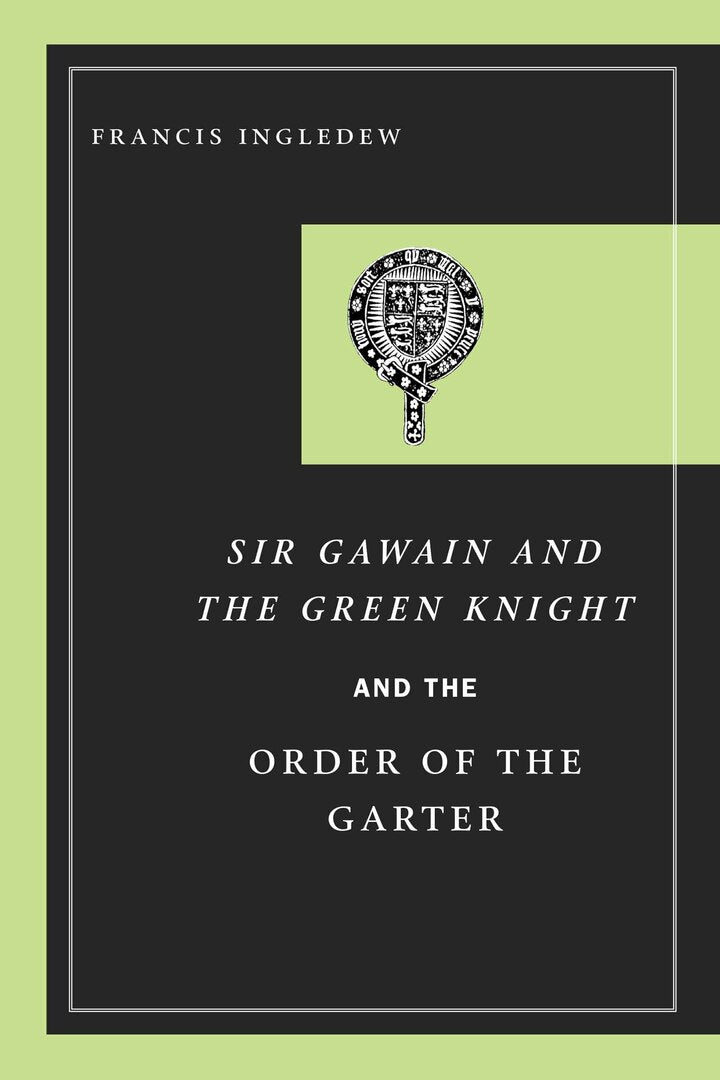
Francis Ingledew's book makes the case that Sir Gawain and the Green Knight, one of the canonical works of medieval English literature, should be recognized as a response to King Edward III's foundation in 1349 of the chivalric Order of the Garter. As well as providing the basis for a thorough reinterpretation of the poem's purposes and meanings, this argument dates to the mid-fourteenth-century reign of Edward III (1327–77) a poem conventionally ascribed to the reign of Richard II (1377–99).
Through close readings of the poem and of an array of overlooked historical sources, Ingledew presents Sir Gawain and the Green Knight as a critique of Edward III's sexual and military behavior. Ingledew's argument takes him deep into chivalric practice in Edward's court of the 1340s, much of it connected with the early years of war with France. Ingledew pursues the significance of sexual scandal associated with Edward, especially the rape of the Countess of Salisbury confidently imputed to him by the formidable Liégois historian Jean le Bel. At the same time that he was trying to conquer France and Scotland and preside over a court vulnerable to scandal, Edward also called on the history (as it was seen) of King Arthur and the Round Table, associating himself with Arthur's imperial and moral authority through the founding of the Order of the Garter. In its portrayal of the Order of the Garter, Ingledew argues, Sir Gawain and the Green Knight sets itself at odds with Edward's central ethical and political projects.
A new and persuasive interpretation of a central literary text, this book will be of interest to medievalist historians as well as literary scholars.

"This is a daring and provocative book about the great but still mysterious Arthurian poem Sir Gawain and the Green Knight. Ingledew boldly —and, for this reader convincingly—locates Sir Gawain in the triumphal years of Richard's grandfather Edward III, a period when chivalric aspiration supported a series of Enlgish military triumphs and Edward was the beau ideal of both insular and continental historians, who often align him with King Arthur. He argues for a significant and quite precise connection between the poem and the chivalric ideology ritualized in the Order of the Garter and other international knightly orders. Ingledew links Gawain's sexual temptation to a disruptive sexual scandal at the core of Edward's court, in the king's rumored rape of the Countess of Salisbury. More importantly, in a massively informed but supple opening chapter, Ingledew shows how this scandal figures in the romance historiography of Jean le Bel and Jean Froissart, who respectively narrate and deny the scandal. This leads in turn to the book's claim that we should read Sir Gawain as much through the canons of its contemporary historiography (both Trojan and Arthurian) as we do in the context of twelfth and thirteenth-century romance. And behind this, even more ambitiously, is Ingledew's often eloquent call to read both historiography and romance as closely linked manifestations of an erotics of history. No one has explored these issues with the force and focused learning Ingledew brings to them, particularly his subtle readings of Arthurian-inflected historiography from Geoffrey of Monmouth to the fifteenth century." —Christopher Baswell, UCLA
Francis Ingledew is associate professor in the School of English, Philosophy, and Humanities, Fairleigh Dickinson University.