


Some error occured while loading the Quick View. Please close the Quick View and try reloading the page.
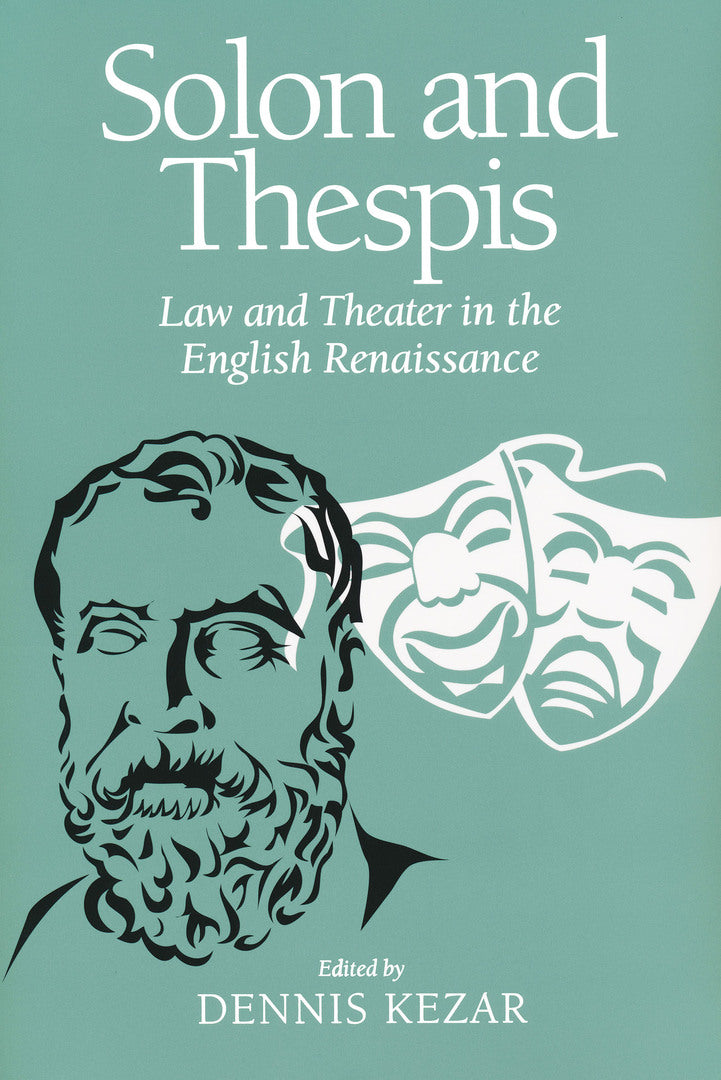
In the archetypal confrontation between the Athenian lawmaker Solon and the Greek poet Thespis, Solon confronts Thespis after seeing him act in a tragedy. He asks Thespis if he is not ashamed to tell so many lies before so many people. In response to Thespis's reply—that it was no harm to say or do so in a play—Solon vehemently blames Thespis for a professional deceit that threatens to pervade society.
Solon's criticism of Thespis points to a fundamental motivation for Solon and Thespis: an exploration of the long-standing antagonism between law and theater, between drama's inconsequential fiction and the real world's socially consequential fact, at a crucial moment—the sixteenth century—in England's cultural and legal formation.
The literary critics and historians in this volume examine that antagonism and find it revelatory of English Renaissance law and Renaissance theater's institutional connections and interdependences at a time when both were emerging as powerful forces in English society. Renaissance legal processes were subject to dramatic and public representation, appropriation, and evaluation. Renaissance commercial theater, often populated by law students and practitioners, was both subject to the law and subversive of it. The contributors demonstrate that theater and law were not simply relevant to each other in the early modern period; they explore the physical spaces in which early modern law and drama were performed, the social and imaginative practices that energized such spaces, and the rhetorical patterns that make the two institutions far less discrete and far more collaborative than has previously been recognized.

"In this attractively titled collection of essays on law and theater in the English Renaissance, Dennis Kezar has assembled an impressive array of talent to focus on the productive and yet vexed relationship of theater and the state. Plays 'tell lies' to their audiences: so argued Solon in his riposte to Thespis, to be followed in due course by Plato's attack on poetry in the Republic and all that Jonas Barish has studied under the rubric of The Antitheatrical Prejudice. This battleground here affords a rich opportunity for an exploration of 'an institutional antagonism over the tenuous distinction between theater's inconsequential fiction and the real world's socially consequential fact.' This volume is a truly valuable contribution to the growing interest in law and literature, here brought to bear on the great drama of Shakespeare, Jonson, Dekker, Marston, Chapman, and their contemporaries." —David Bevington, Phyllis Fay Horton Distinguished Service Professor in the Humanities, University of Chicago
Dennis Kezar is associate professor of English at Vanderbilt University.