


Some error occured while loading the Quick View. Please close the Quick View and try reloading the page.
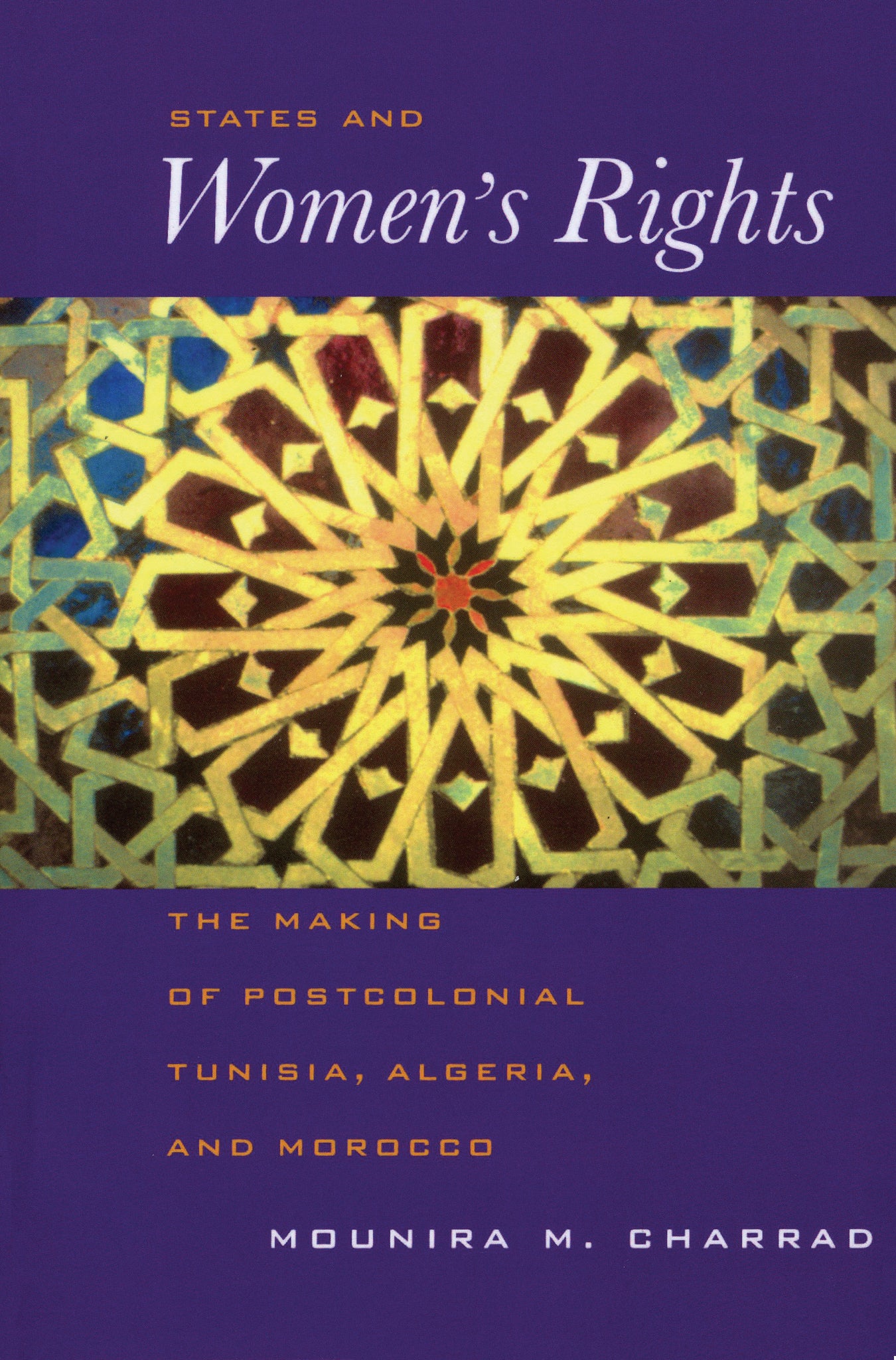
At a time when the situation of women in the Islamic world is of global interest, here is a study that unlocks the mystery of why women's fates vary so greatly from one country to another. Mounira M. Charrad analyzes the distinctive nature of Islamic legal codes by placing them in the larger context of state power in various societies.
Charrad argues that many analysts miss what is going on in Islamic societies because they fail to recognize the logic of the kin-based model of social and political life, which she contrasts with the Western class-centered model. In a skillful synthesis, she shows how the logic of Islamic legal codes and kin-based political power affect the position of women. These provide the key to Charrad's empirical puzzle: why, after colonial rule, women in Tunisia gained broad legal rights (even in the absence of a feminist protest movement) while, despite similarities in culture and religion, women remained subordinated in post-independence Morocco and Algeria. Charrad's elegant theory, crisp writing, and solid scholarship make a unique contribution in developing a state-building paradigm to discuss women's rights.
This book will interest readers in the fields of sociology, politics, law, women's studies, postcolonial studies, Middle Eastern studies, Middle Eastern history, French history, and Maghrib studies.
Charrad argues that many analysts miss what is going on in Islamic societies because they fail to recognize the logic of the kin-based model of social and political life, which she contrasts with the Western class-centered model. In a skillful synthesis, she shows how the logic of Islamic legal codes and kin-based political power affect the position of women. These provide the key to Charrad's empirical puzzle: why, after colonial rule, women in Tunisia gained broad legal rights (even in the absence of a feminist protest movement) while, despite similarities in culture and religion, women remained subordinated in post-independence Morocco and Algeria. Charrad's elegant theory, crisp writing, and solid scholarship make a unique contribution in developing a state-building paradigm to discuss women's rights.
This book will interest readers in the fields of sociology, politics, law, women's studies, postcolonial studies, Middle Eastern studies, Middle Eastern history, French history, and Maghrib studies.

Price: $33.95
Pages: 359
Publisher: University of California Press
Imprint: University of California Press
Publication Date:
30 October 2001
Trim Size: 9.00 X 6.00 in
ISBN: 9780520225763
Format: Paperback
BISACs:
Mounira M. Charrad is on the faculty of the Department of Sociology and the Center for Middle Eastern Studies at the University of Texas, Austin.
List of Maps and Tables
Preface
Acknowledgments
Note on Foreign Terms and Transliteration
Introduction
PART ONE: Similarities: Common Heritage of the Maghrib
1. State Formation in Kin-Based Societies
2. Islam and Family Law: An Unorthodox View
3. Women Ally with the Devil: Gender, Unity, and Division
4. Men Work with Angels: Power of the Tribe
PART TWO: Historical Differences
5. The Precolonial Polity: National Variations
6. Colonial Rule: French Strategies
PART THREE Three Paths to Nation-State and Family Law
7. Palace, Tribe, and Preservation of Islamic Law: Morocco
8. Elite Divisions and the Law in Gridlock: Algeria
9. State Autonomy from Tribe and the Transformation of Family Law: Tunisia
Conclusion. State-Building, Family Law, and Women's Rights
History, Strategy, and Policy
Some Theoretical Implications
Glossary
Notes
Bibliography
Index
Preface
Acknowledgments
Note on Foreign Terms and Transliteration
Introduction
PART ONE: Similarities: Common Heritage of the Maghrib
1. State Formation in Kin-Based Societies
2. Islam and Family Law: An Unorthodox View
3. Women Ally with the Devil: Gender, Unity, and Division
4. Men Work with Angels: Power of the Tribe
PART TWO: Historical Differences
5. The Precolonial Polity: National Variations
6. Colonial Rule: French Strategies
PART THREE Three Paths to Nation-State and Family Law
7. Palace, Tribe, and Preservation of Islamic Law: Morocco
8. Elite Divisions and the Law in Gridlock: Algeria
9. State Autonomy from Tribe and the Transformation of Family Law: Tunisia
Conclusion. State-Building, Family Law, and Women's Rights
History, Strategy, and Policy
Some Theoretical Implications
Glossary
Notes
Bibliography
Index