


Some error occured while loading the Quick View. Please close the Quick View and try reloading the page.
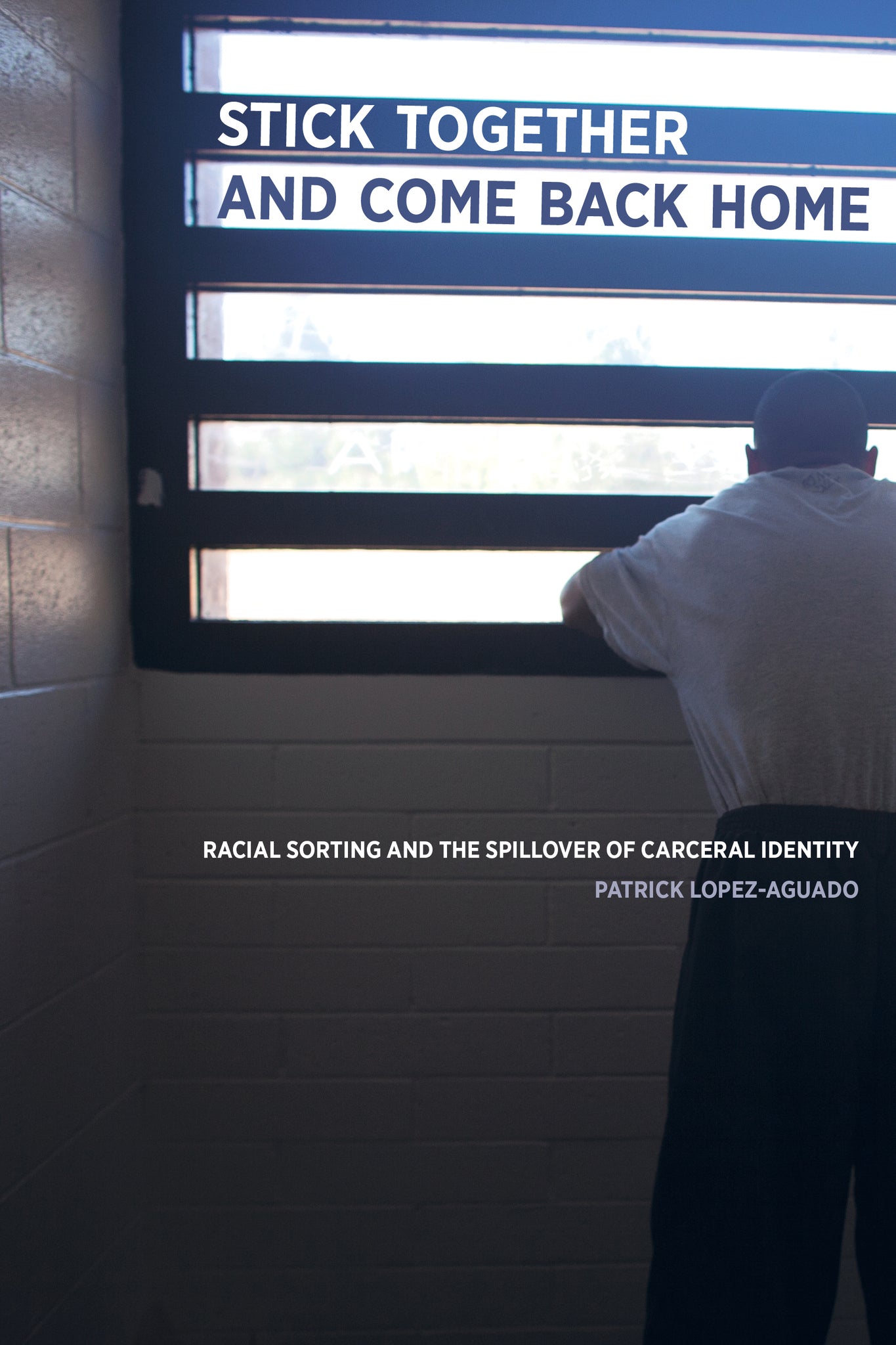
In Stick Together and Come Back Home, Patrick Lopez-Aguado examines how what happens inside a prison affects what happens outside of it. Following the experiences of seventy youth and adults as they navigate juvenile justice and penal facilities before finally going back home, he outlines how institutional authorities structure a “carceral social order” that racially and geographically divides criminalized populations into gang-associated affiliations. These affiliations come to shape one’s exposure to both violence and criminal labeling, and as they spill over the institutional walls they establish how these unfold in high-incarceration neighborhoods as well, revealing the insidious set of consequences that mass incarceration holds for poor communities of color.

Price: $29.95
Pages: 240
Publisher: University of California Press
Imprint: University of California Press
Publication Date:
19 January 2018
Trim Size: 9.00 X 6.00 in
ISBN: 9780520288591
Format: Paperback
BISACs:
“An in-depth, detailed example of the ways in which the criminal justice system replicates the racist inclinations of the larger society.”
Patrick Lopez-Aguado is Assistant Professor of Sociology at Santa Clara University.
Acknowledgments
Introduction: The Carceral Social Order
PART I. INSIDE THE FACILITY
1. Constructing and Institutionalizing the Carceral Social Order
2. Carceral Affiliation and Identity Construction
3. Negotiating and Resisting the Carceral Social Order
PART II. COMING BACK HOME
4. “The Home Team” at the Intersection of Prison and Neighborhood
5. Carceral Violence Inside and On the Outs
6. The Carceral Social Order and the Structuring of Neighborhood Criminalization
Conclusion: “How You Just Gonna Make Up Your Mind About Where We’re Gonna Be, When Our Minds Should Be Going Higher?”
Notes
Bibliography
Index
Introduction: The Carceral Social Order
PART I. INSIDE THE FACILITY
1. Constructing and Institutionalizing the Carceral Social Order
2. Carceral Affiliation and Identity Construction
3. Negotiating and Resisting the Carceral Social Order
PART II. COMING BACK HOME
4. “The Home Team” at the Intersection of Prison and Neighborhood
5. Carceral Violence Inside and On the Outs
6. The Carceral Social Order and the Structuring of Neighborhood Criminalization
Conclusion: “How You Just Gonna Make Up Your Mind About Where We’re Gonna Be, When Our Minds Should Be Going Higher?”
Notes
Bibliography
Index