


Some error occured while loading the Quick View. Please close the Quick View and try reloading the page.
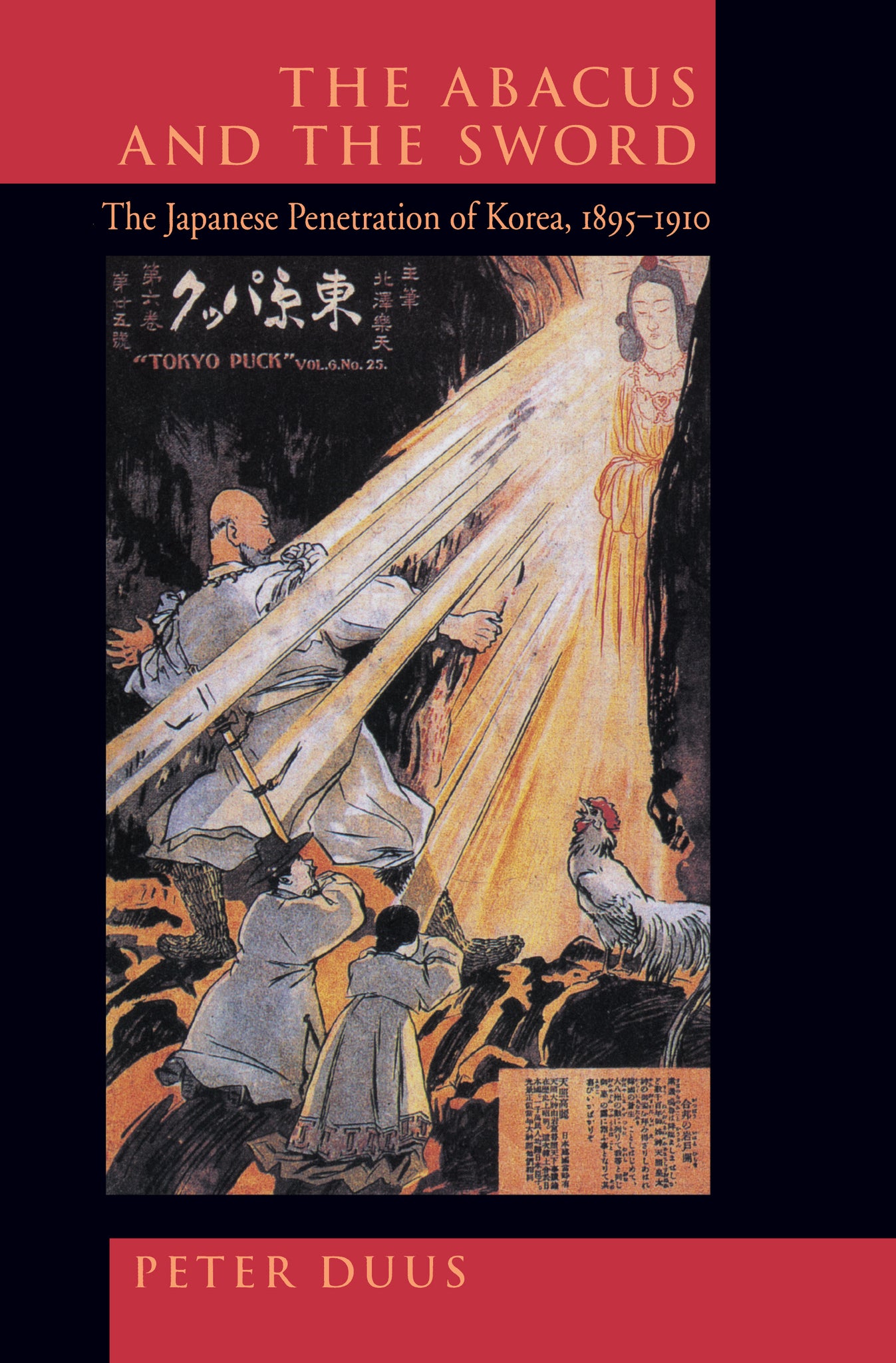
What forces were behind Japan's emergence as the first non-Western colonial power at the turn of the twentieth century? Peter Duus brings a new perspective to Meiji expansionism in this pathbreaking study of Japan's acquisition of Korea, the largest of its colonial possessions. He shows how Japan's drive for empire was part of a larger goal to become the economic, diplomatic, and strategic equal of the Western countries who had imposed a humiliating treaty settlement on the country in the 1850s.
Duus maintains that two separate but interlinked processes, one political/military and the other economic, propelled Japan's imperialism. Every attempt at increasing Japanese political influence licensed new opportunities for trade, and each new push for Japanese economic interests buttressed, and sometimes justified, further political advances. The sword was the servant of the abacus, the abacus the agent of the sword.
While suggesting that Meiji imperialism shared much with the Western colonial expansion that provided both model and context, Duus also argues that it was "backward imperialism" shaped by a sense of inferiority vis-à-vis the West. Along with his detailed diplomatic and economic history, Duus offers a unique social history that illuminates the motivations and lifestyles of the overseas Japanese of the time, as well as the views that contemporary Japanese had of themselves and their fellow Asians.
Duus maintains that two separate but interlinked processes, one political/military and the other economic, propelled Japan's imperialism. Every attempt at increasing Japanese political influence licensed new opportunities for trade, and each new push for Japanese economic interests buttressed, and sometimes justified, further political advances. The sword was the servant of the abacus, the abacus the agent of the sword.
While suggesting that Meiji imperialism shared much with the Western colonial expansion that provided both model and context, Duus also argues that it was "backward imperialism" shaped by a sense of inferiority vis-à-vis the West. Along with his detailed diplomatic and economic history, Duus offers a unique social history that illuminates the motivations and lifestyles of the overseas Japanese of the time, as well as the views that contemporary Japanese had of themselves and their fellow Asians.

Price: $36.95
Pages: 498
Publisher: University of California Press
Imprint: University of California Press
Series: Twentieth Century Japan: The Emergence of a World Power
Publication Date:
24 April 1998
Trim Size: 9.00 X 6.00 in
ISBN: 9780520213616
Format: Paperback
BISACs:
Peter Duus is William H. Bonsall Professor of History at Stanford University. He is author of Feudalism in Japan, (2nd ed. 1993), editor of The Cambridge History of Japan Vol. 6 (1989), and coeditor of The Japanese Informal Empire in Japan, 1895-1937 (1991).
List of Illustrations
Acknowledgments
Abbreviations
Introduction: The Origins of Meiji Imperialism
PART ONE
1. The Korean Question, 1876-1894
2. The Failed Protectorate, 1894-1895
3. Japanese Power in Limbo, 1895-1898
4. The Race for Concessions, 1895-1901
5. Toward the Protectorate, 1901-1905
6. The Politics of the Protectorate, 1905-1910
PART TWO
7. Capturing the Market
Japanese Trade in Korea
8. Dreams of Brocade
Migration to Korea
9. Strangers in a Strange Land
The Settler Community
10. The Korean Land Grab
Agriculture and Land Aquisition
11. Defining the Koreans
Images of Domination
Conclusion: Mimesis and Dependence
Bibliography
Index
Acknowledgments
Abbreviations
Introduction: The Origins of Meiji Imperialism
PART ONE
1. The Korean Question, 1876-1894
2. The Failed Protectorate, 1894-1895
3. Japanese Power in Limbo, 1895-1898
4. The Race for Concessions, 1895-1901
5. Toward the Protectorate, 1901-1905
6. The Politics of the Protectorate, 1905-1910
PART TWO
7. Capturing the Market
Japanese Trade in Korea
8. Dreams of Brocade
Migration to Korea
9. Strangers in a Strange Land
The Settler Community
10. The Korean Land Grab
Agriculture and Land Aquisition
11. Defining the Koreans
Images of Domination
Conclusion: Mimesis and Dependence
Bibliography
Index