


Some error occured while loading the Quick View. Please close the Quick View and try reloading the page.
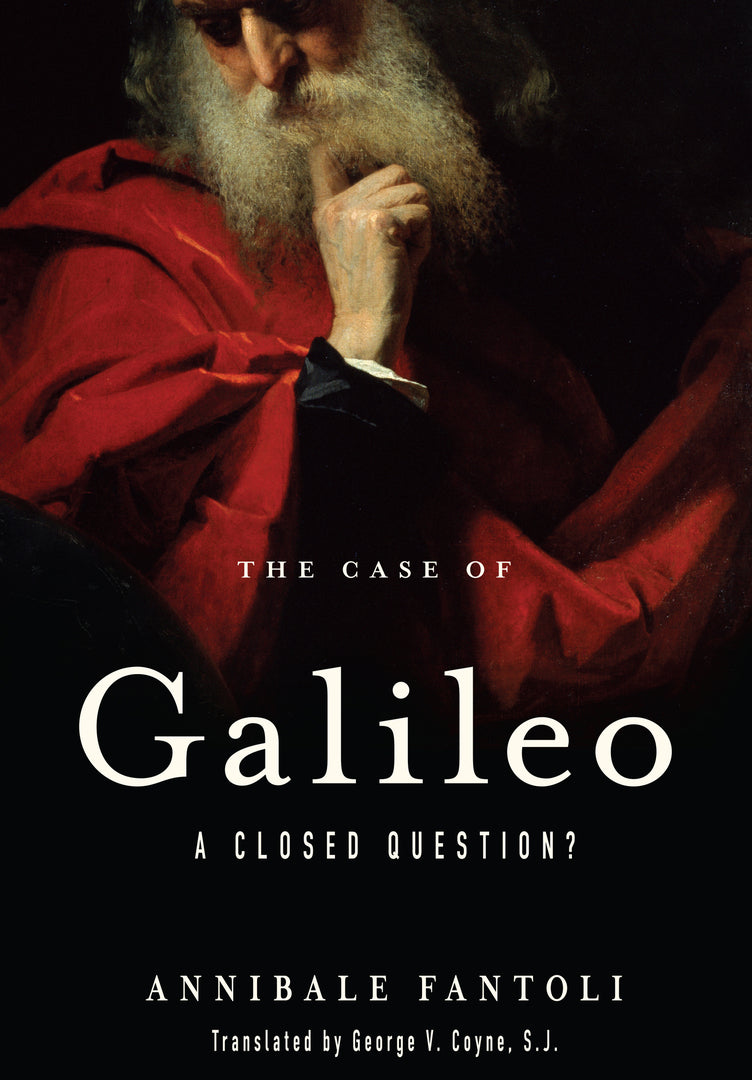
The “Galileo Affair” has been the locus of various and opposing appraisals for centuries: some view it as an historical event emblematic of the obscurantism of the Catholic Church, opposed a priori to the progress of science; others consider it a tragic reciprocal misunderstanding between Galileo, an arrogant and troublesome defender of the Copernican theory, and his theologian adversaries, who were prisoners of a narrow interpretation of scripture. In The Case of Galileo: A Closed Question? Annibale Fantoli presents a wide range of scientific, philosophical, and theological factors that played an important role in Galileo’s trial, all set within the historical progression of Galileo’s writing and personal interactions with his contemporaries. Fantoli traces the growth in Galileo Galilei’s thought and actions as he embraced the new worldview presented in On the Revolutions of the Heavenly Spheres, the epoch-making work of the great Polish astronomer Nicolaus Copernicus.
Fantoli delivers a sophisticated analysis of the intellectual milieu of the day, describes the Catholic Church’s condemnation of Copernicanism (1616) and of Galileo (1633), and assesses the church’s slow acceptance of the Copernican worldview. Fantoli criticizes the 1992 treatment by Cardinal Poupard and Pope John Paul II of the reports of the Commission for the Study of the Galileo Case and concludes that the Galileo Affair, far from being a closed question, remains more than ever a challenge to the church as it confronts the wider and more complex intellectual and ethical problems posed by the contemporary progress of science and technology. In clear and accessible prose geared to a wide readership, Fantoli has distilled forty years of scholarly research into a fascinating recounting of one of the most famous cases in the history of science.

“Fantoli’s account is thorough and suitable for those without specific expertise in the history of science . . . [and] his conclusions offer larger lessons. While the Inquisition no longer exists, the Catholic Church’s intransigence on issues such as birth control, for which its official doctrine runs counter to the practices of millions who consider themselves to be Catholic, suggests, for Fantoli, that the Catholic Church must embark on greater dialogue with the whole of contemporary religious and secular thought in order to avoid the same failings that it created in 1616 and 1633.” —European Historical Quarterly
An internationally known Galileo scholar, Annibale Fantoli is adjunct professor of philosophy at the University of Victoria. An English edition of his biography Galileo: For Copernicanism and for the Church was published in 1994 by the Vatican Observatory and distributed by the University of Notre Dame Press. It has since reached a third edition and been translated into several languages.