


Some error occured while loading the Quick View. Please close the Quick View and try reloading the page.
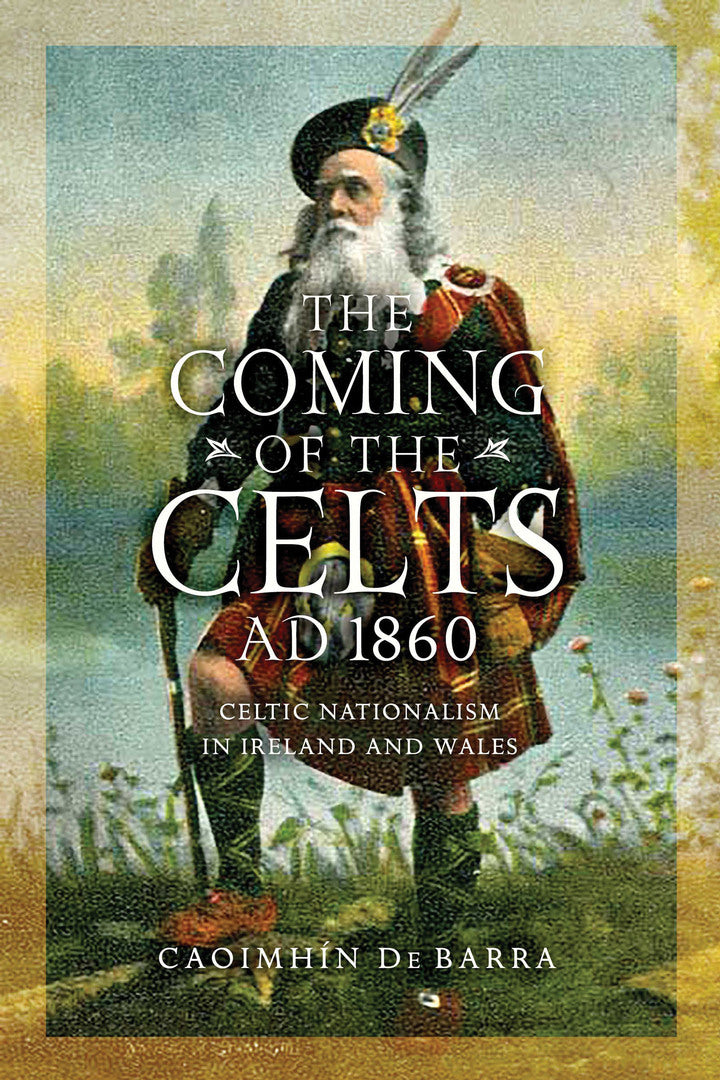
Who are the Celts, and what does it mean to be Celtic? In this book, Caoimhín De Barra focuses on nationalists in Ireland and Wales between 1860 and 1925, a time period when people in these countries came to identify themselves as Celts. De Barra chooses to examine Ireland and Wales because, of the six so-called Celtic nations, these two were the furthest apart in terms of their linguistic, religious, and socioeconomic differences. The Coming of the Celts, AD 1860 is divided into three parts. The first concentrates on the emergence of a sense of Celtic identity and the ways in which political and cultural nationalists in both countries borrowed ideas from one another in promoting this sense of identity. The second part follows the efforts to create a more formal relationship between the Celtic countries through the Pan-Celtic movement; the subsequent successes and failures of this movement in Ireland and Wales are compared and contrasted. Finally, the book discusses the public juxtaposition of Welsh and Irish nationalisms during the Irish Revolution. De Barra’s is the first book to critique what “Celtic” has meant historically, and it will appeal to the reader who wants to learn more about the modern political and cultural connections between Ireland and Wales, as well as scholars and students in the fields of modern Irish and Welsh history. It will also be of interest to professional historians working in the field of “Four Nations” history, which places an emphasis on understanding the relationships and connections between the four nations of Britain and Ireland.

"In this exhaustively researched and absorbing book, De Barra (Drew) explores the problematic nature of the word Celtic as it applied to the populations of Ireland and Wales before and after 1860. . . . De Barra’s conclusion that the ethnic sense of national identity characterized by being Celtic may soon become disentangled by immigration and a focus on civic participation is timely indeed." —Choice
Caoimhín De Barra is assistant professor of Irish studies at Gonzaga University.
Introduction
1. The Coming of the Celts
2. A Celtic Paradise
3. Celts, Catholics, Criminals
4. Gathering the Clans
5. Protestants Playing Pagans
6. Dancing to a Different Tune
7. Bringing the Moon and Mars Together
8. Celtic Heroes and Villains
9. The Search for a Welsh Sinn Féin
Conclusion
Bibliography