


Some error occured while loading the Quick View. Please close the Quick View and try reloading the page.
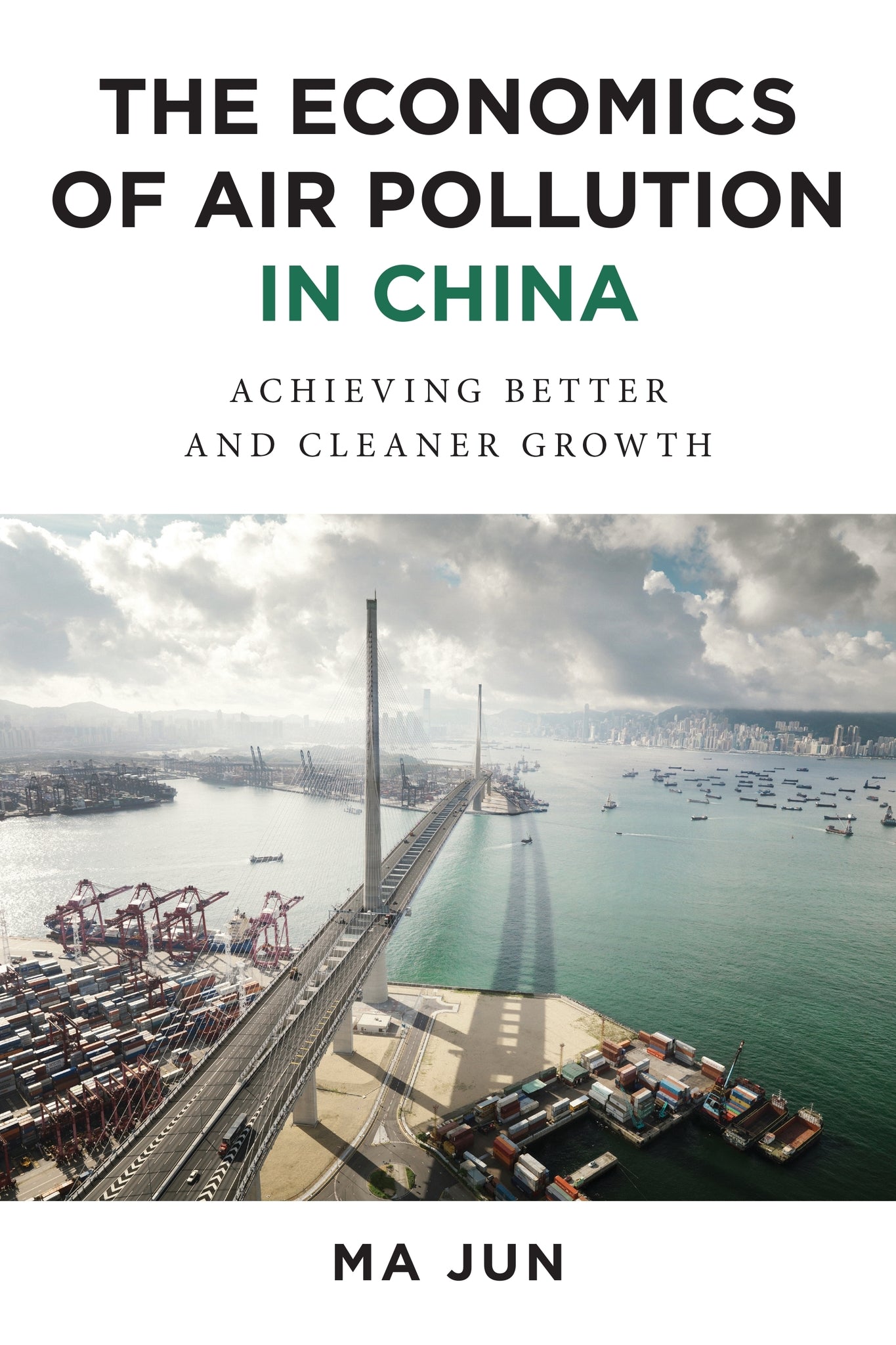
Suffocating smog regularly envelops Chinese metropolises from Beijing to Shanghai, clouding the future prospect of China's growth sustainability. Air pollutants do not discriminate between the rich and the poor, the politician and the "average Joe." They put everyone's health and economic prosperity at risk, creating future costs that are difficult to calculate. Yet many people, including some in China, are concerned that addressing environmental challenges will jeopardize economic growth.
In The Economics of Air Pollution in China, leading Chinese economist Ma Jun makes the case that the trade-off between growth and environment is not inevitable. In his ambitious proposal to tackle severe air pollution and drastically reduce the level of so-called PM 2.5 particles—microscopic pollutants that lodge deeply in lungs—Ma Jun argues that in targeting pollution, China has a real opportunity to undertake significant structural economic reforms that would support long-term growth. Rooted in rigorous analyses and evidence-based projections, Ma Jun's "big bang" proposal aims to mitigate pollution and facilitate a transition to a greener and more sustainable growth model.

Preface
Introduction
Part I. Getting to 30 μg/m3
Introduction to Part One
1. PM2.5 Data, Reduction Model, and Policy Package
2. Environmental Actions: Necessary but Insufficient
3. Structural Adjustment: The What and the How
4. Enabling Change: Incentives Needed
5. The Cleanup and Economic Growth
Part II. Cases Studies and Green Finance
6. Case Study: Shanghai
7. Case Study: Beijing
8. How to Deal with Coal
9. Making Green Finance Work in China
Notes
Index