


Some error occured while loading the Quick View. Please close the Quick View and try reloading the page.
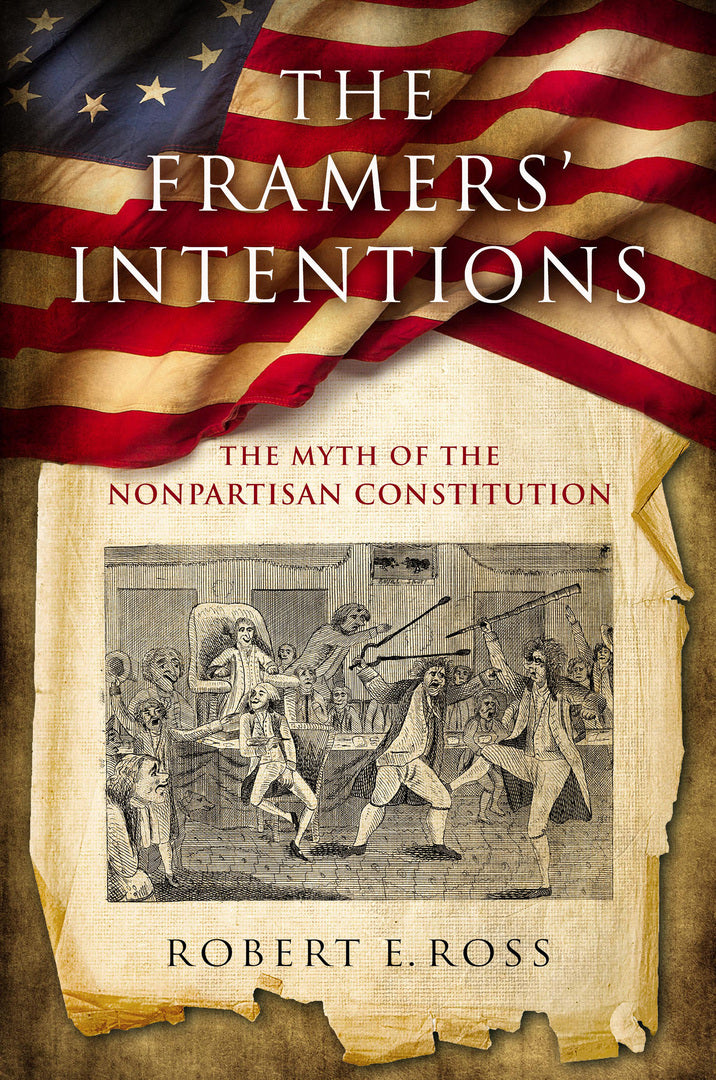
Robert Ross addresses a fascinating and unresolved constitutional question: why did political parties emerge so quickly after the framers designed the Constitution to prevent them? The text of the Constitution is silent on this question. Most scholars of the subject have taken that silence to be a hostile one, arguing that the adoption of the two-party system was a significant break from a long history of antiparty sentiments and institutional design aimed to circumscribe party politics.
The constitutional question of parties addresses the very nature of representation, democracy, and majority rule. Political parties have become a vital institution of representation by linking the governed with the government. Efforts to uphold political parties have struggled to come to terms with the apparent antiparty sentiments of the founders and the perception that the Constitution was intended to work against parties.
The Framers’ Intentions connects political parties and the two-party system with the Constitution in a way that no previous account has, thereby providing a foundation for parties and a party system within American constitutionalism. This book will appeal to readers interested in political parties, constitutional theory, and constitutional development.

"The story of political parties' decline, and how that decline led to Congress's, has yet to be told. Until then, : The Framers' Intentions provides a valuable service by showing the essential role parties have played in making workable our republican government." —Claremont Review of Books
Robert Ross is assistant professor of political science at Utah State University and a contributor to Hatred of America’s Presidents.
Introduction: Antipartyism and the Constitution: Reassessing the “Constitution-Against-Parties” Thesis
1. Antiparty Constitutionalism and the Tradition of Political Parties
2. Partyism Before the Constitution
3. Partyism and the First Amendment: Organizing Opposition and the Partisan Press
4. Partyism and the Presidential Selection System: The Twelfth Amendment and Political Opposition
5. Partyism and Organized Opposition in Elections
6. Partyism and the Electoral College: Completing the Twelfth Amendment
7. Partyism, the Election Clause, and the House of Representatives
Conclusion: Partyism and the Twenty-Fourth Amendment: Entrenching the Two-Party Constitution