


Some error occured while loading the Quick View. Please close the Quick View and try reloading the page.
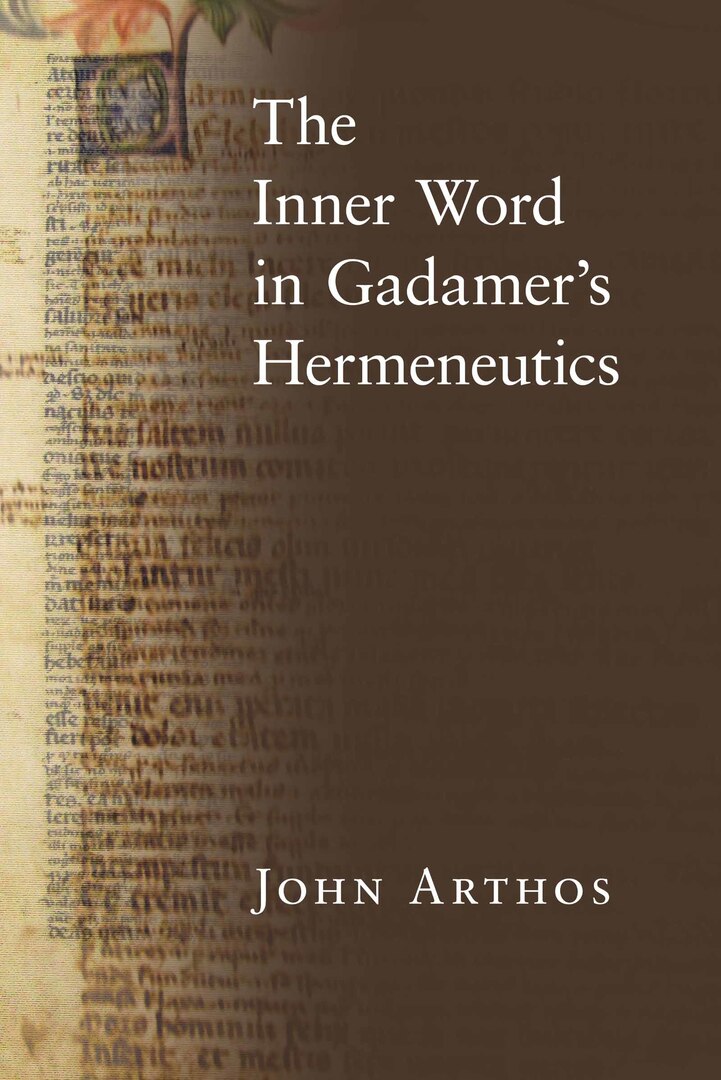
This intellectual history and textual analysis of Hans-Georg Gadamer’s famous and obscure theme of the verbum interius, or “inner word,” serves as an indispensable guide to and reference for hermeneutic theory. John Arthos here gives a full exposition and interpretation of the medieval doctrine of the inner word, long one of the most challenging ideas in Gadamer’s Truth and Method. The scholastic idea of a word that is thought but not yet spoken served Augustine as an analogy for the procession of the Trinity, served Aquinas as the medium between divine ideas and human expression, and serves Gadamer as an expression of the embodied nature of human language. Arthos offers a history of the idea of the inner word in ancient and medieval thought, its place in German philosophy, and its significance for probing the deepest implications of hermeneutic understanding.
Arthos also provides a close reading of Gadamer’s exegesis of the source texts of the doctrine of the inner word. He cross-references Gadamer’s analyses with the original texts and draws out their Heideggerian and Hegelian overtones. Through this close reading, Arthos deepens our understanding of the radical nature of Gadamer’s thought, which not only calls upon the authority of tradition but also develops some of the profoundest insights of classical and Judaeo-Christian teaching about language.

"[The Inner Word in Gadamer's Hermeneutics] is a 360 page magisterial study of the roughly ten pages of the 'Language and Verbum' section in Truth and Method, in which Gadamer treats of the topic of the inner word . . . Methodically researched and engagingly written, [the book], however, is no dry academic tome. For Arthos's purpose is not only to exegete these pages but to inquire 'into the paradigmatic significance of a hermeneutic logos for our culture.' . . . Indeed, he succeeds not only in his inquiry but also in demonstrating, i.e., producing, the very workings of a culturally relevant hermeneutics." —The Heythrop Journal
John Arthos is associate professor of Communication at Denison University.