


Some error occured while loading the Quick View. Please close the Quick View and try reloading the page.
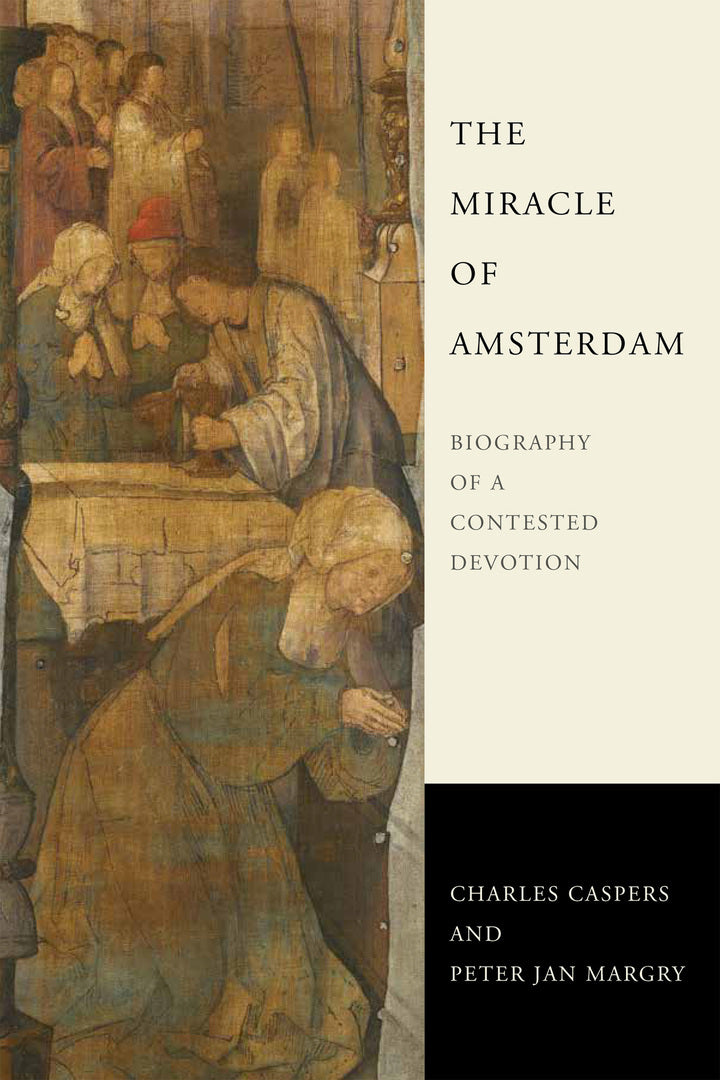
The Miracle of Amsterdam presents a “cultural biography” of a Dutch devotional manifestation. According to tradition, on the night of March 15, 1345, a Eucharistic host thrown into a burning fireplace was found intact hours later. A chapel was erected over the spot, and the citizens of Amsterdam became devoted to their “Holy Stead." From the original Eucharistic processions evolved the custom of individual devotees walking around the chapel while praying in silence, and the growing international pilgrimage site contributed to the rise and prosperity of Amsterdam.
With the arrival of the Reformation, the Amsterdam Miracle became a point of contention between Catholics and Protestants, and the changing fortunes of this devotion provide us a front-row seat to the challenges facing religion in the world today. Caspers and Margry trace these transformations and their significance through the centuries, from the Catholic medieval period through the Reformation to the present day.

"This 'cultural biography' recounts the fascinating life of a religious devotion that has persisted from the Middle Ages to today. Repeatedly changing form and meaning, veneration of the Miracle of Amsterdam has been an important part of Dutch Catholic identity for almost seven centuries. Through the lens of the Miracle, Caspers and Margry offer a compelling view of a much wider story of religious and social change." —Ben Kaplan, University College London
Charles Caspers is an expert in the field of popular devotions, spirituality, liturgy, and mission history. Together with Peter Jan Margry he published a four-volume study on pilgrimage sites in the Netherlands. He is a senior fellow of the Titus Brandsma Institute in Nijmegen.
Peter Jan Margry is professor of European ethnology at the University of Amsterdam and a senior fellow at the Meertens Institute. He is the editor of Shrines and Pilgrimage in the Modern World: New Itineraries into the Sacred.
Introduction
Part 1. Creation and expansion of a cult (1345-1500)
1. The rise of Amsterdam
2. Religious context
3. The Miracle
4. Corpus Christi and Sacraments of Miracle
5. The bishop and the count
6. Miracles of the Miracle
7. Processions through the city
Part 2. In the Habsburgs’ Favor (1500-1600)
8. Royal interest in the Holy Stead
9. The Habsburgs and national consciousness
10. Eucharistic symbolism
11. The Reformation comes to Holland
12. A women’s resistance movement and the city’s identity
13. The failed coup of the Anabaptists in 1535
14. Disciplining faith and cult
15. 1566, the “miraculous year”
16. The end of Amsterdam as an international place of pilgrimage
Part 3. The Miracle on the margins (1600-1795)
17. Hidden devotion
18. Catholic hope and Reformed fear
19. The Miracle expressed
20. The Miracle celebrated
21. The Miracle weighed up
Part 4. The battle for public space (1795-1881)
22. A velvet revolution: change and continuity
23. 1845: the “Feast of Folly”
24. Antipapism and the ban on public space
25. The “Ultramontane miracle disease”
Part 5. The Silent Walk as a national symbol of identity (1881-1960)
26. The construction of the Silent Walk
27. Cult versus cultural heritage
28. A national cult
29. The practice of the Walk
30. The international Eucharistic movement
31. Politics and ideology: the interwar years and the Second World War
32. The post-war cult: climax and catharsis
Part 6. Revolution and the reinvention of tradition (1960-2015)
33. Reconstruction and affluence
34. Revolution in the long 1960s
35. Religion, market, and tradition
36. Ecumenical harmony?
37. Continuing, broken, restored, and new traditions
Part 7. Conflict or consensus?
Route of the Silent Walk
Timeline
Sources and literature
Index